Those asking “How long does alcohol stay in your system?” usually want one definitive number. But each kind of test has its own detection window, and no two bodies clear alcohol at the same pace.
A breath or blood test finds alcohol for hours, and a urine test can look back a few days. But your size, your age, how much you drank, and any medicines you take can all change the answer too. Only time clears alcohol from your body, and the safest course of action is to assume it will take longer than you expect.
If you or someone in your life is regularly wondering about being over the limit to drive or whether alcohol will show up in a work test or doctor’s appointment, that could point to a growing dependence on alcohol. Knowing how the body clears alcohol and how fast it clears can help you understand what’s going on.
I contacted Castle Health [formerly CATCH] with a view to getting online support after a period in rehab. They recommended recovery coaching and arranged for me to meet my coach in person as the first of 10 meetings. I continued the coaching on Zoom as I live in France. I was very happy with my 10 sessions and feel I am in a good place to continue my recovery.

How long does it take alcohol to leave your system?
Each test finds alcohol for a different length of time after your last drink – anywhere from about 10 hours to three days.
The table below shows the usual longest time for each:
| Test | Usual longest time |
| Blood | about 12 hours |
| Breath | 24 hours |
| Saliva | 24 hours |
| Urine, standard test | 10 to 12 hours |
| Urine, EtG test | one to three days |
Note: the information draws from Cleveland Clinic and two Harvard doctors, with the EtG figure from SAMHSA, a US government health agency.
These times don’t guarantee a clear result, because more sensitive tests can pick up smaller amounts. The more you drink, the longer your body takes to process it. The EtG test works differently from the others, so it has its own section below.
What is an EtG test?
An EtG test looks for a substance your body makes from a small part of the alcohol you drink. That substance is ethyl glucuronide (EtG for short), and it stays in your urine for longer than alcohol does.
Clinics and courts use EtG tests to check that people are staying off alcohol, such as people on probation and drivers with a drink-driving conviction.
The test is so sensitive that everyday products with a little alcohol in them can make it come back positive. These include mouthwash, hand sanitiser, cosmetics, cleaning products, some cough medicines and some foods.
If you’ve used any before a test, tell whoever’s testing you.
How does your body process alcohol?
Your stomach and your liver process alcohol, with your liver doing most of the work. Your stomach can break some of the alcohol down using enzymes, chemicals your body makes for that job. One of them is alcohol dehydrogenase. The rest passes through your small intestine into your blood. The level in your blood tends to peak about 60 to 90 minutes after you start drinking.
Your liver clears about 90% of the alcohol from your blood, in steps. First, alcohol dehydrogenase turns alcohol into acetaldehyde, a highly toxic substance. A second enzyme turns acetaldehyde into acetate, which is less harmful, and your body breaks that down into water and carbon dioxide.
How long it takes for alcohol to leave your system varies. Drinkaware Ireland says a rough guide is about an hour for each standard drink. A standard drink in Ireland holds 10 grams of pure alcohol, and a UK unit holds eight grams, so one unit is 0.8 of a standard drink.
A standard drink can take longer than an hour to clear, depending on your age, sex, weight and the strength of your drink.
What factors affect how long alcohol stays in your body?
Your weight, sex, age, health, how often you drink, and the medicines you take all change how long alcohol stays in your body. If you weigh less, your body holds less water, so each drink leaves you with more alcohol in your blood.
Women’s bodies generally hold less water than men’s too, so the same drink can give them a higher alcohol level. As you get older, your body breaks alcohol down more slowly, so it stays in your system longer.
Liver and kidney conditions also make it harder for your body to clear alcohol. People who drink regularly have lower levels of alcohol dehydrogenase, so more alcohol reaches the blood.
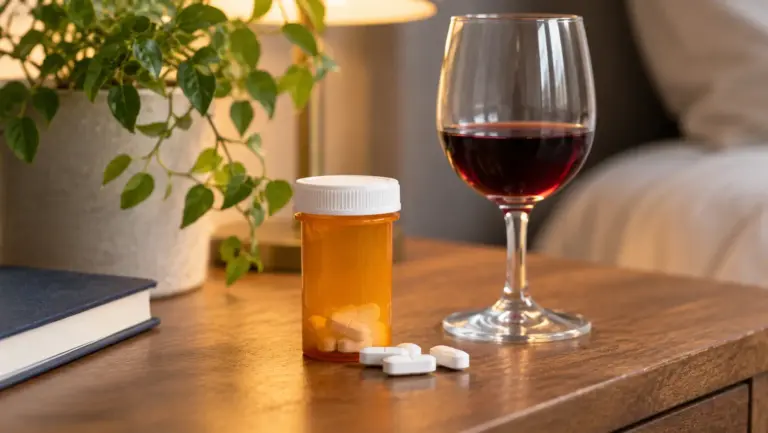
Antidepressants, anxiety medicines, sleeping tablets and some antibiotics can react with alcohol, even if you take them at different times. Ask your doctor or pharmacist about the medicines you take.
Eating doesn’t change how soon you can pass an alcohol test.
To check your own drinking, read our page on understanding what counts as a safe drinking limit.
How long does alcohol stay in your system for driving?
It’s not possible to say how many drinks will keep you under the limit because of how different bodies process and retain alcohol.
| Where | Legal limit (milligrams of alcohol per 100 millilitres of blood) |
| England, Wales and Northern Ireland, according to the Department for Transport. | 80 |
| Scotland | 50 |
| Ireland, according to the Road Safety Authority. | 50 |
| Ireland, learner, newly qualified and professional drivers | 20 |
You can feel sober and still be over the limit, and alcohol can still be in your system the morning after drinking.
If you’re driving, it’s better to simply not drink
When should you think about your relationship with alcohol?
If you often ask yourself, “How long will alcohol stay in my system?”, look at how much you drink in a normal week.
The NHS says you may need help for alcohol addiction if you often feel the need to have a drink, or if you think your drinking is causing problems. It further suggests starting with your family doctor (GP) and being open about how much you drink.
If your body has come to rely on alcohol, don’t stop suddenly. The National Institute for Health and Care Excellence (NICE) says that in severe dependence, stopping without medical help can lead to seizures and, in some cases, death.
Talk to your GP first, and call 999 or 112 if, after you stop, you have hallucinations, severe tremors or seizures (fits).
Castle Health treats alcohol dependence in the UK, Ireland, and locations across Europe. You can read more about our treatment options for alcohol dependency.
We’ve helped many people turn their lives around
Frequently asked questions about how long alcohol stays in your system
How long does alcohol stay in your system for a breathalyser test?
A breathalyser reads the alcohol in your breath right now and works as a guide to your blood alcohol level. Breath tests can find alcohol for up to 24 hours after you stop drinking.
Can you speed up how quickly alcohol leaves your body?
No, nothing clears alcohol faster. Coffee, food, cold showers, exercise, and water are all myths.
How long after drinking is a urine test accurate?
A standard urine test picks up alcohol for 10 to 12 hours, and an EtG test reaches back one to three days. A quick test done on the spot is more likely than a lab test to say alcohol is there when it isn’t. A positive result should be checked in a lab.
Does the type of alcohol you drink affect how long it stays in your system?
The type affects it mostly through how much pure alcohol is in your glass. The strength and size of the drink set that amount. In Ireland, a half pint of beer and a pub measure of spirits each hold one standard drink.