
United Kingdom
Castle Craig, Scotland
Find out more



Anxiety is one of the most common mental health conditions in the world, affecting around 1 in 6 adults in the UK in any given week. The impact anxiety can have on a person’s life is not to be underestimated. But the important thing to know is that anxiety disorders are treatable, and people recover from them every day.
At Castle Health, we offer anxiety treatment for people aged 16 and over across the UK and Europe. For almost four decades, our team has helped countless people to rebuild their lives using evidence-based treatment and the kind of care that only comes from experience.

Some worry is a normal part of life. Anxiety is the system your body uses to prepare for threats, making you more alert and ready to act if something dangerous is coming.
The challenge starts when that same system reacts to situations that aren’t actually unsafe. The physical feelings designed to help you escape real danger can show up when you are sending an email, walking into a social event, or making a difficult decision.
When the brain senses danger, stress hormones flood the body, the heart rate climbs, and breathing becomes shallow. This is the fight-or-flight response, and in anxiety disorders, that internal alarm system becomes oversensitive.
When anxiety leads you to leave or avoid a situation, relief follows. The brain learns that escape solved the problem, so the alarm triggers more easily next time. This is how avoidance builds, and sadly, people tend to find that this leaves them feeling isolated, and their world gets smaller.
Anxiety and depression are different conditions, but they often appear together, with around 30% of people with an anxiety disorder also meeting the criteria for depression.
The two conditions are linked to overlapping brain chemistry, including serotonin, though the relationship is complex and not fully understood.
Anxiety often leaves people feeling tense, restless, or stuck in racing thoughts. Depression usually does the opposite with people reporting low energy, feeling flat, and losing interest in things that used to matter. When both are present, it can feel like you’re dealing with two problems at once, but treatment doesn’t have to work that way. At Castle Health, depression treatment can be given alongside anxiety treatment at the same time.
Anxiety affects people in different ways, and symptoms can be emotional, mental, or physical. Most people report experiencing a combination of the three.
Common signs of anxiety include:

If you’re living with anxiety, our team is here to listen. Call us to find out what support is available to you.
Anxiety disorder is an umbrella term for a range of conditions that share similar features but affect people differently.
Some of the most common anxiety disorders are:
Anxiety can affect anyone, regardless of age or background. That said, it tends to be reported more often in women. Between 2022 and 2023, an average of 37.1% of women in the UK reported high levels of anxiety, compared to 29.9% of men.
Anxiety can begin during the teenage years or early adulthood, and stressful life events, long-term pressure, health problems, or past trauma can all raise the risk. While that may be true, it’s important to bear in mind that anxiety can also develop without a clear cause.
Support for anxiety looks different for everyone, and how much someone needs depends on how much it is getting in the way of their life. The main treatment options are therapy, medication, and lifestyle changes, and people tend to benefit from a combination of approaches.
Therapy is central to generalised anxiety treatment. The most common approach is cognitive behavioural therapy (CBT), which works by helping you identify the specific thoughts and behaviours that are keeping anxiety going. Over the course of sessions, you learn new tools for responding to anxiety and practice them with your therapist. Other therapy approaches include group therapy, where shared experience can reduce the sense of isolation that anxiety often brings.
Medication is sometimes used when anxiety is making it hard to function day to day. The most commonly prescribed medications for anxiety are SSRIs (selective serotonin reuptake inhibitors), which work by increasing serotonin levels in the brain. They aren’t sedatives and aren’t considered addictive in the way some other anxiety medications can be. But, they can take several weeks to take effect.
SNRIs work in a similar way and are also used for anxiety disorders.
Beta blockers are sometimes prescribed for the physical symptoms of anxiety, such as a fast heartbeat or shaking, particularly in situations like public speaking. Buspirone is another option for generalised anxiety disorder and tends to be used when SSRIs haven’t worked well.
Benzodiazepines are fast-acting, central nervous system depressants that can be prescribed for short-term severe anxiety relief. These, however, carry risk of developing significant dependency. Wthdrawal and detox can also be intense, and carry its own risks,.They are therefore typically only prescribed for only two-four weeks
A psychiatrist will talk through whether medication is appropriate for you and, if so, what kind.
What happens outside of therapy sessions matters too. Getting better sleep, cutting back on caffeine or alcohol, or stopping them altogether, and having more structure in the day can all reduce how often anxiety flares up and how intense it feels when it does.
There are two ways to access anxiety treatment support at Castle Health:
Residential care tends to suit people whose anxiety is severe enough that managing day-to-day life has become very difficult, or where anxiety is happening alongside another mental health or addiction concern.
At Castle Health, you can access anxiety treatment as an outpatient through our mental health services. While we do treat addiction, you don’t need to be struggling with one to use this service.
If anxiety is happening alongside alcohol, drug use, or another addiction, support is available through our residential programmes at Castle Craig and Smarmore Castle.
Before treatment starts, you’ll have an assessment with our team to review your medical history and discuss your situation. It gives us what we need to recommend the right type of support, and it gives you the chance to ask anything you want to know before committing to anything.
You can contact our team to arrange an assessment by phone or online.
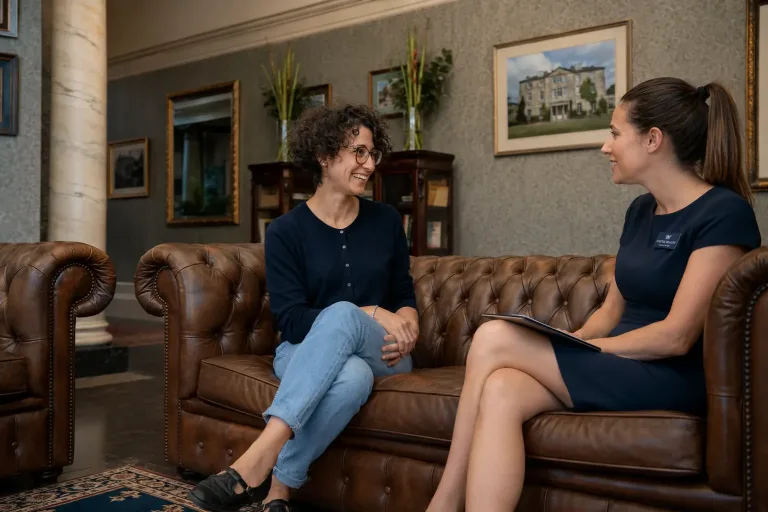
Castle Health offers outpatient anxiety treatment across several locations in Europe. As well as the UK, we have clinics in Sweden, Finland, Ireland, and the Netherlands.
Online therapy lets you access support from home through video or phone sessions with a trained therapist. This can suit people who need flexible care, live far from an anxiety treatment centre, or feel more comfortable starting treatment remotely.
We are here to listen, guide and help you every step of the way. Call us today and together we can find a solution that suits you.
Our admissions process is confidential and designed to suit and support you and your circumstances. Find out more about the Admissions process.
From the UK: 0131 287 4071
International: +44 (131) 287 4071
CBT is one of the most well-evidenced treatments for anxiety disorders. It works by helping you identify the thoughts and behaviours keeping anxiety going and practise responding differently. Most people benefit from a combination of therapy, lifestyle changes, and where needed, medication.
Choosing a therapist with experience in private anxiety treatment matters. At Castle Health, all therapy is delivered by trained professionals working within a psychiatrist-led team, so clinical oversight is part of your care from the start.
Some mild anxiety can improve on its own. But ongoing or severe anxiety generally does not get better without support. Without treatment, symptoms can persist or get worse over time, and the patterns that keep anxiety going tend to become more fixed. Getting help sooner rather than later makes treatment more straightforward.