

Page last updated
Monday 29th Jun 2026

Page written by
Victoria McCann, Communications Director
Beat addiction
Help for prescription drug addiction
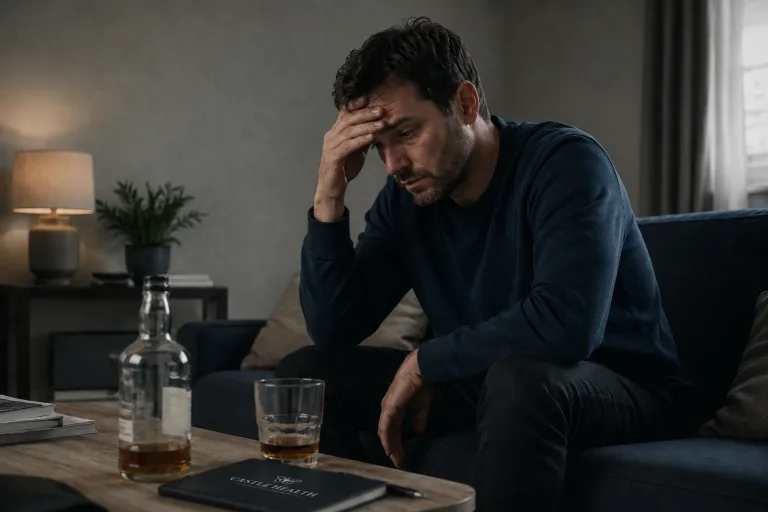
The prescription on the kitchen counter has your name on it. A doctor wrote it. A pharmacist filled it. You took it the way you were told to, for the reason you were told to. Prescription drug addiction begins with medication that was appropriately prescribed and worked as it should have. And somewhere between then and now, the relationship has changed.
At Castle Health, we provide medically supervised detox and ongoing therapeutic care at our residential clinics in Scotland and Ireland. We also offer online and in-person support across the UK and Europe.
Never hesitate to reach out to our team to ask whatever questions you may have.

Get the support you need for prescription drug addiction
Castle Health offers a full pathway of care for prescription drug addiction, from initial assessment through detox, therapy and aftercare.
What is prescription drug addiction?
Prescription drug addiction is the loss of control over how a medicine is taken, even when continuing to take it is causing harm. It can develop with opioids prescribed for pain, benzodiazepines prescribed for anxiety or sleep, and stimulants prescribed for ADHD. It can also develop when the medicine is taken exactly as a doctor instructed.
There is an important distinction, though – physical dependence is the body adapting to a medicine, so that stopping it causes withdrawal. This can happen to anyone on long-term treatment and is not, on its own, addiction. Addiction involves:
- A loss of control
- Continued use despite harm, and
- A psychological pull toward the medicine that goes beyond what the original prescription was meant to treat.
Prescription drug addiction is recognised across European healthcare as a distinct and growing clinical concern – The European Union Drugs Agency (EUDA), for example, now tracks prescription medicines alongside illicit drugs. It does this because dependence on prescribed medicines is now part of the wider picture of addiction in Europe.
How does prescription drug addiction develop?
The brain adjusts efficiently to what is happening around it. When a medicine arrives regularly, the brain treats it as part of the new normal and adjusts its own chemistry to compensate. Over weeks and months, the dose that once helped starts to feel like baseline, and the original symptom returns.
A larger dose helps again, until it doesn’t.
This is how tolerance develops, and it is one of the earliest signs that addiction to medication may be developing.
Benzodiazepines, for example, act on specific parts of the brain (called GABAA receptors) that normally help to reduce activity in the nervous system. With long-term use, those receptors adapt. The medicine becomes less effective, and the brain becomes less able to ‘dampen’ its own activity without it.
Repeated use of an opioid, on the other hand, alters both the brain’s reward system and its stress system. Reward circuits become less responsive over time. Stress circuits become more reactive. This is part of why opioid withdrawal brings low mood and intense cravings.
Which prescription medications carry the highest risk of addiction?
Opioids
- Prescribed for moderate to severe pain.
- Names include codeine, tramadol, morphine, oxycodone and fentanyl.
- Effective in the short term, but carry a known risk of dependence and addiction with longer use.
- Reports suggest opioid-related deaths in Europe most often involve more than one substance, particularly alcohol or benzodiazepines.
Benzodiazepines and sedatives
- Prescribed for anxiety, panic, insomnia and sometimes seizures.
- Names include diazepam, lorazepam, alprazolam and zopiclone.
- Regular use beyond a few weeks can lead to dependence, which is why current guidance recommends short courses where possible.
- Overdoses involving benzodiazepines cannot be reversed with naloxone (the medicine used in opioid overdoses) and may require hospital treatment.
Stimulants
- Prescribed for ADHD and narcolepsy.
- Names include methylphenidate, dexamfetamine and lisdexamfetamine.
- Misuse most often involves taking higher doses than prescribed, taking them more frequently, or using them without a prescription.
- Long-term misuse carries cardiovascular risk and can lead to dependence.
Am I addicted to prescription medication? Signs to look for
Most people who develop a problem with prescription medication do not recognise it as addiction at first. The signs tend to look reasonable when taken one at a time. Together, however, they tell a different story:
- Taking more than prescribed, even occasionally. “Just one extra tonight” becoming a regular event.
- Feeling anxious as a prescription runs low. Counting tablets. Calculating dates.
- Hiding use from your GP, partner or family.
- Using the medicine for reasons it was not prescribed for, such as managing low mood or feelings of stress.
- Seeing more than one doctor to obtain the same medication, sometimes called doctor shopping.
- Trying to stop and finding you cannot, or finding that stopping causes symptoms that drive you back.
- A growing sense of secrecy or shame around the medicine.
If several of these feel familiar, a confidential conversation with a clinician is a reasonable next step. It does not commit you to treatment, here or anywhere else.
How does prescription drug addiction affect everyday life?
The effects tend to be slow and cumulative:
- Work begins to feel harder
- Relationships become strained without an obvious reason
- Sleep changes shape
- Mood flattens, or sharpens
- Things that used to feel manageable start to feel out of reach
People often describe a slow narrowing of their lives. Plans get cancelled because the medicine is needed at a certain time, and concentration begins to suffer. Confidence drops with it. There is often a growing sense that the medicine, which started as a solution, has become the thing the day is organised around.
None of this is a character flaw. It is what happens when a substance with biological effects starts to shape the patterns of a life.
Can you get addicted to prescription medication if it was prescribed to you?
Addiction to medication can develop even when a tablet is taken exactly as prescribed, for exactly the condition it was prescribed for.
The medicines most often involved (opioids, benzodiazepines and stimulants) all carry a known risk of dependence with long-term use. That risk is part of why prescribing guidelines have changed in recent years. The UK’s National Institute for Health and Care Excellence (NICE) now recommends regular review for anyone taking these medicines long-term.
Locations designed to support your recovery
Castle Health treats prescription drug addiction across our specialist residential and outpatient settings in Scotland and Ireland. Each clinic offers medically supervised detox alongside the wider therapeutic programme.






What to expect from prescription drug addiction treatment with Castle Health
Treatment for prescription drug addiction usually has two stages.
- The first is detox, where the medicine is reduced and stopped under medical supervision.
- The second is therapeutic support, where the patterns of thought, emotion and behaviour around the medicine are worked through with a clinician.
For some medicines, detox is medically essential. NICE guidance clearly state that opioids, benzodiazepines, gabapentinoids and Z-drugs (a group of sleep medicines including zopiclone) should not be stopped abruptly except in rare clinical emergencies. Stopping benzodiazepines suddenly can cause withdrawal seizures, which is one of the main reasons reduction needs medical supervision.
For benzodiazepines in particular, NICE recommends a slow, stepwise reduction in dose, with smaller decrements as the dose gets lower. This is one of the main reasons prescription drugs detox works best in a setting with clinical supervision.
After detox, therapeutic support usually includes Cognitive Behavioural Therapy (CBT) and group therapy. It also addresses the original condition the medicine was prescribed for. Where someone began taking opioids for chronic pain, pain still needs a plan. Where someone began taking benzodiazepines for anxiety, anxiety still needs a plan. Treatment that does not address the original condition tends not to last.
What happens when you first get in touch
The first contact is a conversation, not a commitment. One of our admissions clinicians will listen to where you are, talk through what kind of support might suit you, and answer any questions you have. The call is confidential. You do not need to have decided anything before you call, and you don’t even have to be sure that prescription drug addiction treatment is right for you.
What to expect from the admissions process
If you decide to proceed, an admissions assessment helps us understand the medicines involved, the doses and timelines, any other health conditions, and what support is available to you at home. From there, we build a plan that fits your wants as well as needs. You can read more about prescription drugs addiction treatment and the wider drugs addiction treatment pathway at Castle Health.
RECOVERY HUB
Learn more about prescription drug addiction


Help someone today
If someone you know needs help with prescription drug addiction
Prescription drug addiction doesn’t look like the typical addiction stories that we understand. The medicine has a prescription label on it. A doctor wrote it. That can make it harder to know whether what you are noticing is a problem, and harder to know what to do next.
Worry and a sense of helplessness are common. Neither means you are reading the situation wrong. Prescription drug addiction affects the whole family. The support that helps long-term recovery often includes support for the people closest to the person taking the medicine.
How to raise the conversation
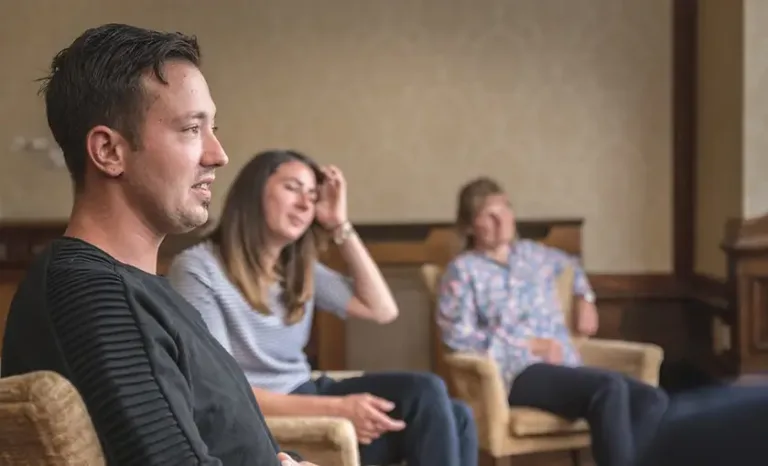
The most useful thing you can do is also one of the hardest. Stay close and stay honest about what you have noticed. Avoid making the conversation about blame.
- Name what you have observed, not what you have concluded. “I have noticed the prescription seems to run out earlier each month” lands differently from “you are addicted”.
- Avoid ultimatums in the first conversation. The conversation often has to happen more than once.
- Ask, do not tell. What feels manageable. What does not. What would help.
- Be specific about support. Offering to come to a GP appointment, or to make an enquiry call together, often lowers the barrier.
Living alongside someone with prescription drug addiction is difficult. Your own support matters and is not a distraction from theirs.
Family therapy, couples therapy and interventions
Family therapy and couples therapy are part of the wider Castle Health programme, and people often find them more useful than they expected. Where a conversation has stalled, a structured intervention with a clinician can help to move things forward. The team can talk through whether either fits your situation.
Success Stories
We’ve helped many people turn their lives around
Get help today
Take the first step in your recovery journey
We are here to listen, guide and help you every step of the way. Call us today and together we can find a solution that suits you.
Our admissions process is confidential and designed to suit and support you and your circumstances. Find out more about the Admissions process.
Telephone
From the UK: 0131 287 4071
International: +44 (131) 287 4071
care to the highest standards
Committed to quality care
Frequently asked questions about prescription drugs
Is it possible to become addicted to a medication even if I only take the prescribed dose?
Yes. Long-term use of opioids, benzodiazepines and some other medicines can lead to physical dependence, and in some cases addiction. This can happen even when the dose is unchanged and the medicine is taken as instructed. This is one of the reasons NICE guidance now recommends regular review for anyone on these medicines over a sustained period.
What is the difference between physical dependence and addiction to prescription drugs?
Physical dependence is the body adapting to a medicine, which can cause withdrawal symptoms when the medicine is stopped. It can happen to anyone on long-term treatment and is not the same as addiction. Addiction involves loss of control over how the medicine is taken, continued use despite harm, and a psychological pull toward the medicine. People can be physically dependent without being addicted, and the two are often confused.
Will my doctor know if I have been misusing prescription medication?
Possibly, depending on what they have been able to see and what you choose to tell them. GPs can review prescription patterns, including early requests and dose escalations, but they cannot always see medicines obtained from other sources. Honesty with your prescriber is usually the most useful starting point, and the conversation is confidential within the limits of normal medical practice.
Can you overdose on prescription medication?
Yes, particularly when prescription medicines are combined with alcohol or other substances. EUDA data shows that most fatal overdoses in Europe involve more than one substance. Combinations of opioids, benzodiazepines and alcohol carry particular risk, because together they slow breathing. Around 7,500 drug-induced deaths were provisionally recorded across Europe in 2023, with combination use a recurring factor in fatal cases.
Does prescription drug addiction affect certain people more than others?
Risk factors include the length and dose of treatment, a personal or family history of dependence on any substance, co-occurring mental health conditions, and the specific medicine prescribed. None of these factors makes addiction inevitable, and none is a reason to avoid medicine that is needed. They are reasons to keep prescriptions under regular review.