


Page last updated
Monday 28th Sep 2026

Page written on 11th August 2026 by
Victoria McCann, Communications Director
There’s still a lot of stigma around drug addiction, and many misconceptions about what it looks like. Some people might imagine a person with a bleeding nose and bloodshot eyes, or with track marks on their arms from injecting.
But the signs of addiction are often more subtle, and being able to spot the signs allows individuals and those closest to them to get the help needed.
While it’s never too late to seek support – the earlier you identify there’s a problem, the sooner you can begin the road to recovery.
Common types of drug addiction
The signs of drug addiction look different from one substance to another. Stimulants don’t look like opioids, and prescription drug misuse can hide behind legitimate use for months. The tiles below link to more detail on each substance.

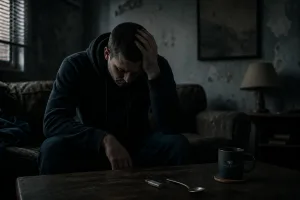



Understanding the signs of drug addiction
What is drug addiction?
Drug addiction is a medical condition where the use of a substance becomes hard to stop, even when it’s causing harm. The NHS describes it as ‘a patterned use of a drug in which the user consumes the substance in amounts or with methods which are harmful to themselves or others’.
Using a drug, depending on it, and being addicted to it are three different things.
Use can become dependence, and dependence can become addiction, but whether this happens and how long it takes differs from person to person. Some drugs affect the body first, others the mind. Most affect both eventually, so drug addiction treatment involves physical detox and different forms of therapy.
Drugs work on the brain’s reward system. They flood it with dopamine; the chemical the brain uses to mark things as worth repeating. With repeated use, the brain becomes less responsive to its own dopamine and starts to rely on the drug to feel normal.
At the same time, the brain’s stress systems become more reactive, so ordinary situations start to feel harder than before. This is called the disease model of addiction. It’s what turns choice into compulsion, and is why drug addiction is treated as a medical condition rather than a failure of will.
Why the signs of drug addiction can be hard to spot
Early drug use often looks like everything else happening in someone’s life: stress, sleep changes, low mood, irritability. None of these on their own point unambiguously at drug use.
What separates a habit from a drug addiction is the question of control:
- A habit can be stopped when the person decides to stop.
- A drug addiction is not so easily overcome.
The person may try to cut down and find they can’t, or stop and find they restart without quite knowing how. That gap between intention and action is one of the clearest internal signs of drug addiction, but one of the hardest to see from outside. Most family members notice patterns long before they know what they’re seeing.
Physical signs of drug addiction
Physical signs build slowly; sleep, appetite and energy are usually the first to be affected. Other physical changes can be more visible, and include eyes that look bloodshot, watery, or unusually dilated, and skin that has lost its colour.
The American provider Northwestern Medicine lists additional signs, including:
- Tremors
- Slurred speech
- Slowed walk
- Runny nose
- Unexplained smells on breath or clothing
- Visible needle marks may appear when drugs are injected
Withdrawal is the most physically obvious sign of drug addiction, but it only appears when someone tries to stop or can’t access the drug. Nausea, sweating, shaking and aches that don’t correspond to illness are common, and severity varies hugely by substance.
Medical support is needed during withdrawal from opioids, alcohol and benzodiazepines, as detoxing from these can be dangerous.
Our drug detox page covers what supervised detox involves.
Psychological signs of drug addiction
The mind tends to show signs before the body does, and these impacts can last longer:
- Mood is usually where this starts. Someone may feel flat for days after use, or unusually anxious in the gap between uses.
- Irritability builds slowly.
- Sleep becomes disrupted, and all energy and focus is spent on getting the next dose and using
Cravings are at the core of drug addiction. A craving is a pull that keeps returning, sometimes triggered by a place, a person, a recurring argument, or even a piece of music. People who’ve stopped using often describe cravings as one of the hardest things to manage in early recovery.
There’s also a heavy overlap between addiction and mental health. According to Public Health England, 70% of people in community drug treatment have a co-occurring mental health condition.
The European Union Drugs Agency notes that across Europe, co-occurring substance use and psychiatric disorders are now considered the rule rather than the exception.
Behavioural and social signs of drug addiction
Families and partners usually notice these first, often before the person using has noticed anything themselves. It’s rarely dramatic; friends slowly drop away, we begin to lose track of where time goes and, after a while, it becomes clear that what they are telling you isn’t what is really going on.
Withdrawal from existing relationships can look like a personality change or like they are upset with you about something. In some cases, they disappear for days, and give up the activities and people that used to mean a lot to them.
For the person using, these social signs can be the hardest to see. Each change has its own reasonable-sounding explanation. The patterns become clear from outside long before they do from within.
How signs of drug addiction differ by substance
The signs of addiction can differ a lot depending on the substance.
Stimulants (cocaine, crack cocaine, amphetamines, methamphetamine) drive visible energy followed by visible crashes. The American Addiction Centers describe cocaine signs that include dilated pupils, a fast heart rate, and restlessness. At higher doses, irritability and paranoia are common. Methamphetamine has more severe markers. These include dental damage, skin sores from picking, significant weight loss, and the involuntary movements known as tweaking.
Opioids (heroin, fentanyl, prescription painkillers like oxycodone and tramadol) show a very different picture. Australia’s Better Health Channel describes heroin’s immediate effects as a rush of pleasure followed by drowsiness, shallow breathing, narrowed pupils and lower body temperature. Long-term opioid use shows as social withdrawal, with visible markers like pinpoint pupils only appearing when the drug is in someone’s system.
Cannabis signs can be easier to miss. The American CDC’s cannabis use disorder page lists ongoing use despite problems at home or work, failed attempts to stop, cravings, and giving up activities to keep using. Daily use, particularly to manage sleep or anxiety, is often where dependence builds.
Prescription drug addiction is the hardest to spot from outside, because the medication is legitimate. Signs include running out before refills are due, asking multiple GPs for prescriptions, anxiety when supply runs low, and using above prescribed doses.
Alcohol remains the most common adult addiction in the UK. The Irish HSE lists dependence signs including being unable to function without alcohol, finding it hard to control how much someone drinks, drinking despite the impact on them or others, and craving alcohol between drinks.
Early warning signs vs signs of advanced drug addiction
Drug addiction has a trajectory, and the signs change with it. Early signs are subtle: slightly more frequent use, the first time someone uses alone, the first cancellation of something they would have shown up to a year ago, the first stash kept hidden. Each is easy to rationalise on its own. Early-stage drug addiction is often the most missed for that reason.
Advanced signs are harder to hide; physical health declines visibly, work and relationships feel the strain, and money problems move from awkward to serious. Patterns that were once intermittent become consistent.
Earlier recognition tends to lead to easier treatment, because earlier drug addiction is generally less entrenched. But people recover at every stage, and it’s never too late to get help.
“In 33 years of sobriety and over 30 years as a clinician, I’ve learned that recovery isn’t about giving something up. It’s about putting down the substance, grieving, then creating a meaningful life that you no longer want to escape.”

What you’ve noticed
If you recognise drug addiction in yourself
If you recognise some of these signs in your own use, the most useful thing you can do is take it seriously. Reading about drug addiction and seeing yourself in it is uncomfortable. It’s also a sign of self-awareness, which is very important for recovery.
A few honest questions can help:
- Are you using more often than you planned to?
- Has cutting back failed?
- When you think about your week, how much of it is shaped, even quietly, by drug use?

What getting help for drug addiction can look like
Recognising the signs is a necessary starting point for recovery. From there, what comes next is yours to shape.
At Castle Health, our drug addiction treatment combines medically managed inpatient care with evidence-based therapies. We offer inpatient treatment at Castle Craig in Scotland, Smarmore Castle in Ireland, and Beroendekliniken in Sweden, with outpatient and online treatment across the UK and wiider Europe.
Admission to our inpatient centres can happen within 48 hours. We provide long-term aftercare, because recovery doesn’t end with the initial treatment phase.
If you’d like to know how admissions works, that page covers it in detail.
our locations
Locations designed to support your drug addiction recovery





HELP FOR FAMILIES & FRIENDS
How to help someone with a drug addiction
If you’ve noticed signs of drug addiction in someone in your life, that is the first step to helping them.
What help looks like depends on the stage they’re at. Conversations work better when they’re calm and focused on a specific behaviour rather than their use overall. Wait until the person isn’t intoxicated, and try not to go into the conversation hoping for any particular response.
Make sure you’re not enabling them. Shielding someone from the consequences of their use can make it easier for them to keep using, even when you mean well. People closest to someone with a drug addiction are often under immense pressure of their own. Family and couples therapy are part of our therapy options, and our admissions team can talk through what drug addiction help looks like for your situation.
You can’t decide for someone else when they will be ready. You can keep the door open and be clear about what you need. Look after yourself in the meantime.

Success Stories
We’ve helped many people turn their lives around
Get help today
Take the first step in your recovery journey
We are here to listen, guide and help you every step of the way. Call us today and together we can find a solution that suits you.
Our admissions process is confidential and designed to suit and support you and your circumstances. Find out more about the Admissions process.
Telephone
From the UK: 0131 287 4071
International: +44 (131) 287 4071
Care to the highest standards
Committed to quality care
Drug addiction: frequently asked questions
What are the signs of drug addiction in the workplace?
Workplace signs can include lateness or unexplained absences, performance drops without a workload increase, constant toilet breaks, pupils that look unusual on return, and behaviour towards colleagues changing. Most of these can have other explanations, so they need to be weighed as a pattern rather than individually.
What are the signs of drug addiction relapse?
Relapse tends to start mentally and emotionally well before any use begins. Early warning signs include skipping recovery meetings, drifting back into old social circles, increasing secrecy, romanticising past use, and ‘just one time’ thinking. Sleep often changes, and they become more irritable. Long-term aftercare has been closely linked to preventing relapse because the people best placed to help are those who have been involved throughout recovery.
What are the signs of drug withdrawal?
Withdrawal signs depend heavily on the drug. Opioid withdrawal looks flu-like, with sweating, runny nose, aching muscles, nausea, restlessness and disturbed sleep. Alcohol withdrawal causes tremors and anxiety, and in severe cases life-threatening seizures. Stimulant withdrawal is often more psychological, with deep fatigue, mood swings, anxiety and intense cravings. Benzodiazepine withdrawal can be particularly serious if stopped suddenly, and should always be medically managed.
Where can I find support for families affected by drug addiction in the UK?
Adfam (adfam.org.uk) is the UK’s leading charity for families affected by someone else’s drug or alcohol use, and runs online support and a directory of local groups. DrugFAM (drugfam.co.uk) offers phone, email and one-to-one support, including a helpline open every day of the year. NHS Inform and your GP can also signpost to local services. Family and couples therapy at Castle Health is available as part of our wider drug addiction treatment, and our admissions team can talk through what’s available where you are.