



Page last updated
Monday 9th Nov 2026
Page written on 9th November 2026 by
George Kelly, Campaign & Content Coordinator
Private psychiatry gives you the attention of a specialist doctor and a clear plan for your mental health. At Castle Health, our psychiatrists see adults with a range of conditions, at clinics across Europe or online.
A psychiatrist looks for what’s behind symptoms such as low mood or constant worry, then plans treatment with you. That can include medicine, talking therapy, or both. The aim is to ease your symptoms and help you return to what you want to do. We offer different levels of care, and you can move between them if your needs change.
Whether your mental health is your main concern or part of addiction treatment, there’s no need to wait for a crisis. Your first step is a conversation with our team. It’s fine if you’re not sure what you need, and nothing is agreed until you’re ready.

Psychiatric disorders we can help with
Many people have more than one of these conditions, so it’s common to be unsure which one applies. Our team can talk it through with you, and if you don’t have a diagnosis, a psychiatrist can assess you.





What are psychiatric disorders?
The World Health Organization (WHO) describes a psychiatric disorder as a ‘disturbance in how a person thinks, behaves, and manages emotions’. It is also commonly called a mental disorder or mental health condition.
There are many types of psychiatric disorders, and as many as one in three people worldwide can live with one. Anyone can be affected, and no single thing causes it. Most psychiatric disorders come from a mix of what’s happening inside a person and in the world around them.
Psychiatrists train as medical doctors first, then specialise in mental health. Because they’re doctors, they can prescribe medicine as well as recommend other treatments.
Psychiatrists are qualified to diagnose and treat a wide range of conditions. In some cases, a person may need a psychiatrist who specialises in a particular condition, such as a bipolar psychiatrist or a psychiatrist for anxiety.

What do local private psychiatry services look like in practice?
A local private psychiatry service is a clinic near you where you see a psychiatrist without staying overnight. That’s often called outpatient treatment.
Your psychiatrist looks after the medical side and the overall plan. A therapist works with you on talking therapy.
You don’t need to prepare for your first appointment. It’s common to feel nervous or unsure where to start, but your psychiatrist will lead the conversation.
At your first psychiatry appointment, you will usually have an assessment. You’ll talk through what brought you to see a psychiatrist and how your mental health is affecting your life. Your psychiatrist will then explain what they think is going on and what could help. You can ask questions at any point.

Together you will agree what you want to be different. That might be sleeping through the night or getting through a working day without dread. Those goals guide your treatment plan and give you both something to check progress against.
Treatment can include talking therapy, medicine, or both. At Castle Health, you can see a psychiatrist as well as therapists who specialise in different forms of therapy.
After that first appointment, you will meet your psychiatrist again regularly to see how you’re getting on. This will include how any medicine is working, and whether the plan needs to change. Therapy sessions run as a structured series, and progress comes in small steps. Some weeks will feel better than others, and that’s completely normal.
How long treatment lasts depends on you and your condition. Setbacks happen, and your psychiatrist will adjust the plan when they do.
In outpatient treatment, you will live at home with appointments planned around work and family.
How psychiatric help works at Castle Health
At your assessment, your psychiatrist will look at your mental and physical health together, because the two affect each other. From that, they can reach a diagnosis and build a plan around you.
A diagnosis gives a name to what you’re living with and points to treatments known to help. Many people feel relieved to have a diagnosis, but it can take time to sink in.
If medicine could help, your psychiatrist will decide which is right for you. Some medicines take time to work, and some cause side effects. If you are prescribed medicine, your psychiatrist will review whether it’s working properly and can adjust or stop it if needed. Never stop a medicine alone, because some need to be reduced slowly.
At Castle Health, we use therapies backed by research. Cognitive Behavioural Therapy (CBT) looks at how your thoughts and actions affect how you feel. Dialectical Behaviour Therapy (DBT) builds skills for managing strong emotions and steadying your mood. Eye Movement Desensitisation and Reprocessing (EMDR) is used for trauma and PTSD.
A psychiatrist brings years of medical training to your care. It helps them tell apart conditions that can look alike, so the treatment fits what’s going on.
Who is private psychiatry for?
Private psychiatry is for adults who want expert help with their mental health, on its own or as part of their addiction treatment or recovery.
- People often get in touch when low mood or anxiety starts to get in the way of their daily life or wellbeing, or when work or a relationship comes under strain.
- If you’ve spent years finding focus and routine harder than other people seem to, you might be looking for an ADHD and autism psychiatrist. Dr Malcolm Scobbie, one of our psychiatrists, has trained in autism assessment and has a special interest in adult ADHD.
Without treatment, a mental health condition can affect your work and your relationships. According to the WHO, as many as one in three people with a mental health condition in the WHO European Region don’t get the treatment they need.
You don’t need a diagnosis to begin treatment. Your psychiatrist will work out what’s going on at your first appointment. If you’re not sure whether you need professional support, a first conversation with our team doesn’t commit you to anything.
"I believe mental health challenges emerge from a combination of factors, including biology, genetics, upbringing, psychological tendencies, and environment.”

What to expect when you reach out for psychiatric support
When you contact us, you’ll speak confidentially to someone from our team. You can ask anything, including what a psychiatrist does and whether this is right for you. We’ll ask what’s been happening and what you’d like help with, then we work out the right kind of care together.
Outpatient care suits people who want to keep their routine while they get support. Residential care may be necessary when people need more support, or when mental health and substance use need treating together. Both are available with Castle Health, so you can move between them if your needs change.
If you decide to go ahead, we’ll explain how admissions work. You can take as long as you need to decide.
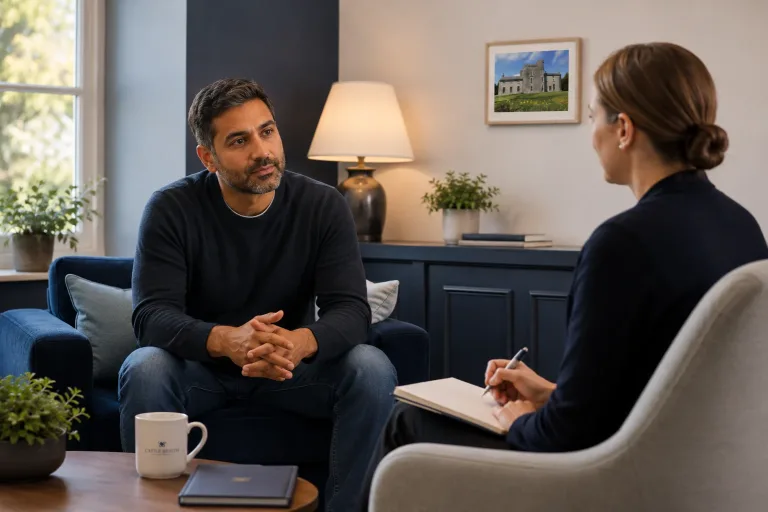
Once treatment starts, getting better is a process, and your care continues after you feel well. Many conditions come and go, so you plan together for early warning signs. If symptoms return, your psychiatrist can review what has changed and adjust your medicine or therapy.
If you’re in immediate danger or thinking about harming yourself, contact your local emergency services straight away.
No referral needed – how to get started
On the National Health Service (NHS) in the UK, your GP may refer you to a psychiatrist or a local mental health team first. But you don’t need a referral from another doctor to begin treatment at Castle Health. You can contact us directly, and one of our team will talk you through how to begin.
When you’re ready, you can book a private mental health assessment with one of our psychiatrists. Expect questions about your health, how things are affecting your sleep and your work, and any medicines you take. You decide whether to go ahead with treatment after your assessment. Call us or leave your details, and we’ll get back to you to arrange an appointment for psychiatrist support.
Resource Hub
Discover more about addiction and mental health




Supporting someone in your life with their mental health
It can be hard to watch someone in your life go through a rough time with their mental health. You might not know what to say, or worry about saying the wrong thing.
Start with what you’ve noticed and say it kindly. Then ask how they’re doing and listen carefully. Try not to push for a decision on the spot, and if they don’t want to talk, you can ask again another day.
Castle Health supports families too. At Castle Craig, family therapy is part of residential treatment and close family members can join online workshops. You can read more about our family support programme.
If you call us on behalf of someone in your life, we’ll talk through what’s available and how to help them take a first step.

When mental health and substance use are connected
A 2016 analysis by the European Union Drugs Agency (EUDA) says about half of people with a substance use disorder also have a mental health condition. Having both at once is called dual diagnosis. The analysis also says experts broadly agree both conditions should be treated at the same time, by a team that works together.
Psychiatry is a part of addiction treatment at Castle Health, and our teams understand how addiction and mental health conditions are connected.
In residential treatment at Castle Craig and Smarmore Castle, we treat substance dependency and mental health as part of the same treatment plan.
People who have finished rehab can also see our psychiatrists for ongoing support.
How can psychiatry help with eating disorders?
Eating disorders are mental health conditions that affect how a person eats and how they think about food and their body.
A psychiatrist can check the physical effects of an eating disorder and plan treatment with you.
The National Institute for Health and Care Excellence (NICE) writes treatment guidelines for health services in England. It says people with an eating disorder should be assessed and start treatment as early as possible. It recommends specialist services in the community. Inpatient or day-patient care is recommended for people whose physical health is severely affected, and who can’t be treated as outpatients.
If you’re worried about your own eating, or about someone in your life, get in touch.






Our psychiatric team
Our UK psychiatrists are registered doctors, and you can check any of them on the UK medical register. A consultant psychiatrist is the most senior grade of specialist doctor.
The letters after a name show how a doctor has trained. MBBS and MBChB are medical degrees, and MRCPsych means they’re a member of the Royal College of Psychiatrists.

Dr. Malcolm Scobbie
Read more about Dr. Malcolm Scobbie“I’m a psychiatrist specialising in addictions and adult ADHD, with broad experience across general adult, rehabilitation, and child and adolescent services in the UK and New Zealand. I bring calm, trauma-informed care grounded in a strong therapeutic relationship.

Dr. Peter McCann
Read more about Dr. Peter McCann“I take a holistic, biological and cognitive-behavioural approach to mental health. I believe mental health challenges emerge from a combination of factors, including biology, genetics, upbringing, psychological tendencies, and environment.”