
United Kingdom
Castle Craig, Scotland
Find out more


Leaving residential rehab marks the end of one chapter and the start of something new. You’ve built a foundation in treatment, and now, it’s time to begin putting that into practice with an addiction recovery coach.
Many people find that the first few weeks at home can feel like a particularly challenging stage of recovery. A recovery coach helps you manage this transition and works alongside you as you build new routines and apply what you’ve learned to everyday life.

Addiction recovery coaches are trained professionals who help you maintain your recovery after rehab treatment.
Unlike outpatient therapy, which often explores emotions and past experiences, addiction recovery coaching focuses on action and planning for the future.
It’s important to say that the role of a recovery coach is to complement therapy, medical care, and 12 Step fellowships as part of wider ongoing support.
A recovery coach can seem similar to a sponsor or sober companion, but their role is different:

A sponsor is another member of a 12 Step fellowship, such as Alcoholics Anonymous or Narcotics Anonymous. It’s a peer relationship built on shared experiences, and it often grows naturally through meetings.
Sponsors have already worked through the steps and give voluntary support to you as you do the same. They offer peer-based understanding and guidance from someone who has worked through the same programme.
A sober companion provides hands-on help during times when staying on track feels challenging or when you may be at risk. This support is often short-term and focused on the early weeks after treatment or during major life changes.
They provide real-time, in-person support when needed. That might mean staying with you at home, travelling with you, or going with you to events where alcohol, drugs, or other influences are present.
The role of a recovery coach is to look at the bigger picture. They help you set goals, build routines, and work through practical challenges like returning to work or managing finances and relationships.
Coaches are trained professionals who work as part of a wider treatment service. Their level of support shifts as your needs change over time. Coaching helps bridge the gap between more intensive treatment and living on your own in recovery.
“I contacted Castle Health [formerly CATCH Recovery] seeking guidance and options to support a relative who was having a difficult time both with addiction and other mental health concerns. The team were incredibly kind and informed, they took the time to go through all the options with me and helped us plan how to approach the matter. Fortunately the person has now been receiving care from [Castle] for several months and is doing really well. A big thank you to the wonderful team. I would highly recommend this service.”

Recovery coaching during and after residential rehab helps you adjust one day at a time after a period of inpatient addiction treatment.
Some of the key benefits include:
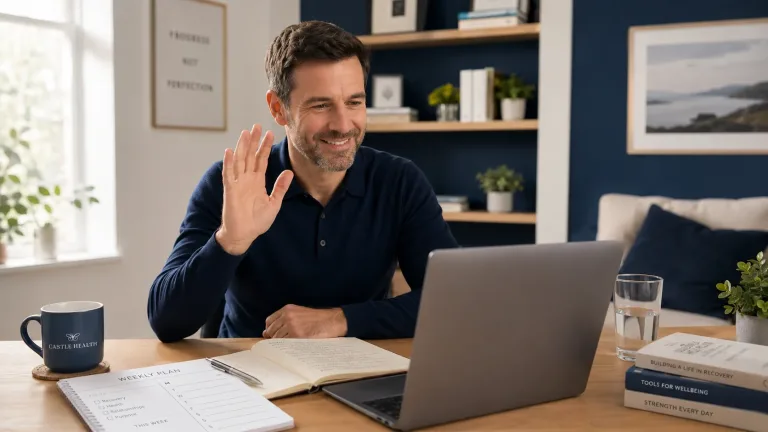
Regular contact can make it easier to stay on track. A recovery coach provides that consistency, whether you meet online or in person.
Regular sessions give you a space to review how things are going and adjust your approach when needed.
Part of recovery coaching for addiction involves learning to spot situations that might challenge your progress.
You’ll develop relapse prevention strategies for handling these moments, so you’re not caught off guard when they come up.
These strategies, as well as the skills you learned in rehab, need to work in everyday life.
Your coach helps you put these into practise while you’re managing work, relationships, and everything else that comes with being home.
Recovery coaches at Castle Health are certified professionals who work with you during your treatment and after you finish. Your coach will support you through multiple sessions a week (or when you need them), to guide you and to act as a mirror to help you work through situations in your everyday life.
If you have been in residential treatment, a recovery coach will be assigned to you in the final two weeks before you leave, and they will be on hand to provide support and help you manage your recovery by working through any issues you may have. They will also support you and be a cheerleader for you when everything begins to click into place.
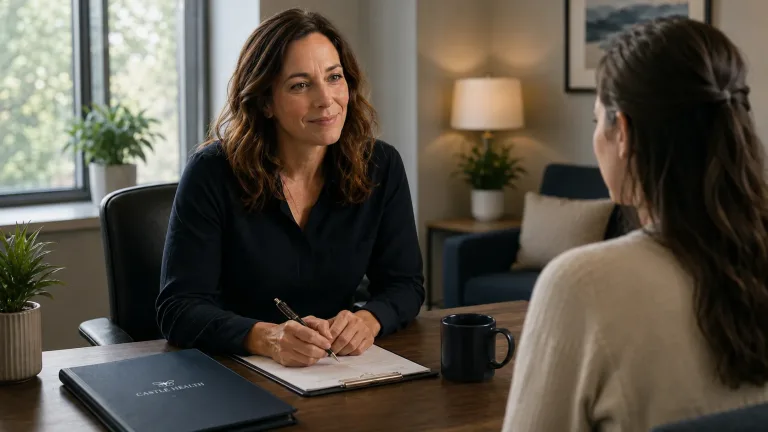
Before your coach can be assigned, a Continuing Care co-ordinator will speak with you about the help you need at home. They will also discuss the aspects of recovery you think will be the most difficult.
After talking with you, they’ll match you with a coach whose experience and approach fit your situation.
Your coach will then meet with you on a regular basis so you can look at your routines and spot things that could affect your progress.
You will typically begin therapy with Castle Health as an outpatient and have a few sessions with your recovery coach per week. As your recovery progresses, you can choose to have fewer sessions – particularly if you feel more confident and ready to tackle challenges alone. Our team is flexible and here to provide as much support as you need.
Our recovery coaches will also keep in touch with your wider care team, making sure the support you get fits with therapy, medical care, or any other treatment you’re receiving.

Get personalised support from a certified recovery coach at Castle Health.
Recovery coaching for addiction can benefit many different people, including:
Individual costs vary based on how long the sessions are and what format they’re in. The number of sessions required varies depending on individual needs.
Our admissions team can give personalised guidance when discussing your options with you. They’ll also explain what’s available in your area and help you decide whether online addiction recovery coaching or in-person sessions might be most suitable.

Some coaches are part of a treatment provider, which means they stay in touch with your care team. Others work on their own and liaise with professionals you already see.
The team can advise which option might suit you best, or you can research coaches yourself to see who feels like the right fit.
Before choosing a recovery coach, you can ask them how often you’ll meet and how they will handle situations if your life gets difficult.
It’s important to feel comfortable and understood when speaking with your coach. A good coach listens without judging and helps you identify practical next steps when you’re facing difficulties.

We are here to listen, guide and help you every step of the way. Call us today and together we can find a solution that suits you.
Our admissions process is confidential and designed to suit and support you and your circumstances. Find out more about the Admissions process.
From the UK: 0131 287 4071
International: +44 (131) 287 4071
A sober coach typically focuses on supporting abstinence. Recovery coaching covers more than that. You practise dealing with situations that might challenge your progress, and the practical side of life outside rehab.
People don’t always choose recovery coaching for addiction as an option, but many find it helpful after rehab. It gives support with staying accountable and dealing with situations that could lead to relapse.
Yes. Recovery coaches can help families support their loved ones after rehab. They can help family members understand what recovery looks like day-to-day and how to communicate without adding pressure.
Look into qualified rehab providers to find addiction recovery coaches in the UK. You can ask your local treatment centre or contact Castle Health to find drug, alcohol, gambling, or porn recovery coaches near you or online.
Contact treatment providers to check their availability and whether they offer online sessions. Online addiction recovery coaching is more flexible if attending in person is difficult.
You’ll need some professional training to become a qualified addiction recovery coach. Courses for this service will teach you how to support someone with addiction, and you’ll also learn different coaching methods.
National approval makes sure that the guidance given by recovery coaches in the UK and Europe is safe and effective.