


Page last updated
Wednesday 26th Aug 2026

Page written on 29th June 2026 by
Victoria McCann, Communications Director

Clinically reviewed on 26th August 2026 by
Ralf Warren, General Practitioner
Heroin addiction is a treatable medical condition. But, the reasons it’s so hard to stop are biological – willpower isn’t what’s being tested.
Heroin acts on the brain’s reward system, and dependence forms quickly. The same biology that makes heroin so hard to stop alone is what good treatment is built to work with – medically supervised through withdrawal, then through the longer work of rebuilding what addiction has taken.
The help for heroin addiction that’s available today is far more effective and less stigmatised than it was even a decade ago and, done effectively, recovery from heroin addiction is not the exception it used to be.

Support for heroin addiction
Getting help for heroin addiction


“I contacted Castle Health [formerly CATCH Recovery] seeking guidance and options to support a relative who was having a difficult time both with addiction and other mental health concerns. The team were incredibly kind and informed, they took the time to go through all the options with me and helped us plan how to approach the matter. Fortunately the person has now been receiving care from [Castle] for several months and is doing really well. A big thank you to the wonderful team. I would highly recommend this service.”

What is heroin?
Whilst heroin has been around in different forms since the late 1800s, the heroin in the UK and European supply today is very different from the heroin of even a few years ago.
Heroin is an opioid made from morphine, a substance derived from the opium poppy. It is sold as a white or brown powder, or as a sticky dark substance known as black tar. People inject, smoke or snort it, and the effects begin within seconds to minutes depending on the route.
The effects are intense and the comedown is hard. That combination is part of why it’s so easy to start using again.
There is no single picture of heroin addiction. The people who develop it come from every kind of background and reach it by many different routes.

How heroin has changed
The European drug supply has shifted, and it has become more dangerous. A joint statement from UK people services published by Change Grow Live describes the arrival of nitazenes in the UK in the last two years.
Nitazenes are a new class of synthetic opioids. Some analogues are far more potent than heroin. They have been found mixed into the heroin supply, and have been linked to accidental overdoses and deaths in several parts of the UK.
The picture across wider Europe tells the same story. The European Union Drugs Agency (EUDA) reported more than 7,500 overdose deaths across the EU in 2023, with opioids involved in over two-thirds. In Estonia, for example, drug-induced deaths rose from 82 in 2022 to 119 in 2023, and nitazenes were implicated in over half of them.
How heroin addiction develops
Heroin works by binding to ‘mu-opioid receptors’ in the brain. These are parts of the brain that normally respond to the body’s own pain-regulating chemicals. When heroin activates them, it triggers a large release of dopamine in the brain’s reward centre. That powerful reinforcement results in the brain learning to seek that experience again.
Repeated heroin use also changes the brain’s physical structure on top of its chemistry. These changes affect the regions involved in reward and decision-making, and they are not easily reversed even after someone stops using.
Regular heroin use also results in tolerance and physical dependence. Tolerance occurs when more of the drug is needed to produce the same effect, physical dependence means the body has adapted to heroin being present, and withdrawal sets in when it is not.
Why heroin addiction is so hard to stop alone
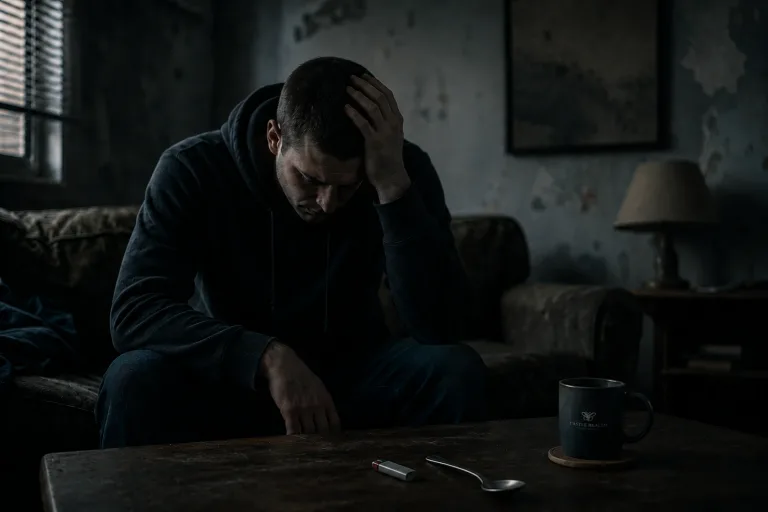
The brain changes that make heroin reinforcing are the same changes that make heroin addiction difficult to stop without support. Long-term heroin use creates long-term imbalances in the brain’s neuronal and hormonal systems. The reward system is no longer responding the way it once did, and the body has come to rely on the drug to feel close to normal.
This means the brain is asking for something it has come to need to function, and that need has a physical basis. Medically-assisted help for heroin addiction support exists to address this.
Find out more about what heroin detox and withdrawal involves.
Why do people become addicted to heroin?
Some people are more at risk of opioid addiction than others:
Family history
A family history of addiction raises personal risk. This works through genetics and through the environment. Growing up around heavy substance use shapes how someone learns to handle stress or difficulty later on.
Trauma
Serious trauma, especially in childhood, raises someone’s risk of opioid addiction. Heroin offers immediate relief and dampens distress. For someone whose nervous system has been carrying too much for too long, that effect can be what makes use stick.
Mental health
Depression, anxiety and PTSD are common alongside heroin addiction. Heroin gives short-term relief from symptoms that are hard to bear. Over time, that relief becomes the reason use carries on.
The prescription pathway
Some people who develop heroin addiction in the UK and Ireland started with prescribed painkillers, usually for chronic pain or recovery after surgery. When those prescriptions ended or became harder to access, heroin filled the gap. This route is more common than the cultural image suggests.
Other factors
Heavy stress with little support, or already using alcohol or other drugs, can both raise the risk. Neither makes addiction certain, and neither means recovery is out of reach.
Signs of heroin addiction
The signs of heroin addiction look different depending on whether someone is using, has just used, or is between uses. They also look different from the outside than they do from the inside.

Physical signs of heroin use
- Constricted, very small pupils
- Drowsiness or appearing to drift in and out of consciousness
- Slow or shallow breathing
- Sudden weight loss
- Nausea and being sick
- Skin infections or wounds at injection sites
Behavioural signs of heroin addiction
The pattern of addiction takes shape over weeks and months, and tends to look like:
- Heroin taking up more time and mental energy than it used to
- Use continuing despite mounting harm to relationships and finances
- Trying to stop and finding that the body will not let you
- Increasing secrecy, or withdrawing from people you used to be close to
Emotional signs of heroin addiction
- Strong cravings that feel impossible to ignore
- A constant low-level fear of withdrawal
- Shame about use that makes reaching for help feel harder
- A growing sense that life without heroin feels impossible
Why is it hard to recognise heroin addiction?
People often arrive at treatment long after the people closest to them suspected something was wrong, and long after they themselves first wondered.

The cultural image gets in the way
Heroin in film and news coverage tends to be shown in one narrow form: visibly unwell, visibly unable to function. The reality is broader. Many people using heroin hold jobs, raise children, and present as well as anyone around them. If your life doesn’t look like the cultural image, it can be easy to tell yourself the problem isn’t really a problem.
Denial protects something
Denial is not the same as lying. It’s the mind’s way of protecting someone from a truth that, if accepted, would feel unmanageable. Many people in recovery describe knowing and not knowing at the same time. That isn’t weakness; it’s a recognised feature of how addiction works.
Reaching out isn't always available
Not everyone reaches a point where treatment feels possible, and recovery has to be something a person can move toward of their own accord. Readiness takes time to arrive. For some it comes quickly; for others it takes years, and for some it doesn’t come at all.
If someone you know may be using heroin
When someone in your life is living with heroin addiction, the signs you can see from the outside will not look like the signs they are experiencing on the inside. You might not see the cravings, the fear of withdrawal, or the energy spent managing use. What you will see are changes in their appearance, sleep, finances, or in how present they feel in a conversation.
You may have been carrying suspicion for a long time, unsure whether to raise it. There is no perfect way to start that conversation. What helps most is that the person knows you’re not approaching it with judgement, and that you’re in this with them.
our locations
Locations designed to support your recovery
Castle Craig in Scotland and Smarmore Castle in Ireland both offer dedicated inpatient treatment for heroin addiction, with medically supervised detox, structured therapy programmes and long-term aftercare in residential settings designed to support recovery.






The health risks of heroin use
The health risks of heroin use fall into two groups: the immediate risks of any single use, and the longer-term risks of regular use over time.
The most serious immediate risk is overdose. Opioid overdose slows breathing to the point where it can stop. The EUDA recorded more than 7,500 overdose deaths across the EU in 2023, with opioids involved in over two-thirds.
The risk has since risen where nitazenes have entered the heroin supply. This is because a normal dose of contaminated heroin can be much stronger than expected. Using heroin with other substances that slow breathing, especially alcohol or benzodiazepines, greatly raises overdose risk. Most opioid overdose deaths involve more than one substance.
People who inject heroin face additional risks. Firstly, this is because wounds and skin infections at injection sites are common. Secondly, blood-borne viruses spread through shared equipment: data summarised by the Health Technology Assessment and the ‘Shooting Up 2019’ report shows around half of people who inject drugs in England are living with hepatitis C, and roughly 1 in 100 are living with hepatitis B and/or HIV.
The wider global picture has been clear for some time. A 2017 study found that drug-use disorders caused around 144,000 annual deaths worldwide. Opioid use disorder was behind 60% of those.
Long-term use takes a toll on the heart, lungs and digestive system. Depression, anxiety and the effects of trauma are often present alongside heroin addiction, and they’re part of why the addiction has held.

Heroin withdrawal symptoms
Heroin withdrawal symptoms usually begin 6 to 12 hours after the last dose. According to NIDA, symptoms peak between 24 and 48 hours and subside after about a week. Sleep, mood and cravings can take longer to settle, sometimes weeks or months. This is sometimes called post-acute withdrawal (PAWS).
There is also an important safety point on the other side of withdrawal: tolerance drops quickly during a period without heroin. Returning to a previous dose afterwards carries a high overdose risk. This is one of the strongest reasons to stay in contact with treatment services after detox.

Withdrawal can include:
- Restlessness, agitation and trouble sleeping
- Muscle and bone pain
- Stomach cramps and diarrhoea
- Sweating and chills, often with goosebumps (the original “cold turkey”)
- Strong cravings
Withdrawal is unpleasant. For someone using heroin heavily, going through withdrawal alone is risky, especially if other substances or health conditions are involved. Medical detox exists for this reason. Our heroin detox and withdrawal page sets out what medically supervised withdrawal involves and how it is managed.
Getting help for heroin addiction
Seeking help for heroin addiction usually unfolds in three phases:
- The first is medically supervised withdrawal, where the body is given the time and the medical support to adjust to being without heroin.
- The second is structured treatment. Therapy and medical care work together to address the patterns and underlying issues that have kept the addiction in place.
- The third is long-term aftercare. This is where sustainable recovery takes shape.
Not everyone follows the abstinence route. Many people in the UK and Ireland receive long-term opioid substitution therapy, where a prescribed medicine like methadone or buprenorphine stabilises the body’s opioid needs without the risks of street heroin.
This is provided through NHS (UK) and HSE (Ireland) community drug services, and is often the safer option for someone with longer or more entrenched use. It can be a route into eventual abstinence, or a long-term treatment in its own right.
At Castle Health, heroin addiction treatment brings these three phases together as one continuous process rather than three separate stages. Inpatient addiction treatment is one of the options, and our approach explains what happens when you first get in touch.
Relapse is part of many recovery journeys, and it is not a failure of the person. Engagement with treatment over time produces better outcomes than any single intervention. That’s why aftercare and relapse prevention are built into treatment from the start, not added on afterwards.
How to take a first step
If you are ready to take a first step, there are several routes:
- Speak to your GP. Your GP can refer you to NHS community drug and alcohol services, which provide opioid substitution, harm reduction and structured treatment. Wait times vary by area.
- Contact a community drug service directly. In most UK regions you can self-refer to a local service without a GP referral. Change Grow Live, We Are With You and Turning Point all run free services across multiple regions. In Ireland, the HSE Drug and Alcohol Helpline (1800 459 459) is the starting point.
- Consider private inpatient treatment. Private rehab is a faster route to medically supervised detox and structured therapy in a residential setting. At Castle Health we can admit patients to our inpatient treatment centres within 48 hours.
If you’d like to talk through what help for heroin addiction could look like in your situation, our team is available for a confidential conversation whenever you’re ready.
If someone you know is using heroin
If you’re looking for help for heroin addiction on behalf of someone in your life, what you’re carrying is heavy. Fear, guilt about what you might have missed, exhaustion from years of trying to help: none of it means you’ve done something wrong.
How to talk to someone about heroin use
You can’t make someone ready for treatment, and accepting that is one of the hardest parts. There’s no perfect script for the conversation either. What helps is choosing a moment when they aren’t under the influence and aren’t in withdrawal, and focusing on what you’ve noticed and how it’s felt to you.
‘I’ statements tend to land better than accusations. Avoid arguing about whether or not they have an addiction; that argument rarely goes anywhere. If they seem open, offer something concrete, like looking into options together, or going with them to a first appointment.
Avoid enabling
Enabling is what care can become when it takes practical forms that make it easier for the addiction to continue. Covering for someone at work, or paying off debts caused by use, are examples, even when the intent is to protect.
Find support for yourself
Living alongside someone’s heroin addiction is exhausting. You don’t have to carry it on your own. Nar-Anon and Families Anonymous run free meetings, in person and online, for family and friends of people with substance addictions. Many find them a source of practical guidance and relief from isolation.
At Castle Health, family and couples therapy is part of how we work, because heroin addiction affects the whole family and the whole family deserves support.
Naloxone
If you’re worried about overdose, naloxone is an emergency medicine that can reverse an opioid overdose if given in time. It’s available to family and friends across much of the UK and Europe, through community pharmacies, drug services or your Doctor. Because some current heroin is mixed with nitazenes, more than one dose of naloxone may be needed. Call emergency services first, give naloxone, and put the person in the recovery position while you wait for the ambulance.
Success Stories
We’ve helped many people turn their lives around
Get help today
Take the first step in your recovery journey
We are here to listen, guide and help you every step of the way. Call us today and together we can find a solution that suits you.
Our admissions process is confidential and designed to suit and support you and your circumstances. Find out more about the Admissions process.
Telephone
From the UK: 0131 287 4071
International: +44 (131) 287 4071
Care to the highest standards
Committed to quality care
Frequently asked questions about heroin addiction
Is heroin addiction more common in any particular age group?
The most recent UK Government data for 2023–24 records around 138,000 adults in treatment for opiate addiction in England. The single largest age group is 40 to 44 years old, with more males than females impacted.
Can you become addicted to heroin after using it once?
You don’t develop physical dependence after a single use, but the brain’s reward learning begins straight away. Heroin’s effect on the reward system means the brain quickly learns to want the experience again.
What is the difference between heroin addiction and dependence on prescription opioids?
The mechanism is the same. Both act on mu-opioid receptors in the brain, and both can produce tolerance and physical dependence. The differences are in dose, purity and route. People who became addicted to prescribed painkillers often arrive at heroin later, when those prescriptions end or get harder to access. Treatment for both follows similar principles.
Is naloxone available to families of people using heroin?
Yes. Naloxone is an emergency medication that reverses an opioid overdose, and it’s available to family and friends of people who use heroin. Access varies by country, but in much of the UK you can get it free from a pharmacy, drug service or GP. Worth keeping accessible if heroin is part of someone’s life.
How is heroin addiction treated in the UK versus the rest of Europe?
The medical foundations are similar across Europe: medically supervised withdrawal, structured therapy and long-term aftercare. What varies is access and the visibility of harm reduction. Castle Health operates clinics in Scotland and Ireland and works with people from across Europe.
Does Castle Health treat people who have been using heroin for many years?
Yes. Length of use isn’t a barrier to starting treatment, though it can affect what the treatment plan needs to address. Many of the people we work with have been using heroin for a decade or more. Treatment is adapted to the person rather than the timeline.
Does therapy help with heroin addiction?
Yes. Therapy is a core part of heroin addiction treatment, alongside medically supervised withdrawal and long-term aftercare. Cognitive behavioural therapy (CBT) addresses the patterns of thinking that drive use. Trauma-informed therapy works with the earlier experiences that often sit underneath addiction. The evidence for therapy combined with medical treatment is stronger than the evidence for either on its own.
What if I'm pregnant and using heroin?
Speak to a doctor or to a community drug and alcohol service as soon as you can. Do not try to stop suddenly without medical advice, because abrupt withdrawal during pregnancy can be risky for the baby. Specialist support is available through the NHS in the UK and the HSE in Ireland, and most community drug services have pathways for pregnant women.