


Page last updated
Friday 11th Sep 2026

Page written on 21st August 2026 by
Victoria McCann, Communications Director

Clinically reviewed on 11th September 2026 by
Dr Seamus Macauley, Addiction Therapist, Castle Health
People sometimes picture recovery as a tough week in detox followed by support group meetings, but sustainable progress means rebuilding every part of your life one piece at a time.
Addiction can affect your career and education, and take all enjoyment out of the things and people that are most important to you. Occupational therapy is helpful when addiction has made these aspects of everyday life harder to manage.
At Castle Health, occupational therapy is part of how we help with this rebuilding work. It’s delivered at Castle Craig in Scotland, Smarmore Castle in Ireland, and Beroendekliniken in Sweden, as well as through our outpatient services.

SERVICES
Get the support you need for addiction recovery





“I contacted Castle Health (formerly CATCH Recovery) seeking guidance and options to support a relative who was having a difficult time both with addiction and other mental health concerns. The team were incredibly kind and informed, they took the time to go through all the options with me and helped us plan how to approach the matter. Fortunately the person has now been receiving care from CATCH for several months and is doing really well. A big thank you to the wonderful team. I would highly recommend this service.”

What is occupational therapy?
Occupational therapy, often shortened to OT, is a clinical discipline that helps people rebuild the practical, daily functions that illness or addiction has disrupted. The Royal College of Occupational Therapists states that the goal is to help people ‘improve their ability to function as independently as possible’ so they can take part in the activities that matter to them.
Addiction tends to make the small – but important – things in life harder:
- Sleep is often affected first
- Then the energy and motivation needed to go to work or spend time with people who ask you how you’re doing.
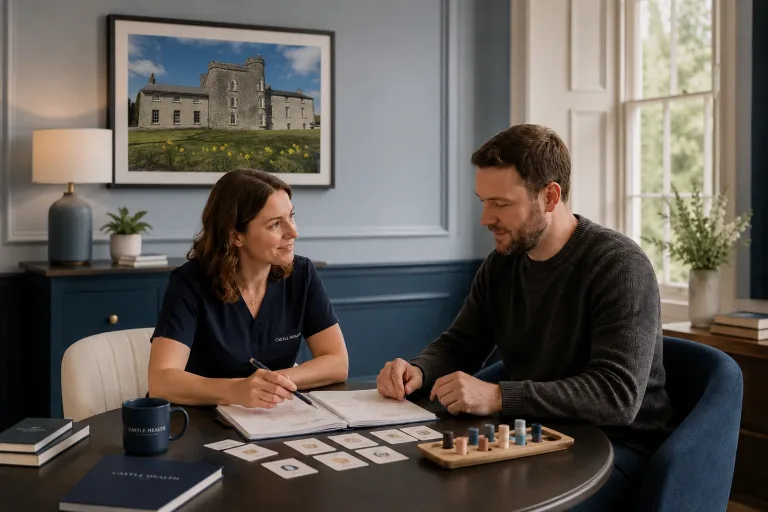
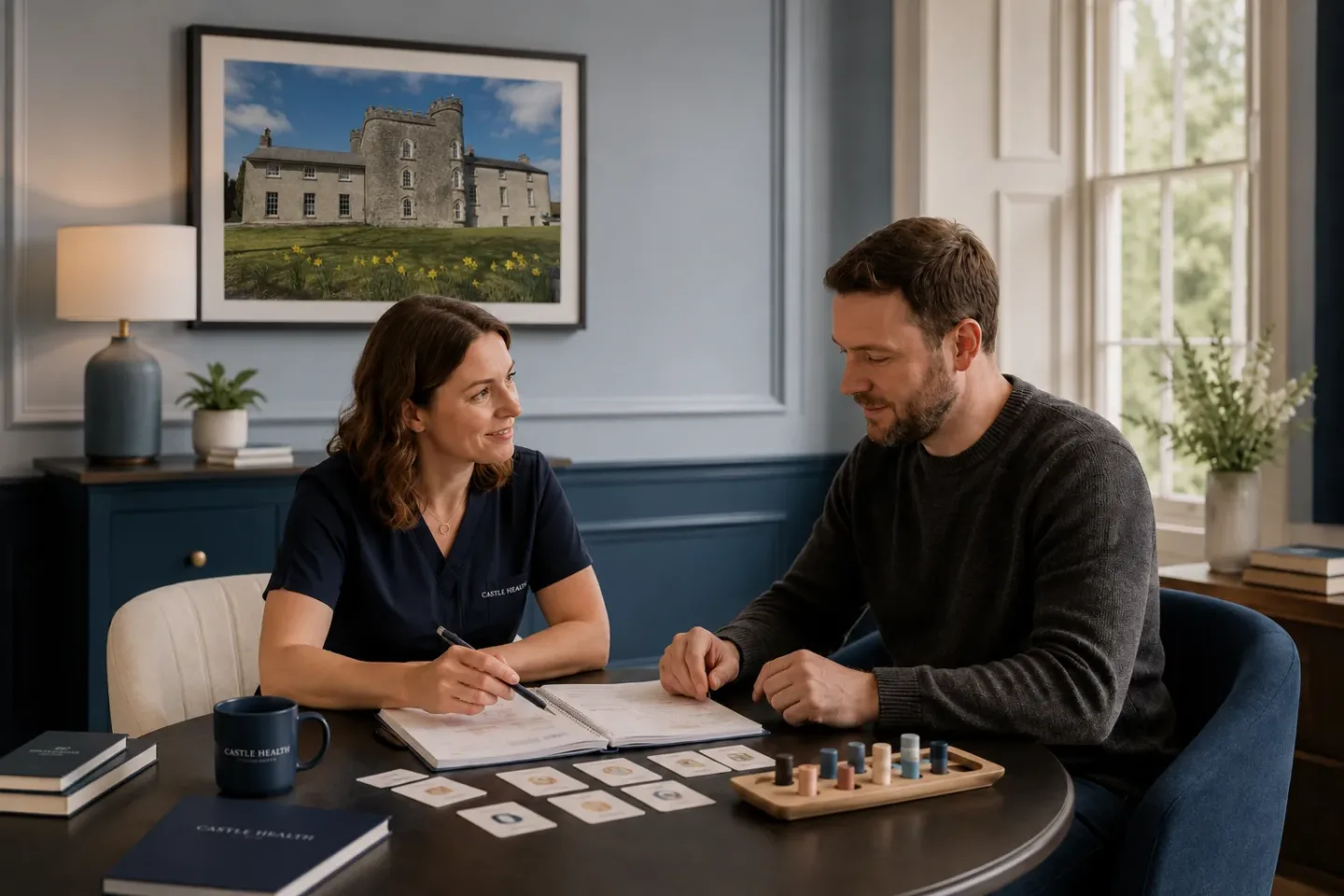
An occupational therapist works alongside you to identify which parts of daily life have been worn down and help you put them back. You set the goals, and your therapist helps you find a workable route towards them.
Occupational therapy in mental health and addiction settings has a particular focus on what you do day to day, rather than only how you feel about it. At Castle Health, OT is delivered in person at our residential centres and as part of our outpatient programmes.
How does occupational therapy support addiction recovery?
The longer addiction continues, the more it takes the place of the activities and relationships a person previously gave time to.
Occupational therapy has been described in the past as ‘more person-centred’ than many medical approaches to substance use. It focuses on the impact of addiction on the activities of daily living, and the restoration of pre-addiction roles, rather than on quitting the substance alone.
We don’t view occupational therapy for addiction as a separate track running alongside the rest of treatment; it helps bridge the gap between what you learn in detox and therapy, and ordinary day. Drug and alcohol occupational therapy shows you how to use what you’ve learned even when you’re tired, or back in a place that used to mean drinking.

Previous research found that those who took part in occupation-based programmes experienced fewer episodes of relapse and were more likely to disengage from activities associated with substance use. A separate 2023 review by the Canadian Agency for Drugs and Technologies in Health (CADTH) found that OT interventions may help reduce symptoms of depression and anxiety, which often co-occur with addiction.
Rebuilding routine and structure
Addiction often affects normal daily routines before anything more visible. Sleep, meal times, task management, and energy can all be impacted as addiction takes hold.
In OT, your therapist will look at what your day used to involve, and help you put structure back in place. That can mean fixed sleep and wake times, a workable plan for meals, scheduled time for rest or exercise, and protected space for things that just help you feel good.
These are small changes but they are fundamental to recovery.
Developing coping strategies and managing relapse triggers
Triggers are personal:
- For one person it’s a time of day
- For someone else it’s a place that used to mean drinking
Part of occupational therapy and substance use work is mapping out which triggers apply to you, and building a practical toolkit for handling them when they arrive.
That toolkit is usually small and specific. It might be a worked-out response to the next time someone offers a drink, or a short list of people you can call.
A 2021 scoping review in the Irish Journal of Occupational Therapy describes life-skills development as core to OT practice in addiction recovery, from managing stress to holding your ground in difficult conversations.
You can’t avoid every difficult moment. The point is to have a workable plan when one arrives.
Rebuilding roles, relationships and confidence
Addiction tends to narrow the roles a person occupies. By the time treatment begins, the parent or partner you used to be can feel a long way off.
Occupational therapy gives explicit space to rebuilding these roles. That can involve:
- Communication work
- Rehearsing difficult conversations
- Repairing routines with family members
- Thinking through which relationships are healthy to invest in and which are not.
The development of social and assertiveness skills is a recurring feature of effective OT programmes in addiction recovery.
Confidence tends to follow function. As the practical work of daily life becomes manageable again, the sense of being a competent person in your own life tends to return with it.
“Recovery happens when awareness meets acceptance. Therapy can help you move from reacting to responding, from feeling trapped to feeling choice again.”
our locations
Locations designed to support your recovery



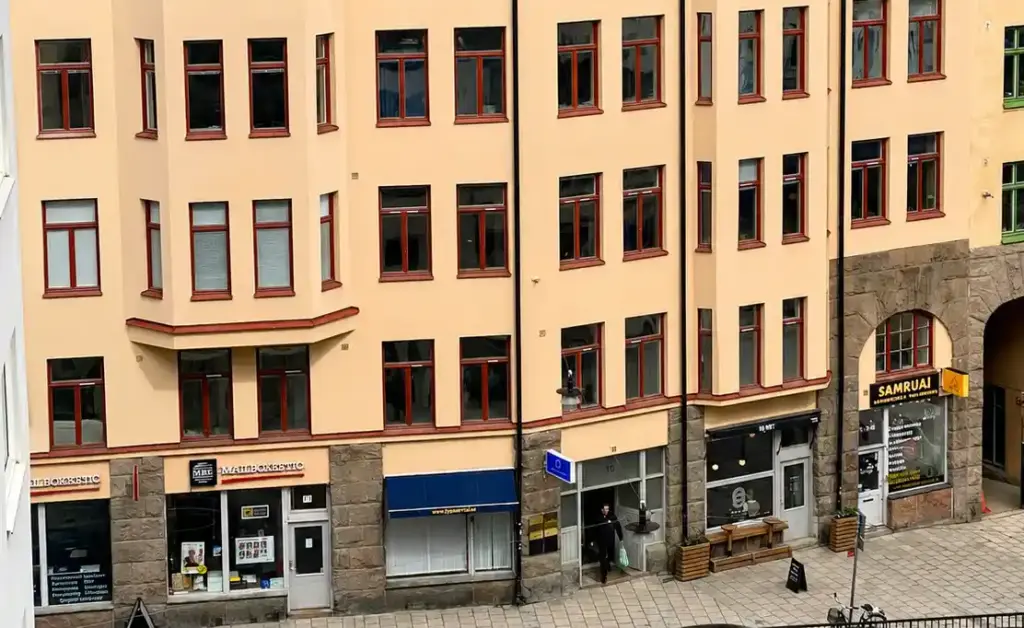


Returning to work after addiction: how occupational therapy helps
Work is one of the areas addiction reaches into most quickly, and one of the most consequential to rebuild. Sustained alcohol or drug use takes a toll on the clarity and energy that a working day requires. Just returning to work can feel out of reach when you first enter treatment.
Vocational support, including practical help with applications and rebuilding the skills that work requires, was a consistent feature of effective programmes.
Inpatient occupational therapy at Castle Health includes vocational work as a named part of the programme. Returning to work involves a sequence of small but fully-supported decisions.
Your therapist will help you think through what a return to work might look like, what your current capacity is, and what a realistic pace of reintegration would be.

What to expect from occupational therapy sessions at Castle Health
Sessions begin with a one-to-one assessment with your occupational therapist. The aim is to understand:
- What your day looks like now
- What you would like it to look like, and
- Where the practical sticking points are.
From that, you and your therapist agree on a small set of short and longer-term goals to work on together.
Sessions then might include planning around a return to work, or rehearsing how you’ll handle a specific situation. Occupational therapy treatment at Castle Health is delivered within our residential programmes and as part of outpatient care. The work can continue at the appropriate intensity as you move through treatment.
The sessions are practical, and you should leave each one with something that makes the next day a little more workable.
Occupational therapy as part of a wider treatment plan
Occupational therapy is one part of a wider treatment plan. At Castle Health, OT sits alongside medical detox, Cognitive Behavioural Therapy (CBT), group therapy, 12 Step facilitation work and aftercare.
All play a role in making sustainable progress towards your goals.
Some people begin with inpatient treatment in a residential treatment setting, where occupational therapy is delivered as part of a structured weekly programme. Others access OT through outpatient treatment, alongside other types of therapy that fit the rest of their life. You and your therapist agree the plan together.
Supporting someone in your life who needs occupational therapy
If you’re trying to support someone in your life whose work and relationships have been affected by addiction, you already know how difficult it is to know what to suggest. Occupational therapy can be useful because it gives you something practical to work on together. That can be easier than another conversation about how they’re feeling.
That uncertainty is normal. Family and couples therapy is part of what we offer at Castle Health, and our admissions team can talk you through what is involved in a confidential conversation. If you’re not sure how to start a conversation with someone in your life, we can also help you think through how to approach it, including whether a structured intervention might be appropriate.
The first step is the hardest one to take. But we’ll be here when you’re ready.
Success Stories
We’ve helped many people turn their lives around
Care to the highest standards
Committed to quality care
Get help today
Take the first step in your recovery journey
We are here to listen, guide and help you every step of the way. Call us today and together we can find a solution that suits you.
Our admissions process is confidential and designed to suit and support you and your circumstances. Find out more about the Admissions process.
Telephone
From the UK: 0131 287 4071
International: +44 (131) 287 4071
Occupational therapy: frequently asked questions
Is occupational therapy available as part of inpatient rehab?
Yes. At Castle Craig in Scotland, Smarmore Castle in Ireland, and Beroendeklinik in Sweden, occupational therapy is built into the residential treatment programme. You’ll have individual sessions and, where relevant, group work as part of your structured week.
How is occupational therapy different from CBT or counselling?
Cognitive Behavioural Therapy (CBT) and counselling work mostly with how you think and feel. Occupational therapy works with what you do, day to day. The two complement each other; CBT helps you understand the patterns and OT helps you build the practical routines that change them.
How long does occupational therapy take to make a difference?
It varies. Some people notice small shifts within the first two weeks of structured work, particularly around sleep and routine. Bigger changes take months, and often keep developing well after the formal sessions end.
Can occupational therapy help with behavioural addictions as well as substance use?
Occupational therapy looks at how an addictive behaviour gets in the way of daily life. That’s true for substance use and behavioural addictions like gambling or gaming.
So, whilst the principles are the same – understand which parts of daily functioning have been displaced, and rebuild them deliberately – the evidence base is thinner
Do I need a referral to access occupational therapy at Castle Health?
No referral is needed to enquire. You can contact our team directly to discuss whether occupational therapy as part of our wider programme is right for you, and our admissions team will guide you through what happens next.