



Page last updated
Thursday 24th Sep 2026

Page written on 11th August 2026 by
Victoria McCann, Communications Director
Clinically reviewed on 24th September 2026 by
Ladan Nekoohesh, Specialty Doctor in Addiction Medicine, PhD in Molecular Medicine
Cannabis occupies an unusual position. It’s widely used, increasingly normalised, and still capable of producing a dependency that is difficult to recognise from the inside.
That difficulty is not incidental. When something has become part of the texture of daily life, the question of whether it remains a choice can be hard to see clearly. Signs of dependency may become more apparent when someone tries to cut down or stop, and finds it harder than expected.
Cannabis addiction is a recognised clinical condition. It has consequences for health, relationships, and quality of life. But it also responds well to treatment.

Get the support you need for cannabis addiction


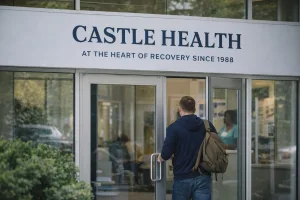
Cannabis addiction — understanding your treatment options
Is cannabis addictive?
Cannabis can cause physical dependence and withdrawal, although this is typically different from withdrawal from alcohol or opioids. Dependence doesn’t require a severe physical withdrawal crisis to be real.
According to the European Union Drugs Agency (EUDA) 2025 European Drug Report, around 1.5% of EU adults use cannabis daily or almost daily; approximately 4.3 million people. They are the group most likely to experience challenges associated with their use. Cannabis is now responsible for more than one third of all drug treatment admissions across Europe.
Cannabis use disorder is a recognised clinical condition. It’s listed in both the International Classification of Diseases (ICD-11) and the Diagnostic and Statistical Manual of Mental Disorders (DSM-5).
Both clinically describe it as patterns of use that cause difficulty in someone’s life, which tends to emerge with regular, long-term use of high-potency products. This is especially true when use starts young.
Preventing cannabis addiction means understanding where your use sits on that spectrum.
How cannabis dependence develops
For most people, it builds slowly. This makes it easy to miss. You need more cannabis to get the same effect, you might feel restless or irritable without it, or reach for it more automatically than you used to.
Long-term THC use changes the brain physically. Research shows it reduces the number of receptors THC binds to, and the ones that remain respond less. The brain adapts to sustained exposure to a psychoactive substance.
Once tolerance develops, a previously enjoyable thing starts to feel like a necessary one. By that point, the brain has adapted to regular use, and cutting back is harder.
Why high-potency cannabis changes the risk
Not all cannabis carries the same risk. According to the same EUDA report, the average THC content of cannabis resin in Europe is now 23%, almost double what it was in 2013.
Herbal cannabis averages around 11% THC. Higher-potency products are likely to carry higher dependence risk than the cannabis of previous generations.
Signs of cannabis addiction: what to look for
There’s no clean line, but there are patterns that point to a problem.
- Finding it difficult to cut down or stop, even when you’ve decided to try
- Using cannabis first thing in the morning, or at times when you previously wouldn’t have
- Feeling irritable or unable to sleep without it
- Continuing to use even though it’s affecting your mood, or causing problems in relationships or at work
- Spending a lot of the day either using cannabis or recovering from it
- Craving it strongly when you haven’t used recently
Signs of cannabis addiction in someone in your life
If you’re concerned about someone’s cannabis use rather than your own, the signs can be harder to see. This is partly because cannabis is so socially normal that it’s easy to feel like you’re overreacting.
The clearest signs are:
- Heavier daily use
- Unpredictable mood
- Pulling away from people who used to matter.
Heavy daily use is different to recreational use; it usually means using cannabis first thing in the morning, at inappropriate times like at work or school, and never going a day without it.
Cannabis, mental health and the chicken-and-egg problem
People with anxiety or depression often use cannabis to manage their symptoms. But cannabis can also worsen the symptoms of mental health conditions, and may contribute to them developing in the first place. These things can both be true at once, and it’s difficult to know which came first.
The evidence on the psychosis risk is somewhat clearer. A 2024 study from King’s College London found that frequent cannabis use raises the risk of psychosis on its own, separate from any genetic predisposition. In both samples studied, this risk was highest among daily users of high-potency cannabis, defined as 10% THC content or above.
The link was present even after researchers stripped out genetic risk for schizophrenia. Cannabis itself appears to raise psychosis risk, rather than simply exposing a predisposition someone was already born with.
Cannabis withdrawal can produce symptoms that look a lot like a mental health condition. A low mood that lifts after a few weeks may be related to withdrawal rather than depression. However, you may be experiencing symptoms of both. A clinical assessment can help tell the difference.
Cannabis withdrawal: what happens when you stop
Stopping cannabis can be uncomfortable. It’s not dangerous in the way quitting alcohol can be, but the first week or two is hard. Cannabis withdrawal syndrome is now formally recognised in both the DSM-5 and ICD-11.
- Irritability or agitation
- Anxiety and restlessness
- Sleep difficulties, including problems falling asleep and vivid or disturbing dreams
- Decreased appetite
- Low mood
- Physical discomfort, including headaches and stomach pain
Symptoms usually begin within the first few days of stopping and tend to peak around days seven to ten, before gradually easing. The sleep disruption can sometimes linger longer than other symptoms.
If you’ve tried to stop and found it harder than you expected, withdrawal is the likely reason. For heavier or longer-standing use, a supervised cannabis detox makes the first week more manageable.
Cannabis addiction treatment: what helps
There’s no approved medication for cannabis addiction. The evidence supports talking therapies instead. CBT (Cognitive Behavioural Therapy) helps people change the thought patterns that keep their use going. Motivational interviewing works with people’s uncertainty so they can find their own reasons for recovery.
The EUDA confirms these are the most well-researched approaches for cannabis problems and are commonly offered across European treatment services.
At Castle Health, inpatient treatment provides a structured residential environment where you can step away from the contexts and routines that sustain daily use. Outpatient treatment allows people to continue working and living at home while accessing regular therapeutic support. Both are delivered across our network, including Castle Craig in Scotland, Smarmore Castle in Ireland, and Beroendekliniken in Sweden.
The period after primary treatment is when relapse risk is highest. Both include personalised, structured aftercare.
If you’re unsure what kind of support fits you, our admissions team can help you work that out. You can also read more about our cannabis addiction treatment or browse our wider drug addiction treatment offering.
"Addictive behaviours are not the problem itself, but a meaningful response to deeper pain, and that with the right support, those patterns can be understood, softened, and ultimately changed.”<br />







What to expect from cannabis addiction treatment with Castle Health
When you first get in touch, the conversation is about understanding your situation. Our admissions team will help you work out whether inpatient or outpatient treatment is right for you.
We start with a conversation, followed by a clinical assessment that covers your history with cannabis and any co-occurring mental health concerns. From there, we’ll talk through your options, including cost and what treatment involves.

Recovery hub
Read more about cannabis addiction



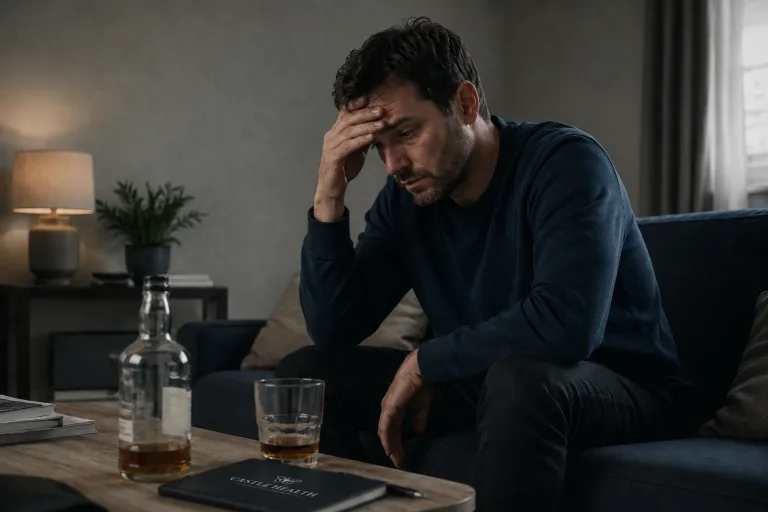
If someone you know needs help with cannabis addiction
Addiction affects everyone close to the person going through it.Watching someone close to you change because of cannabis is harder when the drug itself is so socially accepted.
When you do start the conversation, choose a calm moment, when they haven’t used.
- Cannabis comes with its own version of denial: they might respond with “everyone smokes” or “it’s just weed” rather than dismissing the conversation outright.
- Talk about what you’ve noticed and how it’s been affecting you.
- Don’t tell them what they should do, and don’t frame it as an intervention.
- A single honest exchange is usually better than a confrontation.
Enabling can look different with cannabis. Sharing a joint to keep the peace, or treating someone’s daily use as a personality trait rather than a behaviour they could change, are common patterns. Neither comes from a bad place. Stepping back from them is part of supporting someone effectively.
You don’t have to wait until things get worse to ask for advice. Most of the people who call us aren’t sure whether the situation warrants it yet. What we find helps immensely is simply a chance to talk it through and decide on the next step.
If you’re thinking about how to start a conversation, our team can offer guidance. We also offer family therapy as part of our treatment programmes.

Success Stories
We’ve helped many people turn their lives around
Care to the highest standard
Committed to quality care
Get help today
Take the first step in your recovery journey
We are here to listen, guide and help you every step of the way. Call us today and together we can find a solution that suits you.
Our admissions process is confidential and designed to suit and support you and your circumstances. Find out more about the Admissions process.
Telephone
From the UK: 0131 287 4071
International: +44 (131) 287 4071
Frequently asked questions about cannabis addiction
Can you get dependent on cannabis the first time you use it?
Dependence develops with sustained use over time. Risk increases with more frequent use, with high-potency products and an early start age adding to the risk.
Does CBD cause addiction in the same way as THC?
No. CBD and THC act differently in the brain. CBD has weak activity at the CB1 receptors involved in cannabis dependence, and isn’t intoxicating. Cannabis use disorder is associated specifically with THC.
Is cannabis addiction a recognised medical condition?
Yes. Cannabis use disorder is listed in both the ICD-11 and DSM-5. In practical terms: a GP can diagnose it. Treatment services can address it under a clinical code, and so some insurers are able to treat it as a medical condition. This depends on location and jurisdiction, please always check with your provider first.
Can cannabis addiction affect your sleep long-term, even after stopping?
Yes, for some people. Sleep disruption is a recognised symptom of cannabis withdrawal and can persist longer than other symptoms. If you’re still having sleep problems weeks or months after stopping, a GP or addiction specialist can help work out what’s driving it.
Is cannabis addiction treated differently from other drug dependencies?
Broadly, the same psychological therapies and group work apply. The main difference is that no medication is currently approved for cannabis addiction, so the work is primarily therapeutic. If you’ve been in treatment for another substance before, cannabis addiction treatment will feel familiar.