



Page last updated
Monday 7th Sep 2026

Page written by
Victoria McCann, Communications Director

Clinically reviewed by
Dr Seamus Macauley, Addiction Therapist, Castle Health
Benzodiazepine rehab is not like other forms of addiction treatment. Dependence develops quickly, often from a legitimate prescription for anxiety or insomnia. Benzodiazepines are one of the few substances where quitting too quickly can be dangerous. A safe taper can take weeks and even months, and requires careful medical support.
Effective treatment needs to address both the physical dependence and whatever made benzodiazepines feel necessary in the first place. Castle Health provides specialist care, with individually planned tapers, therapy, aftercare, and ongoing support.
At Castle Health, we’ve been treating benzodiazepine dependence since the 1980s. Our approach combines medically supervised tapering, evidence-based therapy, and treatment for the underlying conditions that drove the original prescription. If you’re trying to understand what benzodiazepine rehab actually looks like in practice, this page sets out everything you need to know.

Get the support you need for benzodiazepine dependence

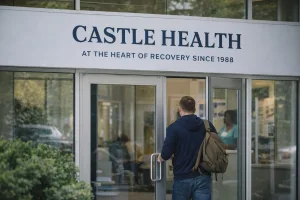

Benzodiazepine rehab — understanding your treatment options
Why benzodiazepine treatment needs a specialist approach
Benzodiazepines are not like most other drugs when it comes to withdrawal. Stopping suddenly, or reducing the dose too quickly, can trigger seizures and severe anxiety. Psychotic episodes are rare but can occur in cases of very high-dose use with abrupt cessation. A peer-reviewed study on benzodiazepine dependence found that even normal therapeutic doses can cause withdrawal symptoms lasting 10 to 14 days. The most serious effects, including seizures, occur in people stopping high doses or short-acting preparations.
Standard detox models are built around timelines that don’t suit benzodiazepines. According to NICE guidance on benzodiazepine withdrawal management, a safe taper from a dose of 40mg diazepam daily can take 30 to 60 weeks. For someone on 20mg daily, the estimate is 20 to 40 weeks. These are not timelines a generic residential programme can accommodate.
The number of people entering treatment for benzodiazepine problems in the UK is rising. According to UK government substance misuse treatment statistics 2024 to 2025, 4,161 new entrants cited benzodiazepines as a primary problem in 2024/25, up from 3,872 the previous year. A separate UK research study estimated that more than a quarter of a million people in the UK are likely taking dependency-forming hypnotic medication well beyond the recommended timeframes.
Standard ‘drug detox’ models can be built around timelines that don’t suit benzodiazepines. According to NICE guidance on benzodiazepine withdrawal management, doses should be reduced by 5 to 10% every one to two weeks for people with a longer history of use, with smaller reductions as the dose falls. That means a safe taper:
- From a dose of 40mg diazepam daily can take 30 to 60 weeks.
- For someone on 20mg daily, can be as long as 20 to 40 weeks.
These are not timelines that a generic residential programme can accommodate.
The number of people entering treatment for benzodiazepine dependency in the UK is rising:
- According to UK government substance misuse treatment statistics 2024 to 2025, 4,161 new entrants cited benzodiazepines as a primary problem in 2024/25, up from 3,872 the previous year.
- A separate UK research study estimated that more than a quarter of a million people in the UK are likely taking hypnotic medication well beyond the recommended timeframes.
Castle Health builds the treatment timeline around the patient, not around a fixed programme length. Every taper is planned individually by our clinical team, with dose reductions made according to tolerability and ongoing monitoring.
Medically supervised benzodiazepine detox and tapering
The medical detox phase is where benzodiazepine treatment diverges most from other types of medically supervised prescription drug detox. Because the brain adjusts to the presence of benzodiazepines over time, removing them too quickly destabilises that equilibrium. Our clinical team assesses each patient on arrival to establish a starting dose, then plans a gradual, supervised reduction.
Where appropriate, we substitute a longer-acting agent – most commonly diazepam – to provide a more stable platform for the taper. NICE recommends reducing doses by 5 to 10% every one to two weeks for people with a longer history of use, with smaller reductions as the dose falls. Final doses may be very small, requiring liquid formulations to achieve accurate titration.
Withdrawal symptoms can emerge weeks into treatment, not just in the first few days. Our medical team monitors patients throughout, adjusting the schedule if symptoms become difficult to manage. The goal is a taper that’s as comfortable as possible, at a pace that’s clinically safe.
Inpatient benzodiazepine rehab
For most people with benzodiazepine dependence, inpatient treatment is the recommended setting. Around-the-clock medical oversight matters because withdrawal symptoms don’t follow a fixed schedule. Delayed-onset seizures are a real risk, and living at home during a taper can be dangerous – particularly with higher doses or short-acting drugs.
Being resident in treatment also removes the daily pressures and triggers that make a community-based taper hard to sustain. Patients can focus on the work of recovery without managing a job, a household, or the anxiety of navigating daily life while their nervous system restabilises.
Therapies used in benzodiazepine rehab
Medical detox addresses physical dependence. The therapeutic work is about why the medication became indispensable and how to live without it. We use therapies that are relevant specifically to benzodiazepine dependence, not borrowed from a standard addiction programme.
The therapies available as part of benzodiazepine rehab at Castle Health include:
- Cognitive Behavioural Therapy (CBT) – helps identify and change the thought patterns that maintain anxiety or insomnia. Patients build practical coping strategies that don’t depend on medication.
- Eye Movement Desensitisation and Reprocessing (EMDR) and other trauma-focused approaches – for patients whose benzodiazepine use is rooted in unprocessed trauma or post-traumatic stress.
- Group therapy – peer-led sessions where patients hear how others have navigated the return of difficult feelings after withdrawal.
- Family therapy – sessions that address the relational impact of dependence and build support for after treatment ends.
- 12 Step Facilitation – an evidence-based intervention that introduces patients to 12 Step recovery and supports ongoing engagement with mutual aid fellowships after discharge.
Treating anxiety, insomnia and underlying conditions
Most people taking benzodiazepines long-term started because of anxiety they couldn’t manage any other way. Research in the International Journal of Clinical Pharmacology found that anxiety and insomnia are the main reasons benzodiazepines are prescribed. Long-term use creates a dependence risk that outweighs what the drugs can offer beyond the short term.
A further study found that as many as 36% of people with an anxiety disorder also have insomnia. Sleep deprivation raises the risk of anxiety disorders. Anxiety, in turn, disrupts sleep. For many patients, the benzodiazepine was a solution to something that still needs treating. Treatment that doesn’t address that underlying condition leaves people without coping strategies once the medication stops.
At Castle Health, we treat anxiety alongside substance dependence as a parallel strand of care. Our psychiatry team assesses each patient’s mental health needs on arrival and contributes to the ongoing treatment plan. That may involve adjusted prescribing or a dual diagnosis approach. The aim is to leave patients with something better than the medication gave them – real tools for managing the feelings that drove use in the first place.
“I contacted Castle Health (formerly CATCH Recovery) with a view to getting online support after a period in rehab. They recommended recovery coaching and arranged for me to meet my coach in person as the first of 10 meetings. I continued the coaching on Zoom as I live in France. I was very happy with my 10 sessions and feel I am in a good place to continue my recovery.”

Our locations
Castle Health operates private residential treatment centres across the UK and Europe
Our facilities include Castle Craig in Scotland, Smarmore Castle in Ireland, and Beroendekliniken in Sweden, as well as outpatient services through CATCH Recovery. Each setting is chosen for its therapeutic environment and its capacity to provide the intensive, round-the-clock care that benzodiazepine withdrawal requires.



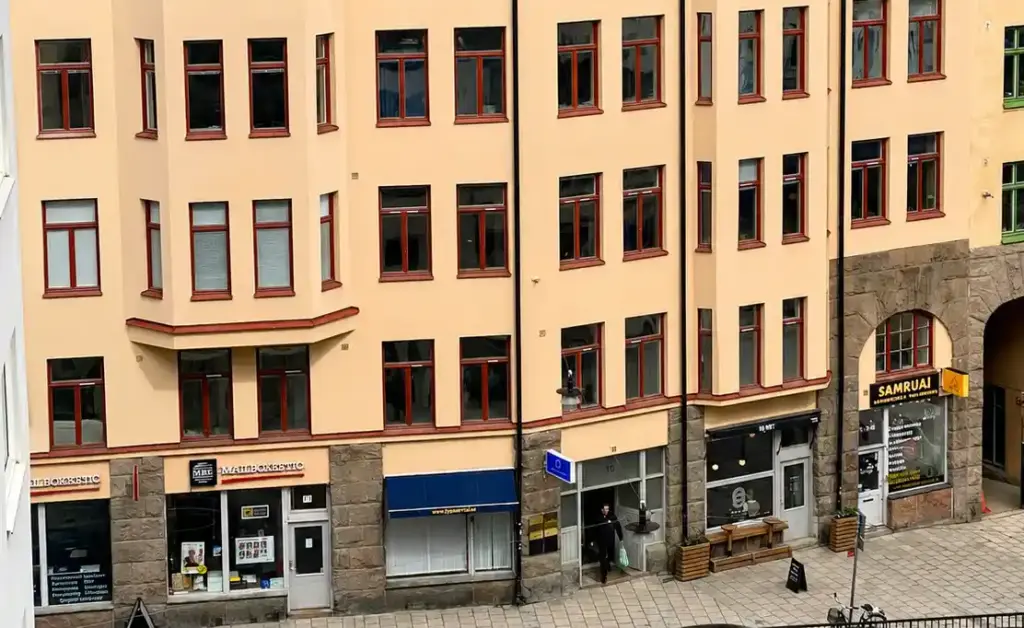


What to expect from benzodiazepine rehab with Castle Health
How we approach benzodiazepine treatment
Our clinical team includes psychiatrists and physicians with specific experience in benzodiazepine pharmacology. That knowledge shapes how we plan a taper and treat the conditions underlying dependence.
We don’t apply a standard template. The length of use and medical history alone mean two patients rarely need the same approach. Clinical decisions are made by the team caring for that patient, not by programme convention.
From first call to admission
The process starts with a confidential telephone call with one of our admissions case managers. There’s no obligation and nothing to sign. The purpose of that first conversation is to understand your situation and make sure our programme is the right fit.
If we’re likely to be able to help, the team will request a recent medical summary from your GP or prescribing doctor. Our medical staff review that information and, where needed, ask for further details before an admission date is agreed. You can read more about the admissions process, which may answer some of the questions you have.
Aftercare and ongoing support
The period after leaving residential care is when relapse risk is highest. For people recovering from benzodiazepine dependence, anxiety and disrupted sleep can last months, extending the window of vulnerability.
This is sometimes called post-acute withdrawal syndrome, or PAWS. For some people it lasts weeks; for others, months. Symptoms tend to fluctuate rather than remain constant, and anxiety and disrupted sleep are the most common. It’s a recognised part of benzodiazepine recovery – not a complication, and not a reason to lose confidence in the progress made.
Our aftercare and ongoing support includes a continuing care plan built into the discharge process. It includes connection to our alumni community, and access to ongoing outpatient and coaching services. The aim is a handover that keeps people supported through the transition.
Recovery hub
Read more about benzodiazepine addiction


If someone in your life needs help with benzodiazepine dependence
Benzodiazepine dependence is often noticed by the people closest to the person taking the medication before they recognise it themselves. A growing sense that someone you know has withdrawn from ordinary life is often the first sign.
If someone in your life started on a legitimate prescription and has found that stopping feels impossible, that’s a medical situation. The drugs create a physiological dependence that makes stopping genuinely difficult. That’s the clinical reality, not a reflection of the person taking them.
Knowing this can help you have a more useful conversation. They need to know that treatment won’t mean being judged for how dependence developed, and what coming off benzodiazepines with medical support involves.

Family therapy is part of our standard treatment offering. Sessions bring in the people who matter most to the patient, address the impact that dependence has had on those relationships, and build a support plan for after treatment ends. If you’d like to talk to our team about someone in your life, the admissions team can speak with you confidentially before any decisions are made.
Success Stories
We’ve helped many people turn their lives around
Get help today
Take the first step in your recovery journey
We are here to listen, guide and help you every step of the way. Call us today and together we can find a solution that suits you.
Our admissions process is confidential and designed to suit and support you and your circumstances. Find out more about the Admissions process.
Telephone
From the UK: 0131 287 4071
International: +44 (131) 287 4071
Care to the highest standard
Committed to quality care
Frequently asked questions about benzodiazepine rehab
How much does benzodiazepine rehab cost?
The cost of benzodiazepine rehab depends on the length of treatment required, the type of programme (inpatient or outpatient), and the specific facility. Because benzodiazepine tapers are highly individualised, it’s not possible to give a standard price without understanding more about your situation. Our admissions team can talk you through costs during an initial call and explain what funding options are available.
Does health insurance cover benzodiazepine rehab?
Some private health insurance policies do cover residential addiction treatment, including benzodiazepine rehab. Cover varies by insurer and policy type. Our team can advise on whether your policy is likely to apply and can support you through the insurance process where relevant. For more on checking your cover, see our insurance guidance page.
How long does a benzodiazepine taper take?
According to NICE guidance, a taper from 40mg diazepam daily can take 30 to 60 weeks. From 20mg daily, the estimate is 20 to 40 weeks. These aren’t fixed timelines – the pace is adjusted to each patient based on tolerability, dose, drug type, and length of use. What matters is that the reduction is safe and sustainable, not that it fits a standard schedule.
Can I continue working during outpatient benzodiazepine treatment?
For some patients, outpatient treatment is a viable option – particularly those with lower-dose, shorter-term dependence and strong support at home. The decision between inpatient and outpatient care is made during the clinical assessment. For complex or long-term dependence, inpatient care is generally recommended, as the medical monitoring available around the clock is difficult to replicate in a community setting.
What's the difference between tapering at home and tapering in rehab?
A home taper works best for people with shorter histories of use and strong external support. In a residential setting, the taper is monitored continuously by a clinical team, dose adjustments can be made quickly if withdrawal symptoms intensify, and the therapeutic work happens in parallel. For people with longer-term or higher-dose dependence, the residential environment provides a level of medical oversight and therapeutic support that a home setting generally can’t match.
Can my GP refer me to Castle Health for benzodiazepine treatment?
Yes. We accept referrals from GPs and other healthcare professionals, as well as self-referrals. If a GP or prescribing doctor has raised benzodiazepine dependence as a concern, or if you’ve decided to seek treatment independently, our admissions team can speak with you or your clinician directly. The pre-admission process involves a medical summary from your GP or prescribing doctor in either case.