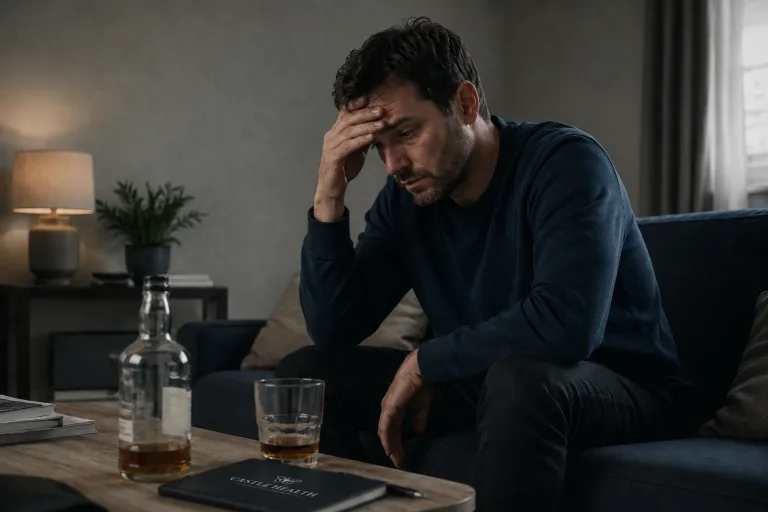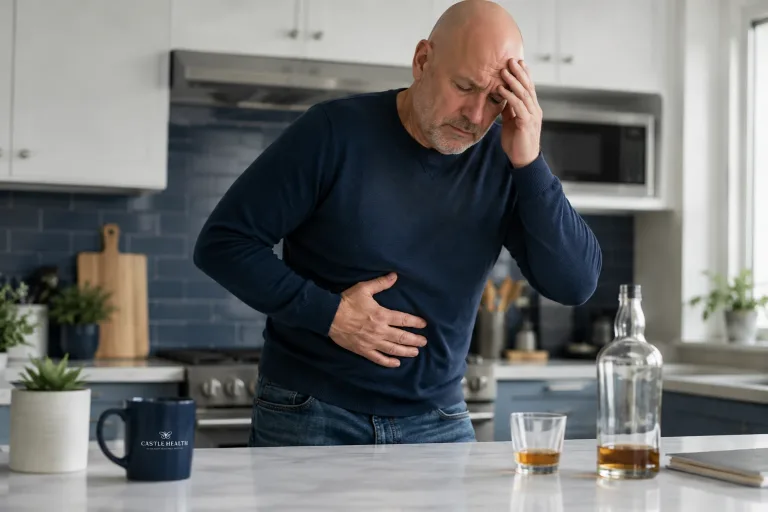
Experiencing chest pain after drinking can be worrying. Most of the time, the first thought is: “is this something serious?”.
Chest pain when drinking alcohol can come from acid reflux, anxiety, changes in blood pressure or heart rhythm, or issues with the pancreas. Most cases aren’t immediately dangerous, but chest pain after drinking should always be investigated.
If chest pain after drinking feels severe, spreads to your arm, jaw or back, or comes with sweating, sickness, or difficulty breathing, call emergency services.
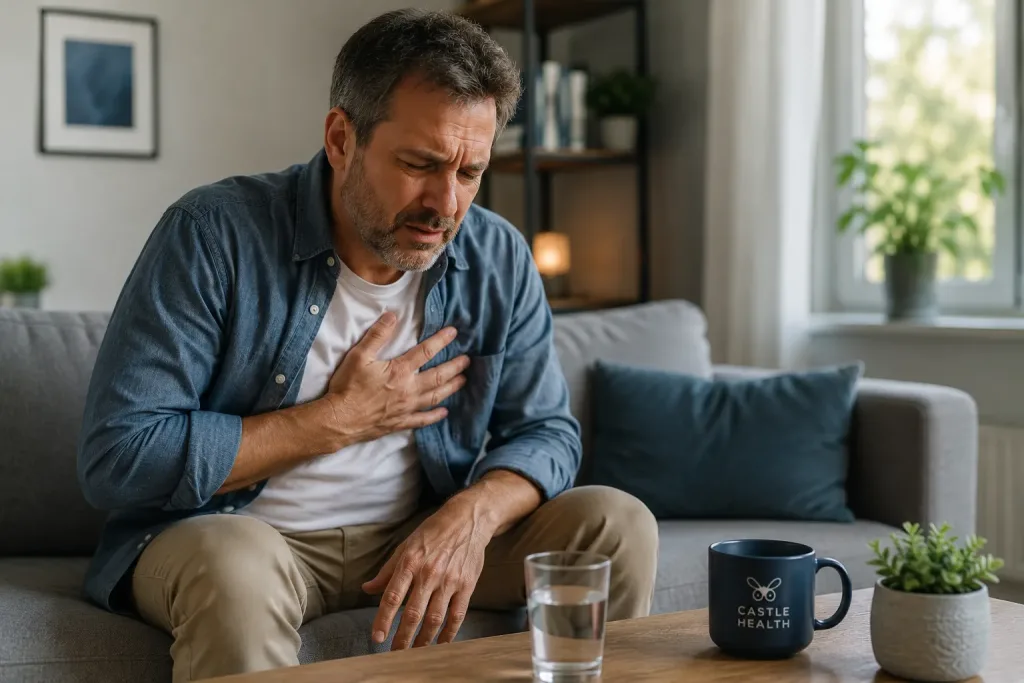
Why can chest pain after drinking alcohol happen?
Alcohol affects several systems in the body at once, which is why chest pain after drinking can have more than one cause.
Heartburn, acid reflux, and chest discomfort after drinking
Alcohol causes relaxation atthe base of the oesophagus. When that area is too relaxed, stomach acid can move upward. This can cause a burning feeling in the chest, often called reflux or heartburn.
This can start while you’re still drinking or straight after. A 2010 review published in Alcohol and Alcoholism found that alcohol can increase the symptoms of gastro-oesophageal reflux disease (GORD) and cause direct damage to the lining of the oesophagus. In many cases, symptoms reduced when drinking was stopped.
Heartburn and cardiac pain can feel similar. If you’re not sure which you’re experiencing, see a doctor.
Alcohol chest pain linked to blood pressure, heart rhythm, or angina
According to the British Heart Foundation (BHF), having more than three drinks in a single sitting can cause a temporary rise in blood pressure, because alcohol interferes with the brain’s ability to regulate it. This puts sustained strain on the heart and blood vessels.
Over time, high blood pressure damages blood vessel walls. It also causes fatty build-up that narrows arteries. This raises the risk of a heart attack or stroke. If chest pain keeps happening when you drink, you should get it checked.
The BHF also notes that vasospastic angina (a type of angina caused by sudden tightening in the coronary arteries) is associated with heavy alcohol use. Chest pain from a coronary artery spasm can feel severe. Without medical assessment, it can be hard to tell from a heart attack.
Anxiety, panic, and chest pain the day after drinking alcohol
Alcohol and anxiety symptoms are closely linked. Alcohol can have a rebound effect on the nervous system. It slows brain activity while you’re drinking, but as alcohol leaves the body the brain can overcorrect, producing anxiety symptoms including chest tightness. And anxiety and panic attacks among the recognised causes of chest pain and discomfort.
This is especially common the day after drinking heavily, and is sometimes called ‘hangxiety’. Anxiety-related chest pain is scary but it doesn’t damage the heart.
Pancreatitis and pain in the chest after alcohol consumption
Alcohol is one of the most common causes of inflammation of the pancreas, according to NHS guidance. A 2013 study in Pancreas journal confirmed that both heavy regular drinking and binge sessions increase the risk of pancreatitis.
A flare of pancreatitis usually causes severe abdominal pain that can spread toward the chest or back, although the chronic form of this can be painless. Other symptoms include vomiting, fever, and yellowing of the skin or eyes (jaundice).
If you have these symptoms, seek medical help immediately.
Could alcohol withdrawal cause chest pain or tightness?
If someone has been drinking heavily for a long time and cuts down or stops suddenly, the brain adapts to alcohol being present. When that changes suddenly, the brain takes time to catch up. This adjustment is alcohol withdrawal.
Alcohol withdrawal can cause a rapid heart rate and raised blood pressure, both of which produce chest tightness or discomfort. In severe cases it can cause hallucinations and seizures known as delirium tremens, which can be fatal.
If you’re dependent on alcohol, stopping suddenly without medical support can be dangerous. Medical alcohol detox provides a safe, supervised environment where withdrawal can be managed carefully. If you think you may be dependent on alcohol, speak to a doctor before making changes.
"I contacted Castle Health seeking guidance and options to support a relative who was having a difficult time with both addiction and other mental health concerns. The team were incredibly kind and informed, they took the time to go through all the options with us and helped us plan how to approach the matter. Fortunately the person has now been receiving care from Castle Health for several months and is doing really well. A big thank you to the wonderful team. I would highly recommend this service."

When should you seek help for chest pain after drinking alcohol?
Chest pain after drinking alcohol can have many causes, and most aren’t immediately life-threatening.
Call 999 if chest pain after drinking feels severe, spreading, or doesn’t go away
According to NHS chest pain guidance, you should call 999 immediately if you experience any of the following:
- Sudden chest pain that doesn’t go away
- Pain that feels like squeezing, pressure, or heaviness across the chest
- Pain that spreads to your left or right arm, jaw, neck, stomach, or back
- Chest pain alongside sweating, nausea, light-headedness, or difficulty breathing
- A feeling of intense anxiety alongside any of the above
These are possible signs of a heart attack. Don’t wait to see if it passes. Call 999 or go straight to hospital.
Speak to a GP if chest pain after drinking keeps happening
Recurring chest discomfort after drinking deserves a proper look, even if it seems mild or passes on its own.
A GP can help identify the cause, advise you on drinking levels, and refer you if needed. If you’ve been told your drinking is affecting your health but find it difficult to cut down, say so.
How to reduce chest discomfort after drinking safely
It’s tempting to look for a quick fix for chest pain after drinking, something that just makes it stop. Some low-risk steps can help if the cause is likely to be reflux:
- Avoiding more alcohol
- Staying upright
- Drinking water
- Try to avoid eating a large meal just before going to sleep
- Don’t eat spicy or acidic food when drinking
Chest pain is a symptom. Managing it at home without understanding the cause can mean missing something that needs treatment.
There’s also a subtler risk; finding a temporary way to manage the discomfort can remove the pressure to stop drinking.
Why 'curing' chest pain after drinking alcohol is the wrong question
If the pain keeps returning after drinking, reducing alcohol and getting a proper health assessment is more useful than any home remedy.
When chest pain after drinking may point to a wider alcohol problem
Not everyone who gets chest pain after drinking has alcohol use disorder. But for some people, a physical symptom like chest pain is the first thing that makes them think about their drinking.
Alcohol use disorder is defined by the pattern of drinking and by what happens when you try to stop. It isn’t about how much you drink on a given night. Signs that alcohol may be having a broader impact include:
- Continuing to drink despite health concerns
- Finding it harder than expected to cut down or stop
- Drinking more than you intended
- Feeling unwell or anxious when you haven’t had a drink
- Cravings for alcohol or another drink at inappropriate times during the day
- Other people in your life expressing concern
- Losing interest in hobbies, caring duties and your appearance
These signs persist because alcohol changes how the brain regulates discomfort and anxiety. They are well-understood features of a medical condition, and they respond to treatment.
Alcohol addiction treatment options at Castle Health
At Castle Health, we offer evidence-based alcohol addiction treatment and we tailor it to the individual.
Options include:
- A confidential assessment to understand your situation
- Outpatient treatment, for people who want to get support while staying at home
- Residential inpatient treatment at Castle Craig or Smarmore Castle
- Medical alcohol detox, where clinically appropriate, to manage withdrawal safely
- Therapeutic support including individual and group therapy
- Relapse prevention and aftercare
If chest pain has made you question your drinking, a confidential addiction assessment is a good starting point. There’s no obligation.
Taking the first step
If you’re concerned about chest pain or your drinking in general, our confidential addiction assessment is a good starting point. Making contact doesn’t commit you to anything.
What if someone in your life gets chest pain after drinking?
Living with someone else’s substance dependency is hard. You may feel unsure whether to say something, or have been dismissed when you tried before.
If someone in your life has severe chest pain after drinking, especially if it’s spreading to the arm or jaw, or they’re sweating and confused, call 999. Don’t wait for their permission.
If it’s not an emergency, a gentle conversation tends to go better than a confrontation. Describe what you’ve noticed, using ‘we’ statements, rather than telling them what to do and using ‘I’ or ‘you’ statements.
Castle Health has resources and support for families and people close to someone affected by alcohol addiction. Family therapy is part of our residential programmes, because alcohol use disorder affects everyone in the household.
If you’re worried about someone, get in touch with us directly.
FAQs about chest pain after drinking alcohol
Can you get chest pain after drinking alcohol even if you don’t drink often?
Yes. Occasional drinkers can still experience chest discomfort after alcohol, for example from anxiety, or acid reflux causing irritation of the oesophagus.
What are the symptoms of alcohol-induced oesophageal spasms?
Oesophageal spasm can cause squeezing or tightening chest pain that’s difficult to distinguish from cardiac pain. It can be triggered by acid reflux after drinking alcohol, very hot or cold drinks, and may also be caused by stress. Because it can feel like cardiac pain, get it assessed rather than assuming it’s something else.
Why do I get chest pain the day after drinking alcohol?
Next-day chest pain can be linked to acid reflux, anxiety (sometimes called ‘hangxiety’), dehydration, disrupted sleep, or early withdrawal symptoms in people who are physically dependent on alcohol. The causes section above covers each of these.
Ready to talk?
If you’re concerned about chest pain or your drinking in general, our confidential addiction assessment is a good starting point. Making contact doesn’t commit you to anything.