
For most people, light stomach pains are common after a night of drinking, usually passing in a day.
But we might not realise that gut symptoms can be quite specific signs of alcohol’s damage to one of our most important organs. Different types of pain can point to what alcohol is doing inside your digestive system, and whether that requires professional help.
Here, we’re discussing the connection between alcohol and gut health, including what causes the symptoms, what they indicate, and when action is needed before they worsen.
Alcohol and gut health: what happens when you drink?
According to the Guts UK charity, the effects of alcohol run from the oesophagus to the colon, and vary with drinking patterns. Even moderate drinking can trigger symptoms in people who already have a condition like IBS.
When you drink, alcohol travels through your digestive system before anything else. It reaches your stomach within minutes, passes through your small intestine, and enters your bloodstream. Along the way, it can
- Irritate the lining of the gut
- Slow down or speed up digestion
- Change the bacteria living in your bowel, and
- Trigger inflammation
Gut symptoms after drinking are common, however the gut’s role in your body cannot be overstated, and pain here can mean that the organ is signalling for help.
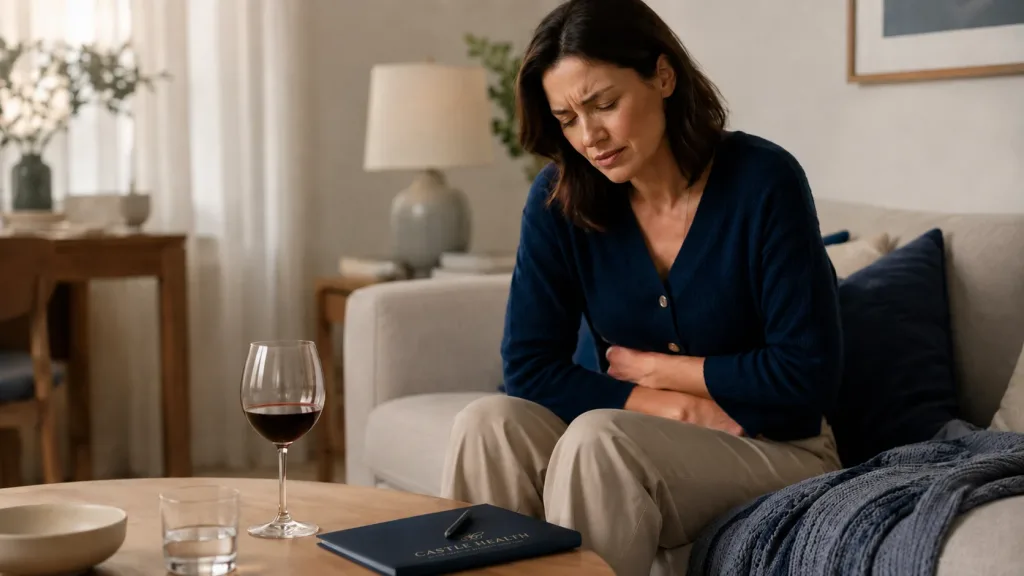
Why does alcohol cause stomach pain and diarrhoea?
Alcohol can disrupt the gut in several ways at once, including:
- Increasing acid production in the stomach and irritate the gut lining
- Speeding up or slowing down how quickly food and fluid move through your digestive system.
This can result in stomach pain or diarrhoea that can be felt on the same night, or during the morning after.
Stomach pain after drinking alcohol
One of the most common causes of stomach pain after drinking is ‘gastritis’. This simply means inflammation of the stomach lining.
The stomach lining normally produces a layer of mucus that protects it from acid. Alcohol can strip away that protection, leaving the lining exposed and vulnerable.
Alcohol affects how the stomach empties and changes the amount of acid produced. Over time, or after a heavy session, this can cause a burning pain in the upper abdomen and feelings of nausea. A single heavy session can trigger symptoms, but so can months of regular, more intermittent drinking.
Stomach pain that keeps returning, or that’s getting worse, might be a sign you need help from a GP.
Alcohol and diarrhoea
Alcohol and diarrhoea can be closely linked, and the mechanism is well established:
- Alcohol changes the speed at which the small intestine and colon work
- After acute alcohol use, propulsive movement in the colon increases
- Food can move through faster than normal
- This then may lead to loose stools or diarrhoea
The same review found that in people who drink heavily over time, the small intestine can lose its ability to absorb fluids properly. The surface that absorbs liquid shrinks and bacterial overgrowth occurs. Diarrhoea is a common complaint in both acute binge drinking and regular heavy drinking for this reason.
How does alcohol affect the gut microbiome?
The gut microbiome is where bacteria and other microorganisms live in your digestive system. They play a role in:
- Immunity
- Inflammation
- Metabolism
- Mood
When this balance is disrupted, the effects are wide-reaching.
Drinking alcohol can push the gut microbiome from a state of balance (homeostasis) into one of imbalance (dysbiosis).
The effects of this range from mild discomfort to strong disorientation.
Why is the gut microbiome so important?
When alcohol changes the composition of bacteria in the gut, there can be a disruption to the balance between beneficial and harmful strains.
When the gut microbiome breaks down the components of alcoholic drinks, it produces chemical by-products that can be toxic, and passed into the liver and bloodstream.
Perhaps most significantly, alcohol can damage the protective mucus layer that lines the intestinal wall. When this layer breaks down – a process called “leaky gut” – substances that should stay inside the gut enter the bloodstream.
Alcohol-related gut symptoms extend far beyond the stomach. The gut-brain connection means disrupted digestion affects mood and energy, seeping into every aspect of your daily functioning.
“I contacted Castle Health [formerly CATCH Recovery] with a view to getting online support after a period in rehab. They recommended recovery coaching and arranged for me to meet my coach in person as the first of 10 meetings. I continued the coaching on Zoom as I live in France. I was very happy with my 10 sessions and feel I am in a good place to continue my recovery.”

What gut health problems are linked to alcohol?
Beyond the common symptoms of stomach pain and diarrhoea, alcohol is associated with several more serious digestive health conditions.
These tend to develop with heavier or more prolonged drinking. Early symptoms are easy to overlook.
Gastritis, ulcers, and reflux
Alcohol can relax the ring of muscle at the base of the gullet (oesophagus), allowing stomach acid to flow upwards. This can cause heartburn or, in more severe cases, inflammation of the oesophagus.
Repeated irritation can lead to ulcers that may cause pain on swallowing or, occasionally, bleeding.
If you notice blood when you vomit, or have persistent pain when swallowing, see a GP. These symptoms need professional assessment.
Pancreatitis and liver disease
The pancreas and liver are both vulnerable to heavy alcohol use.
Alcohol is the second most common cause of both acute and chronic pancreatitis in the UK. Pancreatitis causes severe upper abdominal pain and nausea, and can quickly develop into a medical emergency.
Alcohol is also the second most common cause of liver disease and the leading cause of death from liver disease in the UK. Prolonged heavy drinking can scar the liver, a condition called cirrhosis.
Unexplained weight loss, fatigue, yellowing of the skin or eyes, or swelling in the abdomen should always be checked by a doctor. If your drinking has been heavy over a long period of time, a GP can arrange blood tests to assess how well your liver and pancreas are functioning.
Alcohol and digestive cancer risk
Alcohol is linked to a higher risk of several cancers affecting the digestive system. These include cancers of the mouth, oesophagus, stomach, bowel, and liver. Alcohol can increase the risk of bowel cancer because gut bacteria convert alcohol into other substances that raise cancer risk.
A 2017 meta-analysis found that even lower levels of alcohol consumption can increase the risk of gastric cancer. This is in part because alcohol can act as a solvent, helping other harmful chemicals enter the cells lining the upper digestive tract more easily.
Can your gut recover after drinking alcohol?
When drinking reduces or stops, the gut usually begins to recover. Gastritis, diarrhoea, and microbiome disruption are often linked to the volume and frequency of drinking, so reducing intake gives the gut the chance to begin recovering.
How well and how quickly the gut recovers depends on the severity of the problem and how long it has been going on.
More serious conditions, like cirrhosis or pancreatitis, require medical treatment and should not be managed through lifestyle changes alone. If you’ve been told you have liver damage or have had pancreatitis, your doctor’s guidance on alcohol needs to be followed carefully.
Food, hydration, and probiotics after drinking
Broadly speaking, dietary choices will support the gut once drinking is reduced.
Dietary intervention to support gut bacteria can have a significant impact on digestion and on IBS-type symptoms. It also reduced negative symptoms related to anxiety and depression. This points to the real connection between gut health and broader wellbeing.
Foods that may support gut health include:
- Fermented foods like kimchi or plain yoghurt help restore gut bacteria
- Prebiotic foods like garlic and leeks feed the beneficial strains
- High-fibre foods, including leafy vegetables, fruits, legumes, and whole grains
- Foods rich in omega-3 fatty acids, such as salmon, may help reduce gut inflammation
That said, there’s no single probiotic supplement that works for everyone, and supplements are not a substitute for reducing alcohol intake. If symptoms persist, speaking with a professional is more useful than relying on nutrition changes.
When should you seek help for alcohol and gut issues?
Some gut symptoms after drinking are short-lived and mild. Others are your body’s way of telling you something needs attention.
Speak to a GP or call emergency services if you:
- Have severe, persistent, or worsening stomach pain
- Are vomiting repeatedly or cannot keep fluids down
- Notice blood in your vomit or stools
- Have yellowing of the skin or eyes (jaundice), unexplained weight loss, fever, or significant fatigue
- Have persistent diarrhoea lasting more than a few days
Consider speaking to Castle Health or an addiction professional if you:
- Are drinking more than you intend to, or finding it hard to cut down
- Feel physically unwell when you stop or reduce drinking
- Are using alcohol to manage stress, sleep, anxiety, or low mood
- Notice that gut symptoms are a regular pattern after drinking
You don’t need to be in crisis to reach out. A confidential addiction assessment is just a conversation, giving you a chance to talk through what is happening, with no pressure or judgement. We’re here to help you understand what support options are available.
Consider speaking to Castle Health or an addiction professional if you:
Are drinking more than you intend to, or finding it hard to cut down
Feel physically unwell when you stop or reduce drinking
Are using alcohol to manage stress, sleep, anxiety, or low mood
Notice that gut symptoms are a regular pattern after drinking
You don’t need to be in crisis to reach out. A confidential addiction assessment is just a conversation, giving you a chance to talk through what is happening, with no pressure or judgement. We’re here to help you understand what support options are available.
How Castle Health can support alcohol-related health concerns
Castle Health supports people whose relationship with alcohol is causing concern, whether that is a recent worry or something that has been building for years. Support is shaped by where you are and what feels manageable.
We start with a clinical assessment. We take the time to understand the full picture, including your physical health, your mental wellbeing, your circumstances, and what matters most to you in your life.
Alcohol addiction treatment, detox, and ongoing support
Depending on what the assessment shows, support may include:
- Outpatient treatment for alcohol concerns, for people who want to address their drinking while staying in their day-to-day life
- Online therapy for alcohol use, which can be arranged around work and family commitments
- Medically supported alcohol detox, for people whose bodies have become dependent on alcohol and who need safe medical supervision to stop
- Alcohol addiction treatment at the residential level, including inpatient programmes at Castle Craig in Scotland and Smarmore Castle in Ireland
- Continuing care after services, because recovery needs support after treatment ends
We don’t diagnose or treat gut conditions directly through this service, but if alcohol is playing a role in your physical health, addressing the drinking is a meaningful first step. If you are unsure where to start, our team can help you work that out.
If someone in your life is having gut problems linked to alcohol
estion of drinking itself. If they’re regularly unwell after drinking, suggesting a GP appointment about their gut health sidesteps the bigger conversation for now.
When the time feels right for a more direct conversation, focus on what you’ve noticed. Speaking calmly and from a place of concern rather than blame gives the conversation the best chance of being heard. Avoid ultimatums. What you’re communicating is care, not judgement, and it helps to say so directly.
Families and friends can contact us too, whether to understand their own options or get guidance on how to approach the conversation.

Frequently asked questions about alcohol and gut health
How does moderate alcohol consumption affect gut health?
Even at moderate levels, alcohol can irritate the gut, particularly for people who already have IBS or reflux. UK low-risk drinking guidelines advise no more than 14 units per week for both men and women, spread across three or more days, with several alcohol-free days each week. For some people, staying within these limits will reduce or prevent gut symptoms. For others, any alcohol may trigger discomfort.
Can alcohol make IBS symptoms worse?
Yes, for many people with IBS, alcohol can trigger or worsen symptoms including cramping, diarrhoea, bloating, and urgency. Alcohol speeds up movement in the colon and disrupts the gut microbiome, both of which can aggravate IBS. Triggers vary, so a symptom diary, noting what you drank and when, can help you spot your own patterns.
What are the signs of alcohol-related gut inflammation?
Common signs include stomach pain or burning (particularly in the upper abdomen), nausea, vomiting, bloating, diarrhoea, reflux, and loss of appetite. These symptoms can have many causes. If they’re persistent or worsening, see a GP.
What are the best probiotic supplements for recovering gut health after drinking?
There’s no single probiotic supplement that is right for everyone. The evidence for specific products is mixed and supplements don’t replace reducing alcohol intake. If gut symptoms are ongoing, seeing a GP or a registered dietitian is a better starting point than self-prescribing supplements.