


Page last updated
Friday 21st Aug 2026

Page written by
Victoria McCann, Communications Director

Clinically reviewed on 28th August 2026 by
Ralf Warren, General Practitioner
Most people that look into alcohol detox already know that something needs to change. What they really want to know is what detox involves and whether it’s safe.
Alcohol detox is the process of clearing alcohol from the body under medical supervision, as your nervous system adjusts. That process can produce serious – or even life-threatening – withdrawal symptoms for anyone with physical dependence on alcohol.
At Castle Health, you arrive into a therapeutic community. From day one, the clinical team and the people you’ll go through treatment with are already around you. Our team has more than 40 years of experience supporting people through this process and into sustained recovery.

Get the support you need for alcohol addiction
Alcohol dependence affects people in different ways. Our team can help you understand which combination of support is right for you.



What does alcohol withdrawal feel like?
What to expect during alcohol detox
Withdrawal begins as your body adjusts to an absence of the substance it’s come to be dependent on. For many people, that process can feel uncomfortable or physically unpleasant. Anxiety is both physical and mental, as your nervous system is affected by the removal of alcohol.
Physically, the early phase can include:
- Sweating and tremor
- Nausea or vomiting
- Headaches and sensitivity to light or sound
- Raised heart rate and blood pressure
- Restlessness and difficulty settling
- Insomnia and other sleep difficulties
Psychologically, many people find the pull back to drinking is strongest in the first 48 to 72 hours. The brain has been relying on alcohol to regulate GABA receptors (something that keeps your nervous system calm). When that support disappears, your nervous system overcorrects. That rebound is what produces the agitation, sensitivity, and a desire to pull back to drinking.
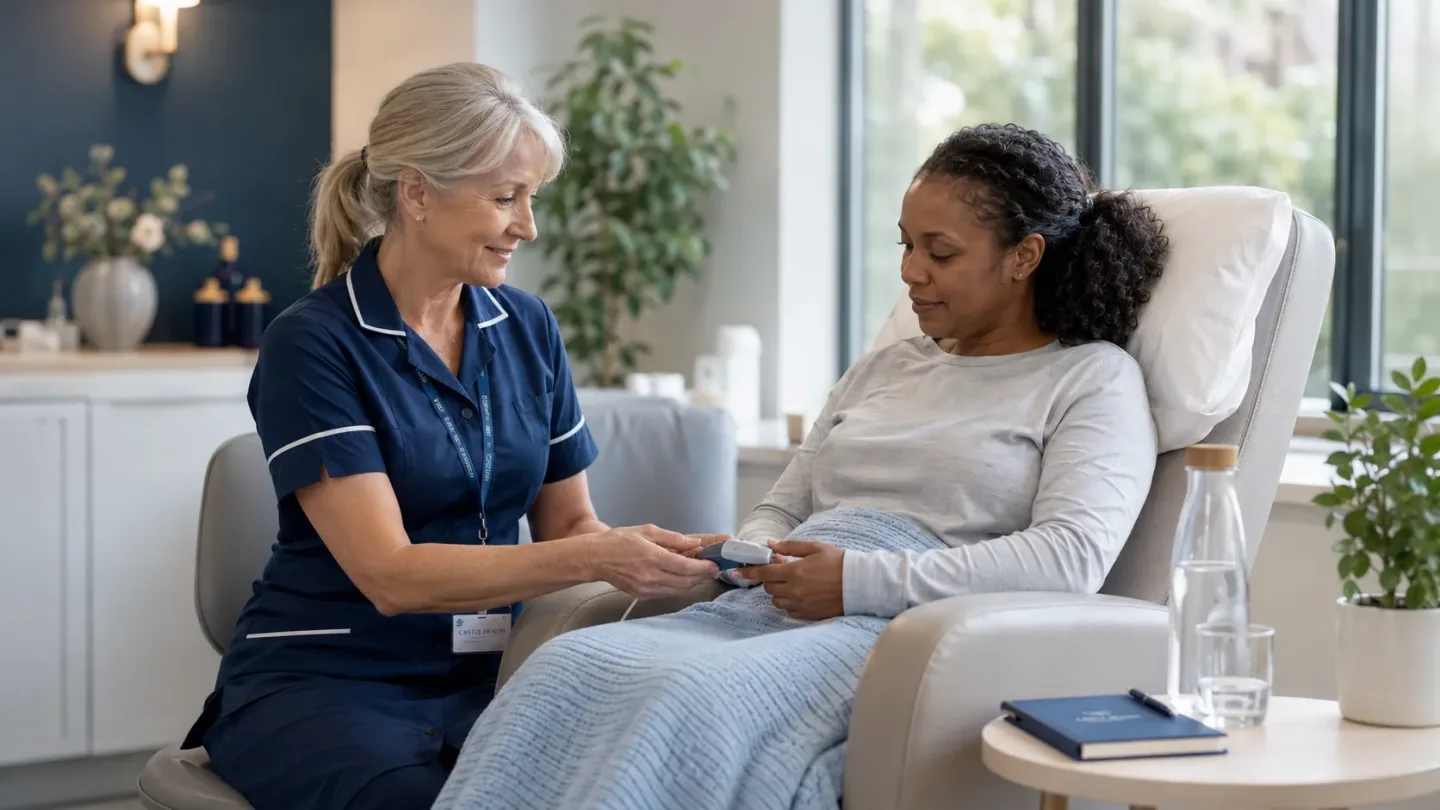
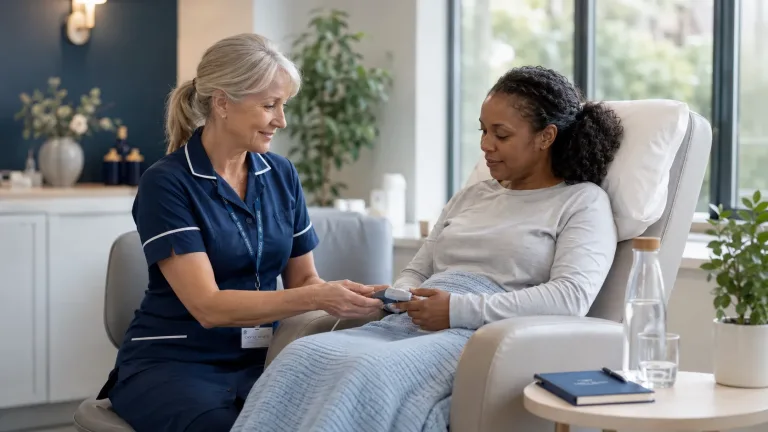
At Castle Health, we take steps to ensure that you are medically monitored through the process. We identify symptoms early and take prompt steps to make them more manageable.
The alcohol detox timeline
Alcohol withdrawal symptoms typically emerge within 24-72 hours of your last drink. One article discussing alcohol withdrawal syndrome states that the most common early symptoms – tremor, agitation, raised heart rate, sweating – begin within one to three days of stopping.
There is a rough guide to what the timeline looks like:
- 6–24 hours: early withdrawal begins – anxiety, nausea, sweating, tremor, hallucinations
- 24–48 hours: symptoms intensify – raised heart rate, blood pressure, risk of seizures
- 48–72 hours: peak risk window for serious complications, including delirium tremens (DTs), the most severe form of alcohol withdrawal
- Days 4–7: symptoms begin to settle for most people
- Days 7–10: for straightforward cases, detox is typically complete
Everyone’s timeline is different. Heavier or longer-term drinking produces a more intense withdrawal, as does concurrent dependence on benzodiazepines or Z-drugs.
Why medical supervision matters during alcohol detox
Alcohol withdrawal is one of the few drug withdrawals that can be fatal. Research published in the journal Alcohol Health and Research World notes that seizures may occur in more than 5% of people in untreated alcohol withdrawal. The mortality rate among those who develop delirium tremens without medical support is up to 5%.
But this figure falls sharply with proper clinical care.
The central nervous system has been suppressed by alcohol for a prolonged period, and when that suppression is lifted, it can rebound. 24-hour medical and nursing care means our team is watching for escalation before it becomes an emergency.
We can facilitate the detox process in Kirkurd House at Castle Craig, one of our dedicated admissions units. Here, the medical team and nursing staff are with you throughout. A monitoring and care plan is created on the day you arrive to keep you safe and as comfortable as possible.
The risks of detoxing from alcohol at home
Some people consider managing detox from alcohol at home, especially if previous attempts haven’t required medical intervention. For anyone with a significant physical dependence on alcohol, this can be risky.
The NHS explains that attempting to reduce alcohol intake too quickly can trigger rapid-onset withdrawal symptoms, and the appropriate rate of reduction is much slower than most people expect.
Home detox is not recommended for anyone with a history of withdrawal seizures, DTs, or complex health needs.
If you’re considering this, please speak to your GP before making any changes to your drinking. Our team is also available for a confidential conversation.
Medications used during alcohol detox
Medical detox uses medication to manage withdrawal safely and reduce the risk of seizures. According to NICE, the standard approach is a benzodiazepine tapering regimen. At Castle Craig, this is typically chlordiazepoxide, reduced each day gradually based on how you’re responding.
Other medications used during alcohol detox may include:
- Thiamine (vitamin B1): given to protect against Wernicke’s encephalopathy, a serious brain condition that can develop after prolonged heavy drinking. Guidelines suggest oral thiamine should begin before detox starts where possible.
- Diazepam: used in some tapering regimens to reduce the risk of seizures and ease withdrawal.
All medications are prescribed and managed by our resident doctor, reviewed by our psychiatrist, and adjusted according to how you’re responding. Nothing is prescribed without proper clinical assessment.
"I contacted Castle Health [formerly CATCH Recovery] seeking guidance and options to support a relative who was having a difficult time both with addiction and other mental health concerns. The team were incredibly kind and informed — they took the time to go through all the options with us and helped us plan how to approach the matter. Fortunately the person has now been receiving care from Castle Health for several months and is doing really well."

our locations
Locations designed to support your alcohol detox
We provide medically supervised alcohol detox at Castle Craig in Scotland and Smarmore Castle in Ireland. Both offer residential inpatient care within a therapeutic community, with 24-hour medical and nursing support throughout the detox process.






Alcohol detox at Castle Health
Castle Health has more almost 40 years of clinical experience with complex detoxes. But this is just the first stage of recovery, with therapy and ongoing support all part of a single programme. That begins the day you arrive for detox, and continues long after discharge.
Your pre-admission assessment
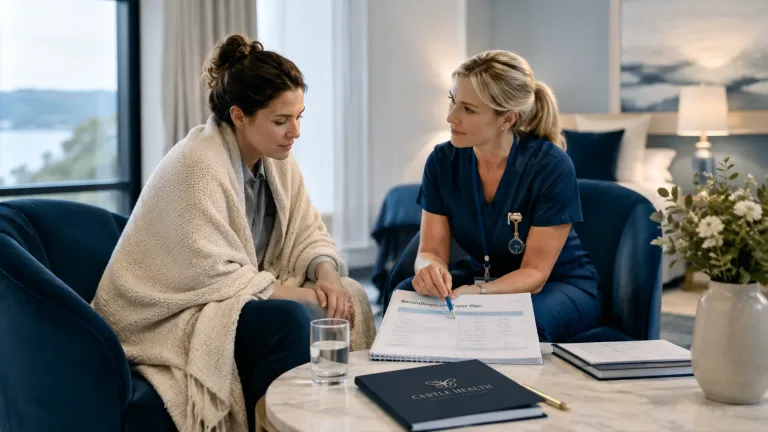
Before you arrive, one of our admissions case managers will speak with you by phone. They’ll ask about your drinking history, physical health, any other substances you’re taking, and whether our programme is the right fit for you. This is how we make sure you arrive prepared, and how we build the right protocol before you’ve even walked through the door.
The pre-admission process usually takes two to three days, though we can move more quickly when needed. Your case manager tracks your admission right up to the point of arrival.
For more information on what the addiction assessment involves, our admissions team will be happy to talk you through it.
Your first 24 hours
You’ll arrive at our dedicated admissions unit. The nursing team will see you almost immediately for a comprehensive health check. A monitoring and care plan is created that day, tailored to your drinking history and physical health.
If you need medical detox – and most people admitted for alcohol use do – it begins in the admissions unit. Medication is prescribed by the resident doctor and typically reduced day by day based on how you’re responding.
Our psychiatrist reviews all patient files shortly after admission. For people with complex needs, including co-occurring mental health diagnoses, the psychiatrist contributes directly to ongoing care planning. From day one, each part of your care is building towards the next.
Detox alongside the wider treatment community
While you’re still completing detox, you can start joining group sessions and getting to know the people you’ll go through treatment with. Beginning while you’re still in detox means there’s no gap, and you don’t have to find your footing in two separate locations with a completely new team.
Alcohol detox for people with complex needs
Some people arrive with concurrent dependence on substances like benzodiazepines or Z-drugs like zopiclone or zolpidem. When someone is dependent on both alcohol and benzodiazepines, the detox protocol has to account for both.
According to NICE, inpatient withdrawal in these cases typically lasts two to three weeks or longer, depending on severity.
Our team at Castle Craig has handled the full range of alcohol detox cases for almost four decades, including those complicated by polydrug dependence. If you’re unsure whether your situation is more complex, your pre-admission call helps to clarify this – as well as any other concerns you might have.
For more on our approach to treatment for concurrent benzodiazepine dependence, visit our dedicated page.
Supporting someone in your life through alcohol detox
If someone in your life is considering alcohol detox, you’re still invited for a free assessment call. Our admissions team can walk you through what detox involves, what a residential stay looks like, and what to do if the person in your life isn’t ready yet. You can ask us about anything, including things you’re not sure how to phrase.
Family contact during treatment is handled carefully. At Castle Craig – our residential facility in Scotland, UK – Sunday is the designated visiting day, and family members are encouraged to attend scheduled sessions as part of the wider treatment process.
For families who want more structured support, we offer a dedicated family programme alongside the main treatment.
If you’re researching on behalf of someone in your life, our team is used to those conversations. Residential inpatient care is one option, but there are others, depending on what is most appropriate. The weeks after someone leaves treatment are often when families need support most, and we will be here for you then too.
Success Stories
We’ve helped many people turn their lives around
Get help today
Take the first step in your recovery journey
We are here to listen, guide and help you every step of the way. Call us today and together we can find a solution that suits you.
Our admissions process is confidential and designed to suit and support you and your circumstances. Find out more about the Admissions process.
Telephone
From the UK: 0131 287 4071
International: +44 (131) 287 4071
Care to the highest standards
Committed to quality care
Frequently asked questions about alcohol detox
How much does a private alcohol detox cost in the UK?
The cost of private alcohol detox varies depending on the length of stay, the complexity of your detox, and whether you’re funding privately or through insurance. We’re transparent about costs from the first conversation. Contact the admissions team for a clear picture of what to expect before making any decisions.
Can I have an alcohol detox if I'm also using other substances?
Yes, but it changes the clinical approach. Concurrent dependence on benzodiazepines or Z-drugs requires a carefully calculated combined protocol, typically over a longer period than a straightforward alcohol detox. Our team at Castle Craig has extensive experience managing complex detoxes of this kind. The pre-admission call is the right place to discuss your full history.
What if I've tried alcohol detox before and relapsed?
At Castle Health, a previous attempt helps us understand what support was missing last time. Understanding what happened before, and what support was or wasn’t in place, helps us build a better plan this time.
Will my employer or insurer find out if I have an alcohol detox?
Your GP is not automatically notified, and we don’t share information about your care without your consent. There are specific circumstances where disclosure may be required by law, which the admissions team can explain in more detail. If you have concerns about confidentiality before you call, you can email us first.
Do I need a referral from my GP for alcohol detox?
No. You can contact our admissions team directly and self-refer. We’ll request a recent medical summary as part of the pre-admission process, but you don’t need a GP referral to get started. Most admissions to Castle Craig and Smarmore Castle are self-referred.