


Page last updated
Friday 11th Sep 2026

Page written on 21st August 2026 by
Victoria McCann, Communications Director

Clinically reviewed on 11th September 2026 by
Dr Seamus Macauley, Addiction Therapist, Castle Health
Meth can be considered one of the hardest drugs to stop without support. That’s because it can change how your brain produces dopamine, which is the chemical that makes you feel motivated and rewarded.
Meth carries a high risk of dependence and often comes alongside acute mental health symptoms, which is why specialist assessment can be essential.
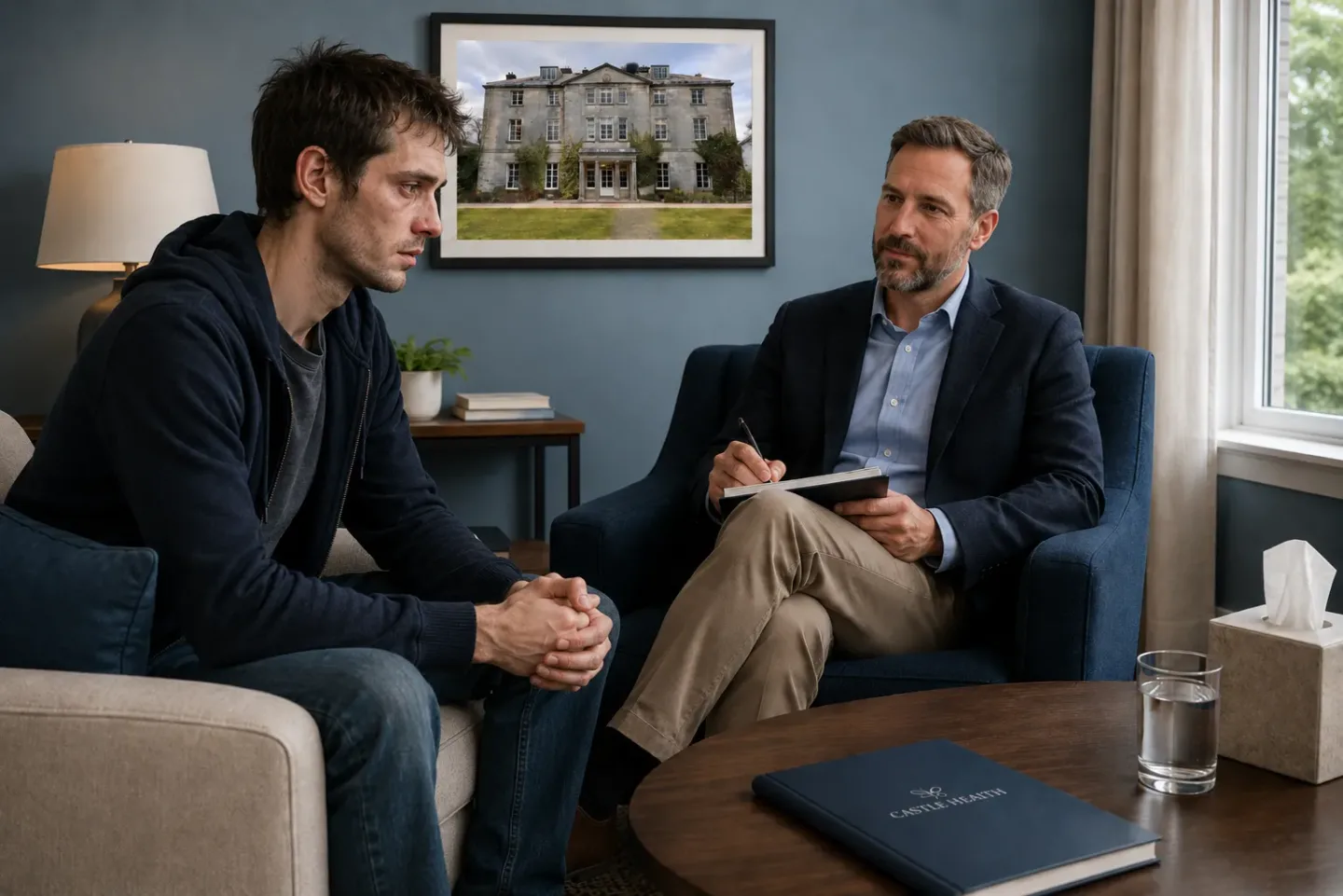
At Castle Health, meth addiction treatment starts with a confidential assessment to understand where you are and what level of support is best. From there, it may include residential care or outpatient therapy.
Your mental health is kept at the forefront, and aftercare is tailored around your life.

Get the support you need for meth addiction
The treatment team at Castle Health have worked with people at every stage of meth use, and we understand that recovery looks different for every person.


Residential meth addiction rehab
Residential treatment means staying at one of our centres to give you clinical support around the clock during the early stages of recovery. It tends to be the right fit when home isn’t a safe base to recover from, or when previous attempts to stop have faltered.
At Castle Craig in Scotland and Smarmore Castle in Ireland, residential programmes typically run for four to six weeks, though people with more complex needs often benefit from longer stays.
While you are with us, the medical team monitors your health daily, working with you on the practical and psychological work of recovery.
Outpatient treatment for meth addiction
Outpatient meth addiction treatment can work well when home is a stable and safe place to be, and when regular attendance at scheduled sessions is practical. You come in for therapy and clinical check-ins while continuing with your everyday life.
Outpatient care is also a natural next step after a residential stay. Continuing outpatient care keeps you connected to clinical support as you move back into normal life.
This is ideal through the early weeks when relapse risk is highest. Castle Health offers outpatient services in the UK and Ireland, as well as serving wider Europe.
Types of therapy
Treatment for meth addiction has to stretch beyond just getting through the early weeks. Therapy helps you understand what was driving previous use, and build the practical skills to stay well.
- One-to-one work with a qualified therapist
- Group therapy with peers at a similar stage
- Psychoeducational workshops on addiction and recovery
- Relapse prevention planning
- Family therapy and support
Aftercare and continuing support
Recovery doesn’t end at discharge. Continuing care keeps you connected to support as you return to your previous life. It supports you back in the community and, as our Treatment Guidelines note, without it, relapse is more likely. Castle Health works with you on a continuing care plan before you leave residential treatment, and stays involved as you transition back. Find out more about aftercare for addiction treatment.
We know how recovery isn’t a straight line. Relapse can be part of the process. If that happens, what you need is a different kind of support, and we can help with that.

“In 33 years of sobriety and over 30 years as a clinician, I’ve learned that recovery isn’t about giving something up. It’s about putting down the substance, grieving, then creating a meaningful life that you no longer want to escape.”

Meth addiction: understanding your treatment options
People come to meth addiction treatment at very different points. Some have been using it for years. Others aren’t sure yet how serious things have become, or whether treatment is really something they need.
An assessment is the first step because the right level of care varies significantly from person to person.

What makes meth addiction treatment different?
Meth is a stimulant, and treating stimulant use is different from treating alcohol or opioid dependence.
One of the biggest differences is that no substitute medication works in the way methadone works for opioids; treatment instead focuses on managing withdrawal and stabilising health. From there, psychological support can develop.
Research published in the Journal of Internal Medicine has shown that meth has a neurotoxic effect on the brain that impacts the brain’s ability to produce dopamine naturally.
A further study found that meth dysregulates dopamine function, flooding the brain with dopamine in a way it cannot replicate on its own. When use stops, the brain has to relearn how to produce it. That process takes time. It’s one reason meth is particularly hard to stop without clinical support.
Inpatient treatment for crystal meth addiction
Residential care isn’t the right option for everyone, but it is often the most effective starting point when meth use is frequent or heavy. It’s also suited for when there are co-occurring mental health symptoms, or when stopping was attempted without lasting success.
This type of care removes you from the environment where drug use was prevalent.
A four-to-six week stay is typically the minimum recommended; one or two weeks likely aren’t enough time for the brain to recover neurologically from the effects of meth, or to do the therapeutic work recovery needs.
Outpatient and online treatment for meth addiction
When home is stable and residential treatment isn’t practical, outpatient care works well. Regular sessions with a therapist, clinical check-ins, and a clear relapse prevention plan provide real structure without requiring time away.
Online treatment is also available for people who need flexibility.
Our clinical team can advise on whether outpatient care is the right starting point or whether a period of residential support first would be more appropriate.
Drug detox support and early stabilisation
Unlike alcohol or benzodiazepine withdrawal, meth withdrawal does not usually carry the same acute medical risk. But it’s often uncomfortable, and it directly affects motivation, mood, sleep, and the ability to engage in therapy.
A study published in the journal Addiction described two distinct phases:
- The first was an acute phase in the initial seven to 10 days, characterised by increased sleep, low mood, fatigue, and poor concentration.
- This was followed by a subacute phase lasting at least a further two weeks, during which sleep quality remains disrupted.
Early clinical support does more than manage discomfort. It lets the team monitor how you’re doing and adjust care as the picture changes. Learn more about drug detox support and what to expect in the early days.
“Recovery happens when awareness meets acceptance. Therapy can help you move from reacting to responding, from feeling trapped to feeling choice again.”
locations
Locations designed to support your recovery
Castle Health offers residential meth addiction rehab through two specialist centres, Castle Craig in Scotland and Smarmore Castle in Ireland. Both provide medically led detox support and residential therapy. The community there is designed to support you at every stage of recovery.
Outpatient care is available across selected locations in the UK, Sweden, Finland, Malta, and Ireland. The right setting depends on clinical need, personal circumstances, and what level of support is most appropriate. Our team can help you work that out during your assessment.






What to expect from meth addiction treatment with Castle Health
Starting treatment can feel like a big step, especially if you’re not sure what you actually need. At Castle Health, the first conversation is low-pressure and clear.

Your first conversation with our team
You don’t need to have made any decisions before you get in touch. A confidential addiction assessment is a conversation with one of our clinicians about what has been happening and what level of support might suit you. Nothing is agreed or committed to during that call; it’s simply a chance to get up to speed with your options.
A treatment plan shaped around you
Based on your assessment, our team will recommend a level of care that reflects your pattern of meth use, your mental health, your home environment, and any previous treatment. No two treatment plans look the same, because no two people arrive in the same position.
Therapy, relapse prevention, and practical recovery skills
Therapy is the core of meth addiction treatment. One-to-one sessions with your assigned therapist run alongside group therapy and structured psychoeducational work. Relapse prevention is built in from the start, including practical work on managing cravings and the emotional patterns that drove the use.
For people with co-occurring mental health needs, our team integrates mental health support into the treatment plan rather than treating it separately.
Support beyond the first stage of treatment
The work doesn’t stop at discharge. Continuing care after residential or outpatient treatment helps you maintain progress and navigate early recovery in real life. We work with you on a continuing care plan before you leave, and aftercare for addiction treatment is ready as your needs change over time.
Recovery hub
Learn more about meth addiction and recovery




Meth addiction and mental health
Meth use and mental health affect each other in both directions; some people might use meth to manage anxiety or low mood, but chronic meth use also directly affects the brain’s capacity to regulate mood – impacting concentration and behaviour.
Chronic meth use has been associated with decreases in executive function, and anxiety, depression, and psychosis are among the most commonly reported mental health conditions in people who use meth.
It’s also been noted there people who use meth that show abnormalities on neuropsychiatric tests. This matters for treatment because the mental health effects of meth can look very similar to pre-existing conditions.
Assessment helps to distinguish between them so that each can be treated properly.
Castle Health works with specialist mental health services so that both are treated as part of the same plan. Find out more about addiction and mental health support.

If someone in your life needs help with meth addiction
Meth use affects nearly every part of daily life. If someone you know is using meth, you might be deliberating on whether to say something, or wait, or whether speaking up will make any difference at all.
There is no single right answer to the questions you have, and Castle Health doesn’t expect you to have one. What we can do is help you understand what meth addiction treatment involves. We’ll show you what the options are and how to approach a conversation about getting support, if and when that feels right.
Meth use also affects the people around the person using it. Our family therapy programme gives families a place to process what they have been through and work out how to support someone in their life without taking on responsibility for their recovery.
You can contact Castle Health for a confidential conversation. You don’t need to know what you want yet. Getting in touch is enough.

Success Stories
We’ve helped many people turn their lives around
Care to the highest standards
Committed to quality care
Get help today
Take the first step in your recovery journey
We are here to listen, guide and help you every step of the way. Call us today and together we can find a solution that suits you.
Our admissions process is confidential and designed to suit and support you and your circumstances. Find out more about the Admissions process.
Telephone
From the UK: 0131 287 4071
International: +44 (131) 287 4071
Frequently asked questions about meth addiction treatment
Can meth addiction treatment help if I also have anxiety or depression?
Yes. Research published in PMC found that meth use is closely associated with anxiety and depression, and these often need to be treated at the same time as the addiction itself. Assessment helps to distinguish between pre-existing mental health conditions and those caused or worsened by meth use, so that both can be planned for.
Do I need residential rehab for meth addiction?
Not necessarily. The right level of care depends on how much and how often you have been using, your mental health, your home environment, and whether you have tried to stop before. Some people start with residential treatment, others with outpatient. An assessment is the only way to know what level of care is right for you.
Is there medication for meth addiction?
There is no approved substitute medication for meth addiction in the way methadone is used for opioid dependence. A 2010 review published in PMC found that multiple medications trialled for meth dependence failed to show clear efficacy. It did show, though, that some agents, including modafinil, bupropion, and naltrexone, had some positive results in reducing use. In practice, treatment focuses on psychological support and clinical monitoring rather than medication-based detox.
How do I start meth addiction treatment with Castle Health?
The first step is a confidential addiction assessment. This is a private conversation with one of our clinicians about what has been happening and what level of care might suit you. There is no pressure to commit to anything during that conversation. You can contact us by phone or online, and we will take it from there.
Can Castle Health support families affected by meth addiction?
Yes. Castle Health can offer guidance, family therapy, and advice about treatment options for someone in your life. If you are not sure how to start that conversation, or you just want to understand what is available, get in touch. You don’t need to have all the answers before you call.