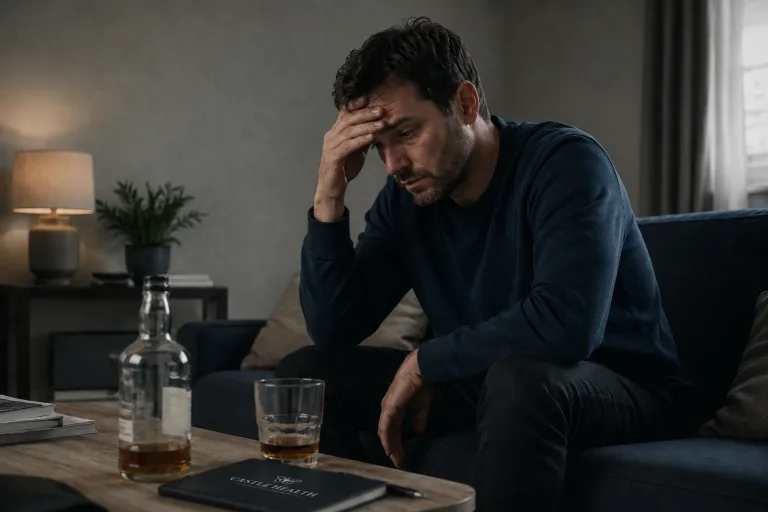
Cocaine cravings are intense but temporary. They follow a physiological curve – rising, peaking, and passing – and that pattern holds even when it doesn’t feel like it will.
The most effective immediate responses are practical:
- Distance from the trigger
- a deliberate pause before acting, and
- Contact with someone who knows what you are managing
Cravings met with those responses are considerably easier to move through than those met alone.
When cravings become difficult to manage consistently, structured cocaine addiction treatment makes a measurable difference.
What do cocaine cravings feel like?
Cocaine cravings can be intense physical and mental sensations. Knowing what’s happening makes it easier to respond rather than just react.
- Repeated, intrusive thoughts about cocaine, especially at specific times of day.
- Feeling restless or tense for no other reason.
- Not being able to concentrate on ordinary things.
- Looking for reasons to justify using cocaine again.
- Feeling drawn back to people or places linked to previous cocaine use.
- A sense of flatness or loss of pleasure in things you usually enjoy.
Why do cocaine cravings happen?
MedlinePlus explains that cocaine causes the brain to release far more dopamine than normal. Dopamine is the chemical at the centre of the brain’s reward system, which produces intense feelings of euphoria. With repeated use, the brain begins to produce less dopamine on its own and becomes less sensitive to it.
When cocaine use stops, the brain is left short of dopamine and takes time to recalibrate. That time is when cocaine withdrawal symptoms happen, including cravings.
Research notes that cravings are one of the main reasons people return to using, even when they want to quit.
How long do cocaine cravings last?
An individual craving episode usually peaks within 10 to 20 minutes. The wider pattern of cravings is far longer.
Stimulant withdrawal symptoms, including cravings, typically begin within 24 hours of the last use and can last for three to five days in acute withdrawal.
But cravings linked to stress, or particular triggers, can return far longer after stopping, particularly after heavy or long-term use.
Cravings don’t stay at the same intensity forever, but support can help you get through the withdrawal period.

How to stop craving cocaine in the moment
Cravings are a normal part of stopping cocaine use, and they respond to specific things done quickly. The aim is to create space between the urge and any decision.
Move away from the trigger
Environmental cues can be a key driver of relapse. If something around you triggers a craving, the easiest thing to do is to leave the situation. Don’t stay and hope that it will pass.
Delay, distract, and ride out the urge
Cravings feel permanent when you are inside one, but they’re not. Things that help while riding out the urge include:
- Breathing and mindfulness exercises.
- Writing down what you’re feeling.
- Taking a brisk walk, exercising, going for a run, or standing under a cold shower.
- Delaying the decision by 15 minutes. Then delaying again.
Tell someone before the craving escalates
Isolation makes cravings worse. Tell someone you trust before the craving peaks.
That can be a friend, a family member, a therapist, a sponsor, or a support line. You don’t need to explain anything, just share the moment until it passes.
Strategies for managing cocaine cravings over time
Getting through a single craving is one thing, but changing long-term patterns takes time and often support.
Learn your triggers
Triggers for cravings can be emotional things like stress or a boring evening with nothing to do. For other people, they’re a particular place or person, or something physical like being tired or hungry.
Mapping your own triggers, ideally with a therapist, means you can take proactive steps to avoid or manage them.
Build a plan before cravings happen
Who will you call? Where will you go? What has worked before?
Having answers to those questions before a craving hits means you don’t have to decide under pressure.
Social situations are often where plans get tested. It helps to decide in advance how you’ll handle them, like leaving early if people start using.
Use therapy to understand the craving cycle
CBT is well-researched for people managing cocaine use. Research in group CBT for cocaine use disorder shows that it helps people identify and change the patterns of thinking that lead back to cocaine use. The skills keep working after the sessions end.
CBT is available through Castle Health’s outpatient and online programmes. You can read more about our approach to drug addiction treatment options and relapse prevention support on our website.
Do not treat a setback as proof that recovery is impossible
If you use cocaine again after a period of not using, learn from it.
What was the trigger? What made it harder to use the strategies that had been working?
Returning to use is common, but what matters is responding to it quickly and safely.
One important safety note is that if you haven’t used cocaine for a period of time and then use it again, your tolerance will be lower. The amount that felt normal before may now be dangerous. If you use again and feel unwell, experience chest pain, or have any severe symptoms, get medical help straight away.
"I contacted Castle Health — formerly CATCH Recovery — with a view to getting online support after a period in rehab. They recommended recovery coaching and arranged for me to meet my coach in person as the first of 10 meetings. I continued the coaching on Zoom as I live in France. I was very happy with my 10 sessions and feel I am in a good place to continue my recovery."

When to seek help for cocaine cravings
You don’t need to be using every day for it to become a problem. According to the NHS, if any of the following matches your useage, you should speak to someone:
- You’ve tried to stop or cut down but keep returning to cocaine.
- Cravings are affecting your work, relationships, sleep, or finances.
- You use cocaine to manage anxiety, stress, depression, or to get through social situations.
- You experience withdrawal symptoms when you stop or reduce cocaine use.
- You are experiencing chest pain, seizures, severe agitation, or other physical symptoms.
- You don’t feel safe managing cravings on your own.
Chest pain, seizures, or feeling unsafe are medical emergencies. Get help immediately.
How Castle Health can help with cocaine cravings
Castle Health offers structured, clinically informed support for people who are finding cocaine cravings hard to manage. We’ll work out what’s right for you rather than putting you on a standard pathway.
Our support options include:
- Cocaine addiction treatment – outpatient therapy, online sessions, and referral into inpatient care where needed.
- Cocaine detox and withdrawal support – for people who need medical assistance.
- Relapse prevention support – working on triggers, coping skills, and what to do when things get difficult.
- An addiction assessment – a confidential conversation to understand what level of support you need.

Speak to Castle Health
If cocaine cravings are becoming hard to manage, you don’t have to work through them alone. Contact Castle Health confidentially to discuss your options and find the right level of support. Making that call doesn’t commit you to anything. It’s just a conversation.
If someone in your life is having cocaine cravings
Watching someone you care about go through this is tough. You might not know what to say, or worry that saying the wrong thing will push them away.
How to talk about cocaine cravings without blame
Choose a calm moment. Not after something has just gone wrong, or when either of you is tired. Conversations about cocaine use that start in a crisis tend to become arguments.
Some things that tend to help:
- Use specific observations rather than broad accusations. “I noticed you seemed really on edge last night” is completely different from “You’re always like this.”
- Focus on what you’ve seen and how you feel, rather than what they’ve done wrong.
- Ask questions rather than delivering conclusions, such as “How are you finding things at the moment?”
- Encourage them to speak to someone, and offer to help with the first step.
- Look after your own wellbeing too. You won’t be able to provide support if you’re running on empty.
Castle Health also supports families. If you want to talk through what you are seeing and how best to respond, we are here for that conversation too.n too.

Taking the first step
Contacting us doesn’t commit you to anything. When you’re ready, you can:
- Speak confidentially with Castle Health about cocaine cravings.
- Book an addiction assessment — a calm, structured conversation to help you understand your options.
- Explore cocaine addiction treatment, outpatient support, or relapse prevention support to see what fits.
Frequently asked questions about cocaine cravings
Can cocaine cravings happen even if I do not use every day?
Yes. The NHS notes that you do not need to be using cocaine every day for it to become a pattern that is hard to break. Cravings can develop with regular but not daily use, particularly when the brain has started associating cocaine with specific situations or moods.
What should I avoid when cocaine cravings are strong?
Alcohol is one of the most significant risk factors. It lowers your inhibitions and makes it much harder to use the strategies you’ve built up. Carrying large amounts of cash, being in old haunts, or spending time with people who currently use cocaine all make it harder to resist a craving.
Can therapy help with cocaine cravings?
Yes. CBT for cocaine use is grounded in social learning theory and helps people identify triggers, build coping skills, and reduce the risk of returning to use. One of the reasons CBT is particularly useful is that its benefits tend to continue after the therapy ends.