
United Kingdom
Castle Craig, Scotland
Find out more



Most people arrive at group therapy with the same thought: I don’t want to talk in front of strangers. That’s understandable. Sitting in a room with people you’ve never met and discussing something as personal as addiction isn’t anyone’s idea of comfortable.
What tends to happen, usually within the first few addiction therapy sessions, is that the strangers stop feeling like strangers. Someone says something you’ve thought a hundred times but never said out loud. Others going through a similar experience will listen and share their experiences, too.
Group therapy for addiction works, in part, because of that moment. Isolation is one of the things that keeps addiction going. Connecting with other going through something similar is what helps to disrupt that way of thinking.
Group therapy is a big part of our treatment programme at Castle Health. We offer it to outpatients who are accessing treatment in person and online. This is a flexible option that helps keep you motivated and supported throughout your recovery. We also offer group therapy rehab as part of our treatment at one of our residential centres. This continues as part of your continuing aftercare programme, to help support your transition home and the weeks and months that follow.

Addiction group therapy is a form of psychotherapy that brings a small group of people together with a trained therapist on a regular basis. Groups usually consist of around eight to 10 people. Sessions follow a consistent format and focus on your recovery. They explore what makes your recovery difficult on a daily basis, and patients share their own experiences of recovery.
Therapy in a group setting is considered an effective treatment for a wide range of mental health and substance use conditions, alongside individual therapy. It offers something individual therapy can’t always provide: being understood by people living through something similar.
At Castle Health, group therapy is an integral part of how we treat addiction and is something we recommend for all patients.

Each session is led by a qualified therapist who keeps the group safe and moving forward. Groups meet at regular intervals, either as part of a residential programme or through outpatient treatment.
The therapist’s role is to create structure without removing honesty. Sessions are guided conversations, but the direction comes from what people bring with them that day.
Group therapy works, in part, because of what researchers call “universality”. Knowing you’re not the only one going through this is one of the most powerful parts of group therapy.

Thoroughly enjoyed the Mindfulness Workshop. Its was very informative and helpful for me, thank you.

Sessions are led by a qualified therapist and run for about 60 to 90 minutes. The therapist guides the conversation and holds the space when reflection is needed. What gets covered depends on the people in the room.
The therapist often opens by introducing a theme or inviting someone to speak. You might talk, or you might listen.
Feeling nervous before the first session is normal. Before the first session fully begins, everyone in the group agrees to keep what’s shared between them. For many people, that boundary is what makes genuine honesty possible, and it creates a safe space to share your recovery openly if you choose.

Group therapy takes on a particular focus. Sessions are designed to build deeper insight into the individual problems that can block full recovery, identify the destructive behaviours and attitudes that risk triggering relapse, and develop the practical life skills that support it.
Reduced isolation: Addiction is often accompanied by stigma, shame, and secrecy. Sitting with others who understand, without judgement, begins to break that down and may help you to feel less isolated.
Peer accountability: When you make a commitment in front of a group, it carries a different weight. Members hold each other to the work in a way that is supportive rather than pressuring.
Shared learning: Someone further along in recovery may model something you have not yet been able to access in yourself. Learning about someone else’s recovery can be beneficial to your own.
Practical skill development: Sessions often involve practising communication, managing emotional responses, and identifying the thinking patterns that contribute to substance use. These are skills, and like all skills, they develop through practice.
The European Union Drugs Agency (EUDA) recognises psychosocial group interventions as an evidence-based component of addiction treatment across European health systems.
Your treatment team will match you to the type that fits your stage of recovery.
Focus on understanding addiction and mental health. Sessions focus on understanding how addiction develops and what makes relapse more likely. The aim is informed understanding, because knowing what is happening is part of being able to respond to it.
Help you identify the thinking patterns and behaviours that contribute to substance use. CBT is one of the most extensively researched psychological treatments for addiction. In a group setting, members work through CBT frameworks together. Hearing how others experience and challenge similar patterns adds something that individual therapy cannot offer.
focus on relationships and communication. Addiction affects how people relate to others, and often those patterns show up in the group itself. Those patterns showing up in the group isn’t a setback. It’s where progress often begins. These groups help people develop more honest and effective ways of connecting.
Are structured around practical tools for daily life. This includes managing cravings and identifying the situations that put recovery at risk.
Prioritise peer connection and shared experience. They are less structured than process or CBT groups and play a particular role in the later stages of treatment and in ongoing recovery.
Offer a space where women in recovery can discuss experiences that are specific to their lives. Different environments work for different people. Women-only groups exist to help support women in the environment in which they feel most comfortable.
The relationships that form in group therapy contribute to recovery in ways that go beyond the sessions themselves.
Research suggests that peer support addiction programmes, both formal and informal, are associated with better outcomes in addiction recovery. There’s something that happens when people in recovery experience each other’s recovery journeys. You begin to feel part of something, not just in treatment.
The therapist guides every session, but the people you’re in the room with are just as much a part of your recovery.

At Castle Health, group therapy is central to how we treat addiction. Each patient is assigned a focal therapist whom they will meet with regularly for individual therapy. Therapy groups for addiction are kept small to ensure that every person has genuine space to participate.
We think carefully about who is in each group and why. Every group is put together with care, so the people in it can challenge and support each other.
Group therapy that is included within residential treatment at Castle Craig and Smarmore Castle forms part of a wider treatment structure. This includes individual therapy, medical support, and aftercare planning.
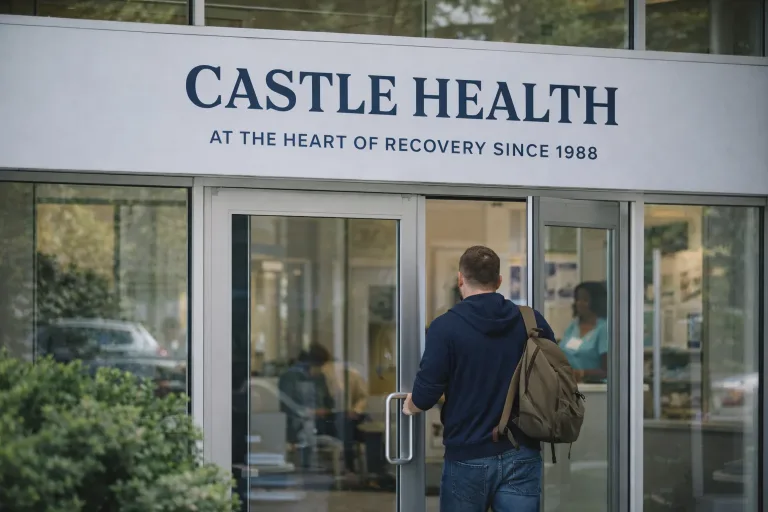
A lot of people find the relationships they build in group stay with them long after treatment ends.
Many people continue with group therapy as an outpatient. This takes place after residential treatment as part of their continuing aftercare programme through Castle Health. Recovery isn’t smooth for most people, and what you need from your personalised treatment programme will change. Group therapy is a resource at any stage of recovery.
If you’re considering treatment and want to understand what group therapy would involve for you specifically, our team can talk you through it. There’s no obligation in that conversation.
Speak to our team about your options for therapy with Castle Health.
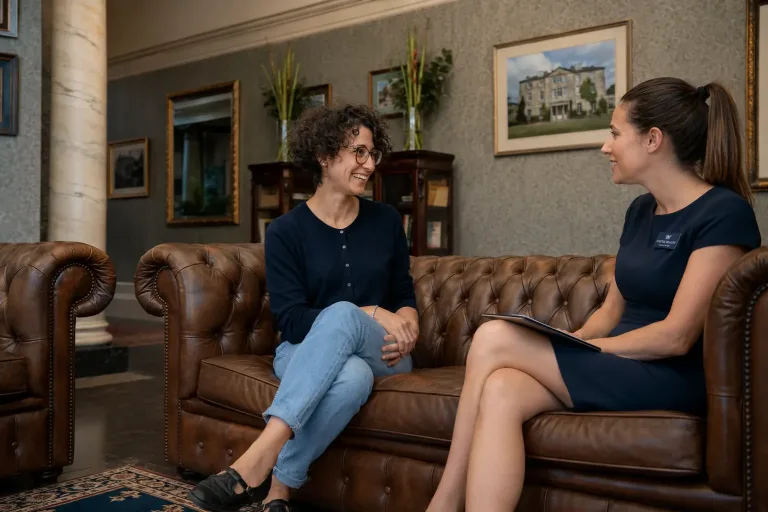
We are here to listen, guide and help you every step of the way. Call us today and together we can find a solution that suits you.
Our admissions process is confidential and designed to suit and support you and your circumstances. Find out more about the Admissions process.
From the UK: 0131 287 4071
International: +44 (131) 287 4071
Yes. Group therapy has a strong evidence base in addiction treatment. It works best as part of a broader treatment programme rather than in isolation.
Listening is participating. Most people find they become more willing to contribute as the group develops and trust builds. There’s no pressure to share until you’re ready.