



Page last updated
Monday 24th Aug 2026

Page written on 30th June 2026 by
Victoria McCann, Communications Director

Clinically reviewed on 24th August 2026 by
Dr Seamus Macauley, Addiction Therapist, Castle Health
Most people who seek gambling addiction treatment have tried to stop on their own first, and are surprised by how much easier it becomes when the right support is in place. Gambling disorder is a recognised clinical condition that has evidence-based treatment options available.
At Castle Health, gambling addiction treatment is built around the individual rather than the diagnosis. It starts with an assessment to understand patient needs, and combines therapy with support for co-occurring mental health conditions.
We offer outpatient and online treatment, as well as inpatient residential addiction treatment at our clinics in the UK and Ireland. When you’re ready, speak to our team in confidence to find out how we can help.






What does gambling addiction treatment actually involve?
Treatment for gambling addiction looks different for someone with a long history of relapse than someone getting help for the first time. Gambling addiction treatment at Castle Health starts with a thorough clinical assessment so your plan can be built around your wants and needs.
Treatment usually combines Cognitive Behavioural Therapy (CBT) with individual and group work. Family therapy can also be offered where it would help and dual-diagnosis care is added where a co-occurring mental health condition is present.

Gambling disorder – a recognised clinical condition
Gambling disorder is not a character flaw or a failure of willpower. It’s a recognised behavioural addiction with a clinical diagnosis, included in the DSM-5 in 2013 and the ICD-11 in 2018.
According to European Psychiatry, gambling disorder shares mechanisms of action with substance addictions. These include decision-making and how the brain processes reward. It responds to therapy and medication in the same way other clinical conditions do.
A 2024 systematic review and meta-analysis in The Lancet Public Health found that almost half of adults globally had gambled in the past 12 months, with online gambling driving most of the growth in European markets.

How Castle Health approaches gambling addiction treatment
A consultant psychiatrist leads our gambling addiction rehab programme. The team around them are clinicians and therapists with specialist experience in behavioural addictions.
A thorough assessment
On admission, our medical and therapeutic team gathers information from your GP, any previous counsellors and – where explicitly agreed – your family members. A consultant psychiatrist then carries out a full clinical evaluation. This looks at your gambling history, any mental health conditions, substance use, physical health, and the practical pressures you are living with
From there, we build an individual treatment plan that sets out the therapies, the structure of your week, and how progress will be reviewed.
Evidence-based therapies used in gambling addiction treatment
Cognitive Behavioural Therapy is a first-line psychological treatment for gambling disorder. CBT has been found to reduce gambling frequency, with effects larger than those of medication alone. Between 65% and 82% of people receiving CBT show greater reductions in gambling outcomes.
The UK’s NICE guideline on gambling-related harms (NG248) recommends group CBT as the first offer. Individual CBT is available if group therapy is not suitable. Both are delivered as a structured course, typically six to 10 sessions, including specific work on relapse prevention.
Alongside CBT, our programme uses:
- Individual therapy, where you work one-to-one with a personal counsellor
- Group therapy, including peer support and 12 Step work
- Family therapy, where appropriate, to begin repairing relationships
More on the specific approaches we use is available on our types of therapy page.
Complementary therapies that support recovery
Alongside core clinical work, our inpatient programmes offer complementary therapies that support recovery in different ways.
These might include:
- Art therapy
- Equine and animal-assisted therapy
- Yoga and meditation
- Mindfulness practice
- Acupuncture.
The aim is to give you more than one way into the work, and more than one tool to take with you when you leave.
our locations
Centres that can treat gambling addiction






Gambling addiction and co-occurring conditions: why dual diagnosis matters
A 2025 systematic review and meta-analysis in European Psychiatry found that 82% of people with gambling disorder likely have a co-occurring mental health condition. It also noted that people living with gambling addiction are over 12 times more likely than the general population to develop any mental health condition. The strongest links are with substance use, mood disorders, and anxiety disorders.
Treating gambling without addressing co-occurring conditions is a common reason recovery doesn’t hold. NICE recommends that some co-occurring conditions, where severe enough, need to be treated first.
At Castle Health, dual diagnosis is built into each programme from the assessment stage onwards. The consultant psychiatrist co-ordinates treatment for both the gambling disorder and any co-occurring condition, so you are not sent between services or asked to manage two separate plans.
You can read more about how we approach addiction and mental health together.
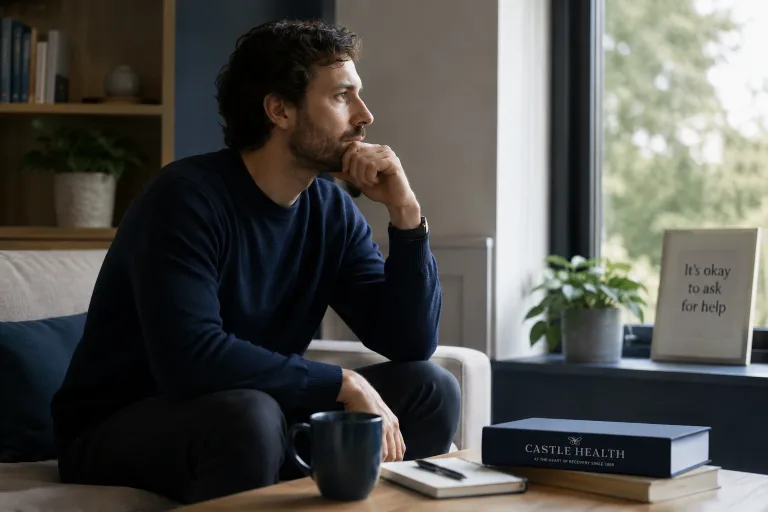
"Addictive behaviours are not the problem itself, but a meaningful response to deeper pain, and that with the right support, those patterns can be understood, softened, and ultimately changed.”<br />

Inpatient, outpatient and online: finding the right level of gambling addiction treatment
The right pathway depends on the severity of the disorder, and what’s practical for your life and finances.
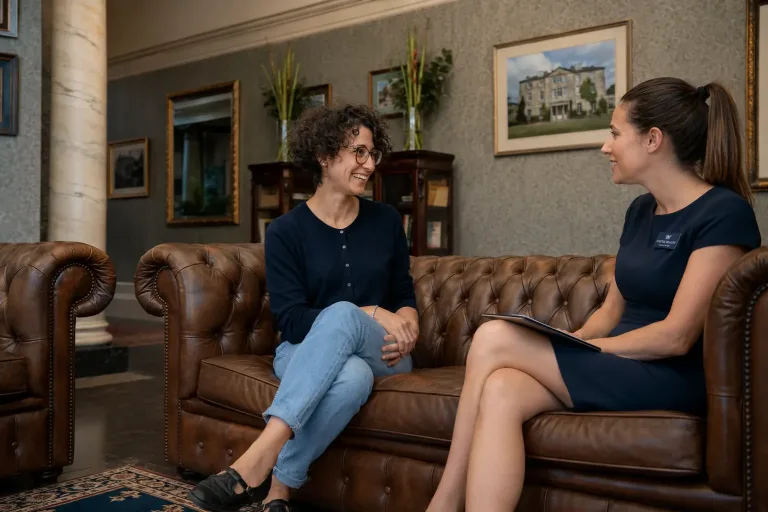
Inpatient treatment
Inpatient treatment provides the structure and clinical oversight many people need to step away from gambling triggers fully. Residential treatment for gambling addiction usually runs over several weeks. It is the right starting point where:
- The disorder is severe
- There are co-occurring conditions
- Previous attempts at outpatient work have not held
Outpatient treatment
Outpatient treatment allows you to remain at home and continue working while engaging with structured therapy and clinical review. It suits people with:
- A less severe presentation
- Strong support around them
- The means to maintain attendance
Online treatment
Online treatment offers therapy and recovery coaching by video. It can be more convenient and less time-consuming than in-person care.
A short conversation with our admissions team is usually the most useful first step for anyone looking for gambling addiction help. They will talk you through what each level of gambling addiction rehab looks like in practice and help you decide what fits.
What to expect from gambling addiction treatment with Castle Health
Gambling addiction treatment with Castle Health follows a clear structure. Each stage prepares you for the next, and the work moves from stabilising your situation, to understanding why gambling has taken hold, to building a life where it does not need to.
Assessment
Treatment starts with a full clinical assessment. This looks at:
- How often you gamble, what you gamble on, and how much you have lost
- Your physical and mental health, including any co-occurring conditions
- Any past treatment, including therapy or 12 Step involvement
- Current risks, including debt, work pressures, and risk to yourself
The assessment helps our consultant psychiatrist decide whether inpatient care, outpatient support, or online therapy will be most effective for you. It also gives you the space to ask questions and understand what treatment might involve before you make a decision.
Stabilisation and early treatment
The first phase of treatment focuses on stepping away from gambling triggers, putting practical controls in place around money and access, and beginning therapeutic work on the patterns that have made the behaviour hard to stop.
For many people, the relief of not being on a phone or app for several days is itself part of how treatment works. The clinical team is alongside you for this period, particularly if anxiety, low mood, or harmful thoughts are part of the picture.
Therapy
Therapy is where the deeper work happens. Rather than just managing urges to gamble, approaches like Cognitive Behavioural Therapy help you develop ways of responding to difficult emotions, financial pressures, and habitual triggers without turning to gambling. Sessions can be one-to-one, in groups, or a combination of both. They are run through inpatient, outpatient, and online care.
Where trauma, emotional regulation difficulties, or co-occurring mental health conditions are part of the picture, the therapeutic plan adapts. DBT, EMDR, and trauma-informed therapy may all sit alongside CBT depending on your assessment.
Aftercare
Leaving treatment is its own transition. Returning to phones, apps, advertising, and the everyday financial pressures that gambling was often used to escape takes adjustment. Aftercare is how we stay with you.
This might be regular check-ins with a therapist, working through your relapse prevention plan, or peer support such as Gamblers Anonymous. The goal is the same: making sure the progress you have made holds when life gets difficult.
Take the next step
We’ll guide you through your options so you can take the next step with confidence.
Talk to us about gambling addiction treatment – no pressure, no judgement, just honest guidance.
What happens after gambling addiction treatment?
Treatment does not end at discharge. Sustainable recovery from gambling addiction is built over months and years. The period immediately after a programme is when ongoing support matters most. Our aftercare includes continuing therapy, recovery coaching, and peer support.
Relapse is something we talk about openly. It is part of many recovery journeys, so we plan for what to do if it happens. That includes how to re-engage with support quickly. Family therapy often becomes more useful at this stage, as the people around you are typically rebuilding trust at the same time you are rebuilding your life.

How to help someone with a gambling addiction
Gambling addiction can affect the whole family.
Supporting someone with gambling addiction can be tough. It’s normal to feel worried or let down.
You may have discovered debts, covered for missed work, or had the same difficult conversation repeatedly. Gambling disorder is a recognised clinical condition with effective treatment. And the person you know does not need to be 100% ready for treatment to work.
Practical first steps from here:
- Talk to our admissions team about your situation, without committing to anything
- Ask about family therapy, which can run alongside treatment or independently of it
- Consider whether an intervention, supported by a clinician, might be the right next step if they’re not yet willing to seek help directly
Success Stories
We’ve helped many people turn their lives around
Get help today
Take the first step in your recovery journey
We are here to listen, guide and help you every step of the way. Call us today and together we can find a solution that suits you.
Our admissions process is confidential and designed to suit and support you and your circumstances. Find out more about the Admissions process.
Telephone
From the UK: 0131 287 4071
International: +44 (131) 287 4071
Care to the highest standards
Committed to quality care
Frequently asked questions about gambling addiction
How do I get into rehab for gambling addiction?
To get into rehab for gambling addiction, you can contact your GP to request a referral, or contact a private provider like Castle Health directly. We’re often able to admit patients to our inpatient programmes within a few days of initial enquiry, subject to assessment. Our admissions team will walk you through the process and explain what to expect at each step.
Does rehab work for gambling addiction?
Yes, rehab can work for gambling addiction. We’ll support you to create a treatment plan based on your specific circumstances. This may involve inpatient or outpatient support, dual-diagnosis care, and a range of evidence-based therapies including CBT. We also provide aftercare support once the main programme ends. While rehab isn’t a guarantee of recovery, it’s an important first step for many people with gambling disorder.
Can I access gambling addiction treatment if I am also dealing with debt?
Yes. Our admissions team can talk you through funding options and what is practical for your situation. The presence of debt is not a barrier to making contact.
How long does gambling addiction treatment take?
It depends on your assessment. Inpatient programmes typically run from four to 12 weeks, with continuing aftercare beyond that. CBT is usually delivered over six to 10 sessions per the NICE guideline. We will give you a realistic timeline at the assessment stage.
Is gambling addiction treatment covered by health insurance?
Some health insurance policies cover residential and outpatient treatment for gambling disorder, but cover varies significantly. Our admissions team can help you check what your policy includes before you make any decisions.
What is the difference between problem gambling and gambling addiction?
Problem gambling is a broad term covering gambling that is causing harm in some part of your life. Gambling addiction, or gambling disorder, is the clinical diagnosis applied when specific criteria are met over a 12-month period. Treatment is available across the spectrum, and you do not need a formal diagnosis to make contact.