



Page last updated
Monday 29th Jun 2026
Page written by
Victoria McCann
Opioid addiction treatment across Europe
Opioid dependency can develop even if you follow your prescription exactly. The medication works, but gradually, you start to realise that stopping is far harder than it should be. Wanting to stop and finding you can’t is usually when people realise something serious has changed.
Castle Health offers inpatient treatment, outpatient care, medication-assisted treatment (MAT), and two-year aftercare across Castle Craig in Scotland, Smarmore Castle in Ireland, and Beroendekliniken in Sweden. Whether you are searching for yourself or for someone in your life, we can help you understand your options and take a first step at your own pace.

Get the support you need for opioid addiction
Our opioid addiction treatment programme covers every stage of care, from medically managed detox through to long-term continuing support.

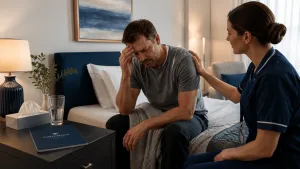

Understanding the service
Opioid addiction treatment – understanding your options
The right opioid addiction treatment involves understanding the type of opioid used, any co-occurring health conditions, previous attempts to stop, and the day-to-day support needed. The EUDA notes that effective treatment often requires more than one episode of care, and that medication combined with therapy produces better outcomes than either alone.

Medically supervised detox for opioid addiction
Detox is the process of clearing opioids from your body safely, with medical oversight. This commonly involves buprenorphine or methadone to ease withdrawal, and sometimes clonidine to manage physical symptoms such as sweating and raised blood pressure. Medications are typically reduced day by day based on ongoing clinical assessment. Stopping opioids suddenly, without a reduction plan, isn’t safe and rarely works. The physical symptoms of withdrawal ease within days. Anxiety, sleep disruption, low mood, and difficulty concentrating often persist for weeks.
Once you are physically stable, you will begin the psychological work of rehab therapy. We provide all stages in one comprehensive programme, so there are no gaps in your treatment.
According to the EUDA (2021), the period immediately after leaving treatment is associated with a higher risk of overdose. After detox, tolerance to opioids falls, so if you relapse and take a high dose again, your body can’t handle it. Structured aftercare reduces that risk directly.
Inpatient (residential) opioid addiction treatment
Residential treatment means living within the treatment facility for the duration of your programme. The main difference from outpatient care is continuous clinical support, day and night. Our residential programme centres on CBT and DBT alongside 12 Step work. These help people understand what is driving their dependency under the surface.
Residential care, sometimes called opioid addiction rehab, tends to suit people whose home environment makes sustained recovery difficult, or whose dependency is complicated by mental health conditions or previous treatment attempts.
Outpatient opioid addiction treatment
Outpatient treatment allows you to engage in structured therapy while continuing to live at home. It suits people who are medically stable, and have a supportive home environment. Therapy typically combines one-to-one counselling with group work, usually including structured relapse prevention.
For some people, outpatient treatment follows a period of residential care. For others, it is the right starting point.
Medication-assisted treatment (MAT) for opioid dependency
Medication-assisted treatment uses opioid addiction medication alongside psychological therapy to manage dependency, reduce cravings, and lower the risk of overdose. According to the EUDA (2021), opioid agonist treatment is “the main approach to the treatment of opioid dependence in Europe.” Methadone and buprenorphine are most commonly used. Both reduce cravings and ease withdrawal by stabilising the brain’s opioid receptors. Naltrexone is also used in some cases, particularly for relapse prevention once detox is complete. Which medication is appropriate, and at what stage, is decided with your clinical team.
Treating opioid addiction and mental health together
The EUDA’s 2026 report on dual disorders notes that between 42% and 90% of people with substance use disorders also have, or have had, a co-occurring mental health condition. Research published in Drug and Alcohol Dependence (Santo et al., 2022) found that more than a third of people with opioid use disorder had current depression, with anxiety and PTSD also common. The two conditions fuel each other, making symptoms of both worse. Many cases of dual diagnosis involve prescription drug addiction to opioids and other medications.
Treating dependency and mental health together produces better outcomes than treating them in sequence. Our clinical team assesses mental health as a standard part of treatment planning. Where dual diagnosis is present, therapy and psychiatric support are integrated into the programme from the start.
"I contacted Castle Health [formerly CATCH Recovery] seeking guidance and options to support a relative who was having a difficult time both with addiction and other mental health concerns. The team were incredibly kind and informed, they took the time to go through all the options with me and helped us plan how to approach the matter. Fortunately the person has now been receiving care from CATCH for several months and is doing really well."

our locations
Locations designed to support your recovery
If you are looking for opioid addiction treatment near you, we have three locations across Europe. Castle Craig in Scotland is registered as a private psychiatric hospital by Healthcare Improvement Scotland. Smarmore Castle in Ireland has a long track record in residential treatment and is recognised for its clinical rigour. In Sweden, Beroendekliniken provides both outpatient and inpatient services within the Swedish healthcare system.






Getting help
What to expect from opioid addiction treatment with Castle Health
Every person who contacts us starts with a free assessment. This is a conversation about your situation with no commitment required. From there, we’ll help you understand your options and what taking the next step looks like.
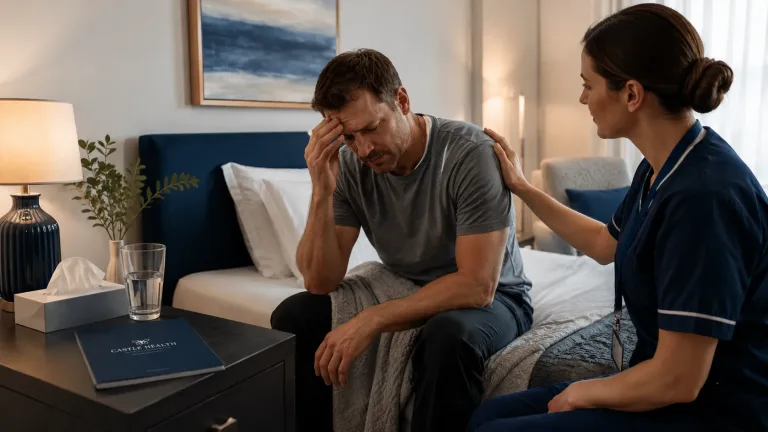
Our approach to treatment
We treat the whole person, not only the dependency. The treatment plan covers mental health and physical health, and the circumstances you’ll return to. Each site’s team includes therapists, nurses, doctors, and a consultant psychiatrist who reviews all patients and contributes to care planning.
Our residential programme uses CBT, DBT, and 12 Step work – alongside family therapy and mindfulness – with the approaches tailored to your specific situation.
Two-year aftercare as standard
For opioids in particular, the risk of relapse remains highest in the early months after discharge. Research by McKay (2021, Alcohol Research) found that longer continuing care, with active efforts to keep people engaged, produces better outcomes, particularly for those at higher relapse risk. We provide two years of structured aftercare as standard, delivered online, with local clinic access available in some locations.
This is twice the aftercare period offered by most comparable providers. See our aftercare and continuing care page for detail on how the two years are structured.
Questions worth asking any treatment provider
Before committing to any programme, ask any provider:
- How will withdrawal and cravings be managed, and by whom?
- Is there psychiatric support available if mental health or trauma is a factor?
- Does the programme understand prescription opioid dependency as well as illicit drug use?
- What happens after discharge, and for how long?
- Is medication-assisted treatment available and treated as a clinically valid option?
We’re happy to answer any of them. You can get in touch at any time, even if you’re not yet sure whether treatment is right for you.
Help for families and friends
If someone in your life needs help with opioid addiction
Watching someone in your life go through opioid dependency can be exhausting, but seeing previous attempts to stop fail doesn’t mean the next one will.
Addiction affects everyone close to the person experiencing it. Our programmes include extensive support for families, including online workshops covered by the cost of treatment. These can help them understand dependency and teach them how to support recovery while protecting their own wellbeing.
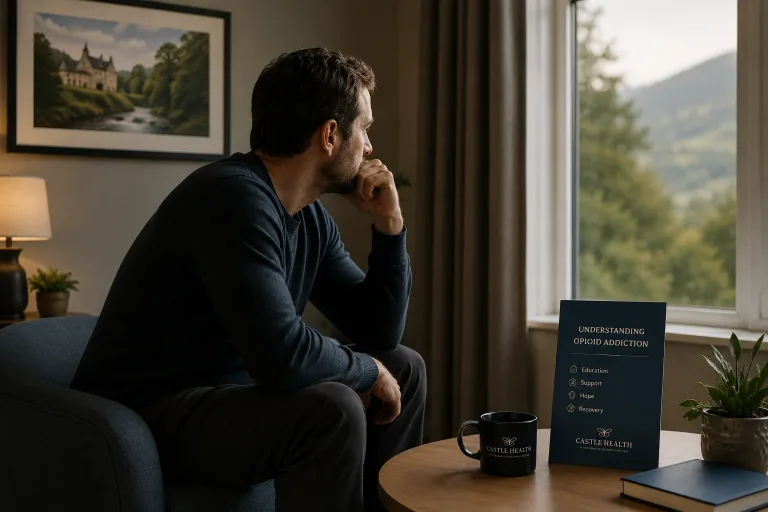
How to start the conversation
Getting in touch is a useful first step even if the person isn’t ready. We can talk through the situation, and help you think through how to approach the conversation when the time feels right.
Family therapy is also part of our treatment programme. Once a person is in treatment, family sessions can help both the individual and the people around them. We also provide support around interventions. These are structured conversations designed to help someone recognise they need help and take a first step towards it.
Success Stories
We’ve helped many people turn their lives around
Get help today
Take the first step in your recovery journey
We are here to listen, guide and help you every step of the way. Call us today and together we can find a solution that suits you.
Our admissions process is confidential and designed to suit and support you and your circumstances. Find out more about the Admissions process.
Telephone
From the UK: 020 3098 2503
International: +44 (20) 3098 2503
Care to the highest standards
Committed to quality care
Frequently asked questions about opioid addiction treatment
Can I access opioid addiction treatment if my dependency started with a prescription?
Yes. Dependency that begins with prescribed medication is extremely common, and it is not a sign that you have done anything wrong. Our clinical team understands this pathway well. You won’t be judged for how your dependency developed.
What is the difference between opioid detox and opioid addiction treatment?
Detox is the process of clearing opioids from your body safely, with medical supervision and support. It’s the first stage of opioid addiction drug treatment, covering physical dependency. Opioid addiction treatment includes detox, then follows on to therapy and structured relapse prevention for a sustainable recovery. For more detail, see our opioid detox and withdrawal page.
Is medication-assisted treatment (MAT) available at Castle Health?
Yes. MAT is part of our treatment offering. Whether medication is appropriate, and which one, is decided with your clinical team based on your history and goals.
What does the free assessment involve?
The assessment is a confidential conversation with a member of our clinical team. We’ll ask about your history with opioids, your general health, and your current situation. From there, we’ll explain what treatment options we think would suit you and answer any questions you have.
Does Castle Health treat opioid addiction alongside other mental health conditions?
Yes. Dual diagnosis, where opioid dependency occurs alongside conditions such as depression, anxiety, or post-traumatic stress, is central to how we approach treatment. Our clinical team assesses mental health as standard and integrates psychiatric support and therapy into the treatment plan.