Call Us Now: +44 1721 360 045
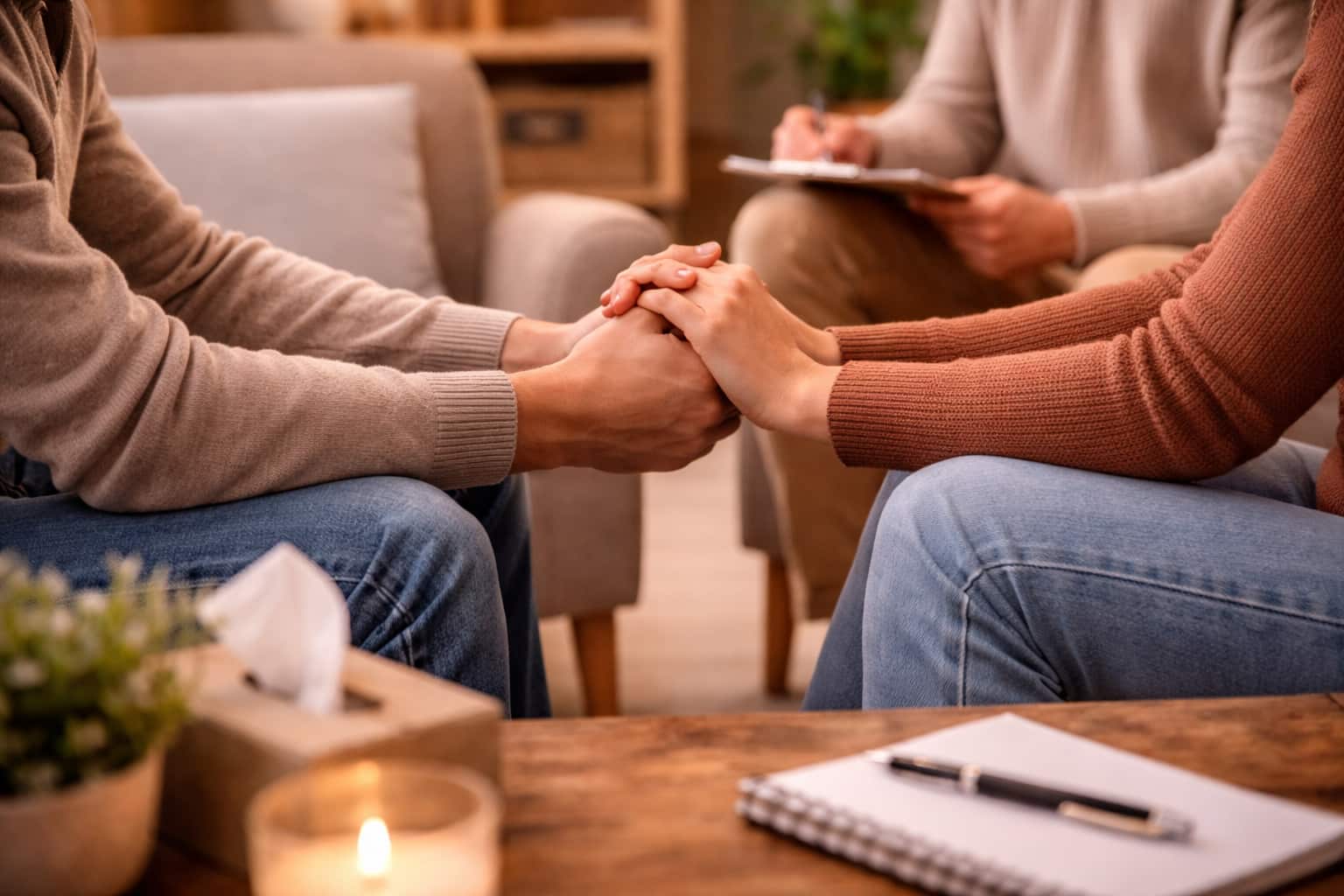
All relationships go through difficult periods, and when addiction is involved, those challenges can feel harder to navigate. Couples therapy can help by providing you with support from a couples therapist who understands both relationships and recovery.
At Castle Health, we offer couples therapy in the UK and across Europe because we know that the people around you matter as much as the work you do on your own.
What is couples therapy?
Couples therapy is a form of talking therapy where both partners meet regularly with a trained therapist to work through difficulties in their relationship. Their role is not to take sides or decide who is right, but to help both of you understand what is happening between you and find more constructive ways to communicate and move forward.
Your couples therapist will guide the conversation, but both partners have equal space to speak and be heard. Couples therapy can help with a wide range of difficulties, including breakdown in communication, loss of trust, emotional distance, the strain of parenting together, and the specific pressures that addiction places on a relationship.
Why couples seek therapy
Couples therapy isn’t a last resort, and for many people it’s a proactive choice, and a way to invest in something they care about before small tensions become difficult to handle. People also come to us when they feel stuck in certain patterns and aren’t sure how to move forward on their own.
Here are some of the main reasons couples decide to seek therapy alongside rehab treatment:
When communication breaks down
Communication problems are the most common reason couples seek therapy. When conversations often end in confusion, fights, or one partner pulling away, it can feel difficult to amend without the help of a professional.
In therapy, a couples therapist helps both partners identify the patterns driving those conversations and practise more constructive ways of communicating, including listening without interrupting, expressing needs clearly, and managing conflict without it escalating.
When trust has been broken
Rebuilding trust after infidelity or breaking trust takes time and effort from both partners. In therapy, both partners have space to talk about what happened and what each needs going forward.
When addiction is involved, trust may also have been damaged by secrecy, broken promises, or unpredictable behaviour during active use. Therapy gives both partners a space to address that honestly, at a pace that works for them.
When parenting becomes a source of conflict
Disagreements about parenting often cause stress, especially about discipline, daily routines, and sharing duties. When addiction is part of family life, parenting tasks and money problems often aren’t shared fairly, which can lead to one partner feeling resentful.
Couples therapy gives both partners a structured space to talk about what is and is not working at home, and to reach practical agreements about how to share responsibilities more fairly going forward.
When you feel disconnected from your partner
Emotional distance is often difficult to address without support because neither partner always knows where to start. In therapy, both partners work with the therapist to understand what has driven the distance and how to reconnect.
For couples dealing with addiction, this often means looking at how the relationship changed during active use and what rebuilding closeness looks like now that recovery has started.
Couples therapy for LGBTQ+ relationship
LGBTQ+ couples can face challenges that others don’t, including the impact of discrimination, navigating family relationships that may not be accepted, and managing the effects this has on mental health. When addiction is also present, these pressures can intensify.
Our approach at Castle Health
Couples therapy at Castle Health is offered alongside our outpatient program, so it can happen at the same time as individual addiction treatment instead of waiting until treatment is finished.
Sessions are available in person at our clinics or online, usually once a week, and we can organise both joint and individual sessions.
Our therapists are accredited and have specific experience in both addiction and relationship therapy. The approaches we use include:
- Cognitive Behavioural Therapy (CBT), which helps both partners identify and change unhelpful patterns of thinking and behaviour
- Emotion-Focused Therapy (EFT), which focuses on the emotional needs driving each partner’s responses and helps build a more secure attachment between them
- Trauma-focused CBT and Eye Movement Desensitisation and Reprocessing (EMDR), for couples where one or both partners have experienced trauma. EMDR uses guided eye movements to help the brain process difficult memories, allowing trauma and addiction to be treated at the same time rather than separately
Read more about our programme.
What to expect in sessions of couples counselling
Each session lasts about an hour and usually happens weekly. In the first sessions, the therapist will take time to understand the relationship, why you came to therapy, and what each partner hopes to get from it.
As sessions continue, the focus moves to practical skills such as:
- How to communicate better
- How to handle conflict
- How to support each other through the challenges recovery brings.
Relapse prevention
Relapse prevention is part of every addiction treatment program at Castle Health. In couples therapy, this means both partners learn to spot early signs of relapse together and create shared ways to handle the situation.
Research shows that problems in a relationship are one of the strongest signs that relapse might happen, and couples who know each other’s triggers and have a clear plan for tough times usually do much better in the long run than those who face these moments alone.
This doesn’t mean one partner is responsible for the other’s sobriety. Recovery is still a personal journey. Couples therapy provides tools to support that journey together, so no one has to carry a burden that was never theirs alone.
Is Couples therapy right for you?
Relationships will inevitably experience difficult periods, and sometimes it’s genuinely difficult to know how to move forward. Couples therapy can provide guidance and support to you as a partnership, whether your difficulties are new or have been going on for a long time.
If you’ve noticed any of the following signs, couples therapy could be a suitable option for you and your partner:
- Feeling distant or disconnected from your significant other
- Arguments that escalate or repeat without resolution
- Struggling to communicate or be understood
- Experiencing trust issues or unresolved hurts
- Feeling unsure about your role in the relationship
It’s normal to feel hesitant about couples therapy. You might worry that it will bring up more issues, or that your partner won’t want to take part. If you both feel ready, you can search for “couples therapist near me” or contact Castle Health to find out more about our process.
How much does couples therapy cost?
The cost varies across the UK and Europe, depending on the level of support you need and whether sessions take place in person or online. Couples therapy typically costs between £500 and £1,000 for around 5 sessions in the UK. No two situations are the same, so at Castle Health, we discuss costs individually with you before you commit to anything.
Treatment is available through private funding or health insurance. If you’re unsure what your policy covers, please contact your insurer to find out more information.
Online couples therapy – flexible, private, effective
Couples therapy online makes it far easier to fit support into busy lives. If you’re struggling to locate relationship counselling near you, virtual sessions can be joined from the comfort of your home, offering the same expert guidance as in-person appointments.
Online couples therapy also provides a level of privacy that can make it feel safer to open up. You won’t need to worry about travel or arranging childcare, and you can access professional relationship support for addiction even if you live in a remote area.
How to get started
Taking the first step is often the hardest part. If you’re ready to talk or simply want to understand whether couples therapy might help, our team is here to listen.
Treatment at Castle Health can be arranged in person or online, as joint appointments or, where needed, individually. Contact our team, and we’ll help you find the right support for your family.
Frequently asked questions
Will couples therapy work?
Therapy helps many couples understand each other with more clarity, but every relationship has its own pace. Progress depends on how willing both partners are to be open and to try new ways of communicating. Therapy offers guidance, not guarantees, but many find it genuinely useful.
What if my partner doesn’t want therapy?
It’s common for one person to feel unsure about couples therapy. You can start by speaking to a couples therapist on your own to get support and work out how to approach the conversation at home. Sometimes that first step helps a reluctant partner feel more comfortable joining later.
Can couples therapy save a relationship?
Therapy can create room for honest conversations and highlight patterns you may not notice on your own. It can help couples reconnect, though it won’t fix everything by itself. The real change comes from the work you both do outside the sessions.
How do we prepare for couples therapy?
A good place to start is thinking about what feels hardest about your relationship and what you hope might shift. Bringing a few examples of recent moments can make the first session flow more easily.
Is couples therapy suitable for all types of relationships?
Are you wondering if couples therapy is worth it? Most willing couples can benefit from relationship counselling, whether you’re married, dating, living apart, or navigating a new partnership. Your therapist will adapt the approach to you as a couple rather than expecting you to fit a strict model.